

Twentieth century Russian composer Dmitri Shostakovich was not Jewish, but his music was greatly influenced by the Jewish experience.
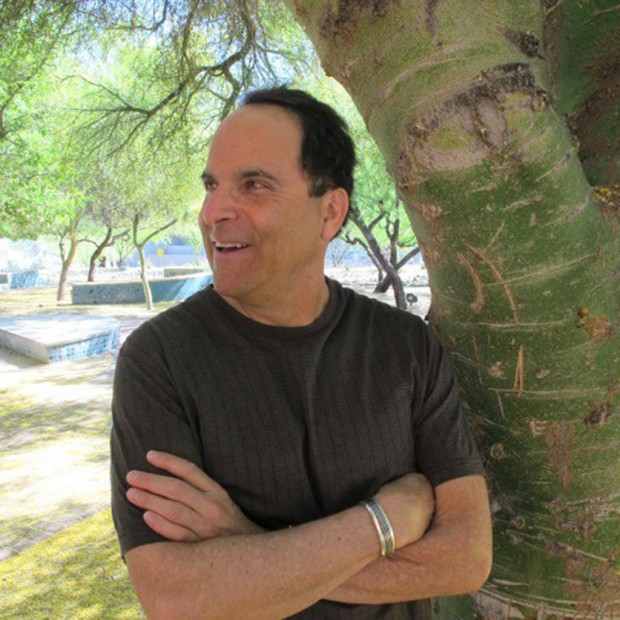
What that means and how it played out in Shostakovich's landmark Symphony No. 13 "Babi Yar" is part of the question composer Daniel Asia and his University of Arizona colleagues will explore Sunday in "The Jewish Experience in Classical Music: Shostakovich and Asia."
"It's an interesting question," Asia mused aloud about how his Jewish heritage and culture have impacted classical and contemporary music alike. "We want to explore the Jewish influence in music, whatever that means. We have to figure it out."
Shostakovich's Jewish experience came from the anti-Semitism that dominated Russia post-World War II. His Symphony No. 13 "Babi Yar," written in 1962, set the text of Russian poet Yevgeny Yevtushenko's most famous work, "Babiyy Yar." The poem criticized Russia's historical accounting of the Nazi massacre of the Jewish population of Kiev in September 1941. It also reminded Russians of the anti-Semitism that was still widespread in the Soviet Union of Yevtushenko's youth; the poet was 28 when he wrote the piece.
People are also reading…
Asia said Shostakovich was surrounded by Jewish composers, musicians and poets and was deeply affected by their experiences, influences that he brought to bear in his own music often to the scorn of the Communist Party and fellow Russian composers.
"There are lots of people who sing Jewish folk songs and perform the klezmer who are not Jewish," Asia explained. "You don't have to be Jewish to relate."
Asia also turned to a Jewish poet for inspiration for his Symphony No. 5, based on Psalms and poems by Israeli poet Yehuda Amichai and American poet Paul Pines. Asia composed the piece, which the Tucson Symphony Orchestra performed in a world premiere in 2008, to commemorate Israel's 60th birthday.
Five years later, Asia is again celebrating Israel, this time with "Amichai Songs," which he pulled from his symphony. Amichai's texts look at the relationships between Israel and its neighbors and how these affect individual relationships with God.
Sunday's event, co-sponsored by the University of Arizona Center for Judaic Studies, School of Music and Center for the Study of American Ideals and Culture, was the brainchild of Russian-born Tucson pianist Alexander Tentser and was curated by Asia.
If you go
• What: "The Jewish Experience in Classical Music: Shostakovich and Asia."
• Featuring: Daniel Asia, Janet Sturman, Alexander Tentser, Alex Dunkel, Theodore Buchholz, Aryeh Tepper and Jan Swafford.
• When: 2 to 5 p.m. Sunday for the symposium; 7 p.m. concert.
• Where: University of Arizona School of Music Room 146 for symposium; Holsclaw Hall for concert. Both located on the southeast corner of East Speedway and North Park Avenue.
• Cost: Free.
• Concert program: Excerpts from Shostakovich's Symphony No. 13 "Babi Yar" and Piano Trio No. 2; and excerpts from Asia's "Amichai Songs" from his Symphony No. 5 (world premiere) and his Piano Trio.
• Details: 621-2998.


