

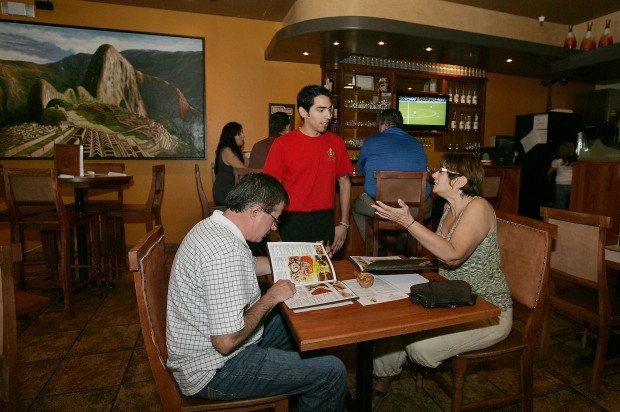
Fatima Campos has brought a rich Peruvian experience to Tucson's Foothills. • Inca's Peruvian Cuisine extols the sights and smells of Campos' South American homeland, from the massive painting of Machu Picchu that hangs on one wall to the television that aired soccer continuously on two recent visits and the appetizing smells wafting from the $14,000 ecological oven she imported from Lima to produce magnificent rotisserie chicken. • The 42-year-old mother of two opened Inca's in November and brought in executive chef Walter Salazar after hearing about him from a friend.
While perusing the menu, diners can munch from a bowl of crispy toasted Cancha kernels, a version of corn nuts tossed with oil and salt.
The intimate dining area was nearly full on both visits, and many of the diners around us ordered Peru's national drink, a pisco sour ($6). The tart drink is made from fermented grapes, lime juice, simple syrup and a drop of amargo de angostura to enhance the flavors. Egg whites help create a frothy top.
People are also reading…
We ordered another national favorite, Inca Kola ($2.50), a yellow soda that tastes like a combination of cream soda and Mountain Dew. We liked its sugary jolt, but we preferred the chicha morada ($2.50), a popular drink made from dried purple corn that is traditionally served in a chilled glass without ice. The sweet, deep-colored drink is made with fresh pineapple and its peel, apple and a bit of cinnamon.
When you settle in to read the menu, be prepared for a gastronomic journey that combines the flavors of Asia, Africa, Europe and South America. Popular Peruvian meat dishes, with beef and chicken the focus, permeate the menu.
Such as the Pollo a la Brasa ($9.50), a half-chicken prepared rotisserie style. But this wasn't just any rotisserie chicken. The oh-so-tender meat was marinated with a blend of black pepper, cumin and Peruvian herbs and spices and slow-cooked at 300 degrees in that special oven for 45 minutes.
We learned that - and a host of other facts - from our friendly and efficient server, who probably could lead culinary tours in Peru.
The chicken was one of many dishes sprinkled with huacatay, a Peruvian herb that looks like cilantro but has an aroma somewhere between mint and basil.
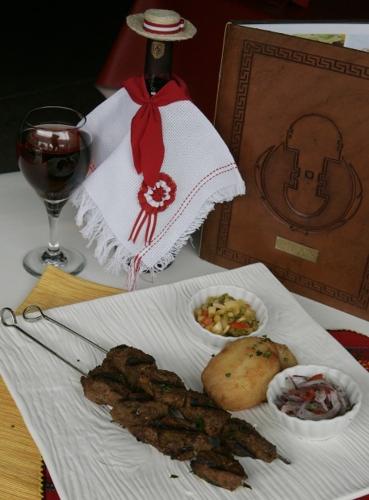
On one visit, we started with Anticuchos ($8.50). Two beef skewers of grilled certified Angus beef were marinated for a few hours in a light vinegar with cumin, garlic and a red chile called aji panca.
A kicky salsa garnished the appetizer and was made with diced onions, green onions and aji amarillo, which looks like yellow bell pepper but is a Peruvian chile.
Lomo saltado ($12), a stir-fried dish of marinated steak, vegetables and fried potatoes, is a popular entree in Peru.
Sort of like a flavorful fajita dish, the tender beef was marinated in huacatay and made with aji amarillo, salt and white and black pepper. The beef was tossed with tomatoes, onions and parsley and served with a side of moist white rice.
But the layer of Peruvian-style fries is what made the dish stand out. The thick-cut potatoes were crispy outside, moist inside and simply seasoned with salt and parsley. The fries were served underneath the beef and the vegetables and had soaked up some of the beef juices, making the potatoes even more savory.
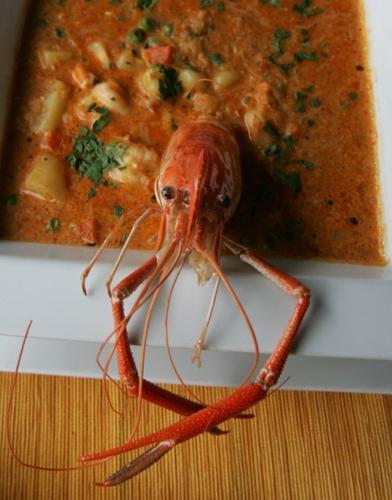
Our second visit took place on a Saturday so we could sample the chupe de camarones ($8.99), a shrimp soup that's currently available only on weekends. It will be offered daily in the winter.
The ahi panca in the soup gave the hearty broth its red color. The soup contained Mexican shrimp, potatoes, rice and choclo corn, a Peruvian corn distinguished by its giant yellow kernels.
The large square bowl was garnished with a huge (3-4 ounces) shrimp that almost seemed to be watching us. We put it to rest on a side plate after scooping out the meat.
The only dish that didn't wow us was Peru's most famous, ceviche. The restaurant's Ceviche Mixto ($14.99) was just like it sounded: A mix of calamari, halibut, shrimp and octopus marinated in lime juice and rocato chiles that gave it a kick. Other than a strong lime flavor, it didn't stand out as much as the other dishes.
Traditional Peruvian desserts rounded out each meal. Our favorite was the crema volteada ($6), a rich flan-like custard created with evaporated and condensed milks, vanilla, eggs and caramel sauce.
The alfajores ($4.50) was a traditional cookie "sandwich" made with flour, anise and vegetable shortening. The recipe doesn't call for any liquid, making for a dry cookie, but a condensed-milk jam made up the filling in the sandwich and added sweetness and some moisture.
Through Saturday, Inca's will feature specials and more Peruvian dishes to commemorate Peru's Independence Day, which took place Wednesday.Diners should call for a reservation - especially this weekend.
Review
Inca's Peruvian Cuisine
6878 E. Sunrise Drive, 299-1405.
• Hours: 11 a.m.-9 p.m. Tuesdays-Sundays. Closed Mondays through Aug. 16.
• Family call: A $4.75 children's menu includes three exotic-sounding choices that actually are typical kid fare, such as salchipapas, thinly sliced pan-fried beef hot dogs with fries.
• Noise level: Conversational.
• Vegetarian choices: The lone veggie entree, Tacu Tacu, is beans and rice with sautéed onions, tomatoes, green beans, carrots and spinach ($9.50).
• Dress: Casual.
• Reservations: Recommended.
• Price range: $-$$.
• Wine list: Eight Latin wines from Argentina, Spain, Chile and Peru. Glasses range from $5.50 to $9 and bottles cost $21 to $36.
• Happy hour: 5 to 7 p.m. Tuesdays through Fridays. Specials include $5 pisco sours, $7 anticucho de pollo and $1 off beers and Peruvian wines. Campos plans to offer Peruvian beers such as Cristal and Cusqueña in the near future.


