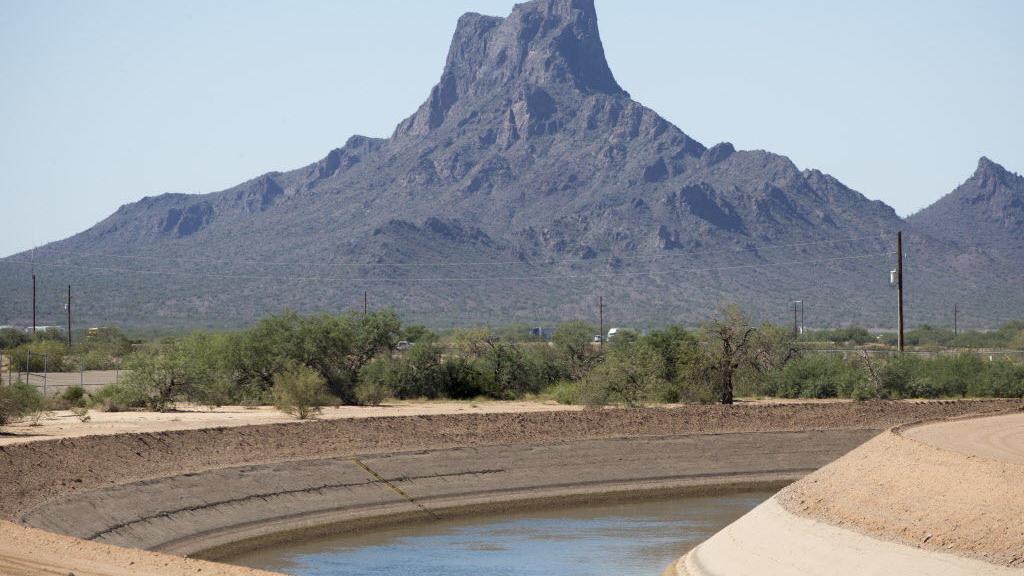
Riverbank-choking thickets of tamarisks have long created a bristly nuisance and an environmental scourge in central Arizona and much of the arid West.
This wildfire season, the brushy trees alternatively known as salt cedars are also proving to be a catalyst for blazes that foul the air with acrid smoke.
First came the Hazen Fire, reported on May 2, which blasted through some 1,200 acres of wall-to-wall tamarisk in the Gila River corridor south of downtown Buckeye. It fanned black smoke into the Phoenix suburb’s core, briefly closing a senior center. State fire officials largely had it in hand five days later and allowed firefighting assets to shift elsewhere.
Then the Horseshoe Fire erupted May 7 on the Verde River just downstream of Salt River Project’s Horseshoe Dam around a public campground. It required aerial support that helped stall it out at 233 acres by this week.
People are also reading…
Then the Jones Fire blew up and forced residents and a school to evacuate from the southeast side of Wickenburg on May 11.
The common thread in all three, beyond Arizona’s rising spring temperatures, was tamarisk. Imported from Eurasia in the last century for everything from erosion control to ornamental plantings, the flowering desert survivor has long since taken over the Gila River and other Arizona watersheds.
River-bottom fires are common in the Phoenix area, Arizona Department of Forestry and Fire Management spokeswoman Tiffany Davila said at a news conference on the Jones Fire’s second day. Recent fires have been challenging because of the heavy, thick fuels, she said.
“Salt cedar is an invasive species, so it really overcrowds and chokes out native vegetation, and conditions that (firefighters) are working in are very smoky, very hot,” she said. “The tamarisk is very flammable.”
It also chokes out much of the wildlife movement, as well as human passage to these natural areas that would otherwise make fine parks and trails around communities.
The city of Buckeye and partners with land along the Gila River have long dreamed of ― and recently worked toward ― removing this barrier to recreation.
For that reason, the Hazen Fire’s silver lining may be that it gave them a head start on natural restoration.
The trick will be to make the clearing stick long enough for the cottonwoods, ironwoods, salt brush and other natives to take root after Buckeye plants them.
It’s why city officials say they and partners, including state agencies, in the Lower Gila Collaborative plan to remove stumps and treat any resprouting tamarisk with herbicides.
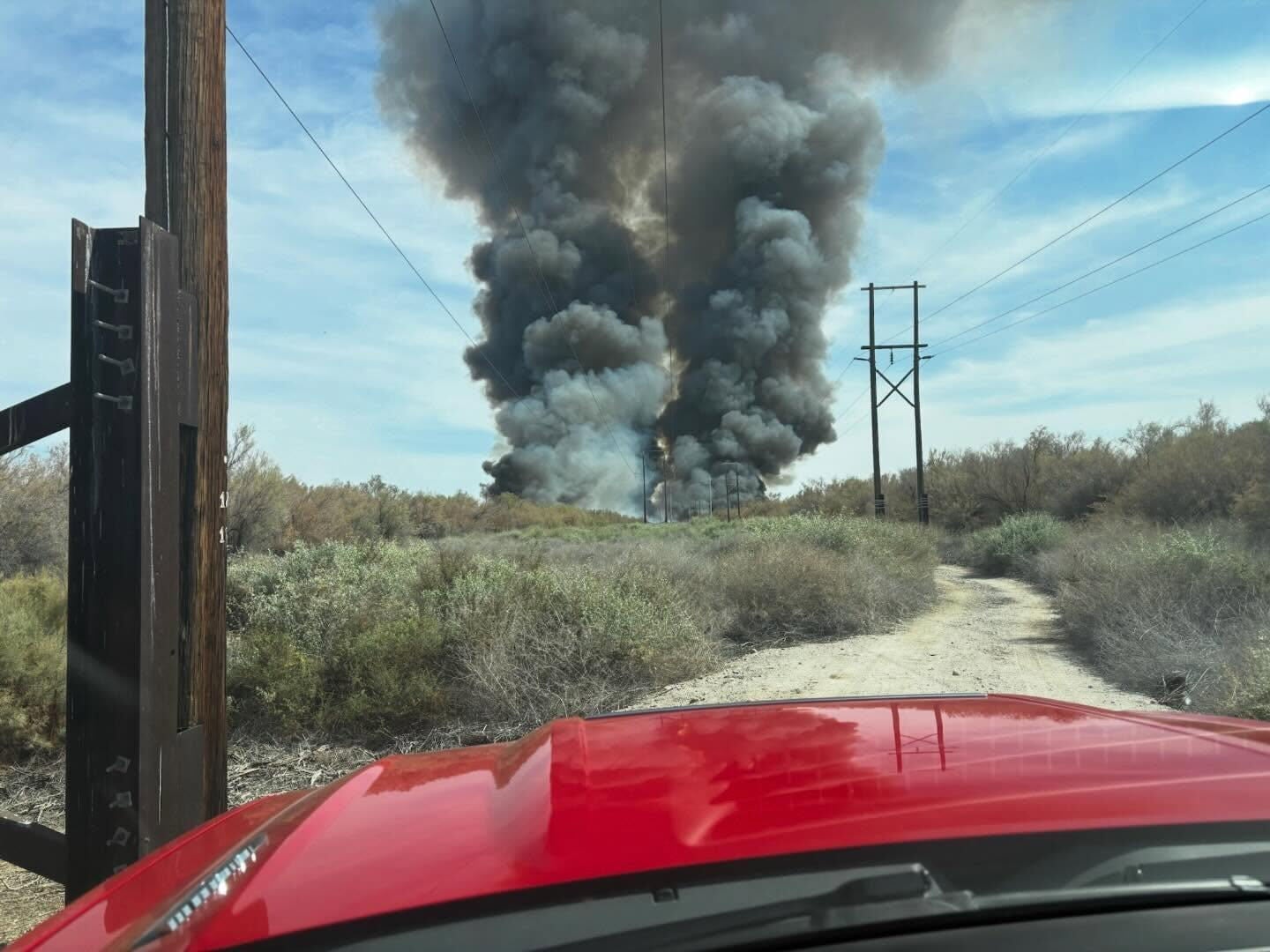
On May 2, smoke billowed above desert brush in Buckeye as firefighters responded to a vegetation fire.
“Tamarisk is very fire-adapted,” said John Leary, a project manager with RiversEdge West, a Colorado-based native restoration group formerly called the Tamarisk Coalition. “Tamarisk will be one of the first plants to be resprouting from its roots. With lack of competition, it comes back faster than native plants, and it often comes in thicker and denser” because any native plants that had been impeding it are also burned away.
Altered or diminished streamflows that dams and diversions have imposed on the West’s rivers can make it a challenge to get native plants established, he said. But after a fire, applying herbicide to new leaves or to stumps can make a dent in the invaders.
“Fire can be an opportunity,” Leary said. It eliminates the cost of mechanically removing the tamarisks.
Loss of a tamarisk bosque can cause problems for endangered birds such as yellow-billed cuckoos, though. For them, the riverside vegetation is often so degraded or excluded that only tamarisks provide nesting sites.
It’s one of the things that Salt River Project keeps tabs on as it maintains environmental compliance for operations at dams, including Horseshoe, north of Phoenix.
“In the Verde River system as well as on other rivers in Arizona (San Pedro, Gila and Salt rivers), tamarisk, because of its density, height and branching structure has become important nesting habitat for many riparian bird species, including for the southwestern willow flycatcher,” SRP biological and cultural resource manager Chuck Paradizick said in an email.
The water and power utility works with partners to maintain streamflows that favor native cottonwoods and willows on the Verde, he said. That, as well as non-native plant removals, helps keep invasive vegetation from dominating the watershed.
It’s a different story in Buckeye and much of the Gila, where low and often absent flows aided tamarisk’s takeover decades ago.
“It’s choked out any ability to access the river,” Buckeye Mayor Eric Orsborn said. That means no hiking, biking, bird-watching or even the fishing that might be possible if all of the miles of tamarisk weren’t sucking up 200 or more gallons of groundwater per tree per day. “You can’t get back into nature,” he said. “You’re stuck on the sideline looking in.”
That’s something that Buckeye and partners as diverse as the Arizona Game & Fish Department, the Gila River Indian Community, REI, the U.S. Bureau of Reclamation and others are aiming to change through their “Rio Reimagined” initiative.
It would create a greenway with trails from Granite Reef Dam in the East Valley to Gillespie Dam in the southwest. Orsborn said it could allow a cyclist, for instance, to start along Tempe Town Lake’s urban greenbelt and enjoy a leisurely ride for miles through remote settings such as the Tres Rios Wetlands.
First, though, the tamarisks have to go.
City development director Adam Copeland said the partners will assess where the fire created opportunities to rapidly treat and restore lands. They will start by determining which agencies own lands that could be primed for work. The partners had already expected to start clearing tamarisks from several hundred acres, he said, starting with a first phase of 50 acres this winter.
“The fire itself is probably not the best way because of everything it’s put up into the atmosphere,” Mayor Orsborn said, “but I look at this as a very important clearing of this invasive species.”
Beyond natural and recreational benefits, Orsborn said, the restoration makes things easier on firefighters.
The Hazen Fire stopped its advance both at a 40-acre section that the city previously restored on its south side and at a Game & Fish property that has become a showcase of native vegetation along State Route 85, he said. The latter may have prevented damage to the adjacent bridge across the Gila, he said.
Buckeye firefighters quickly dug hand lines when the fire broke out, Fire Chief Jake Rhoades said, but the fire burned fast and hot. It would soon require and get state assets, including dozers and aircraft. Tamarisks, when they’re thick, are a rapid conveyor of flames, he said, in part because they contain a lot of sap.
“The one thing that tamarisks do is they put off a tremendous amount of heat and smoke, as well as embers,” he said. “It was pretty impressive.”