AUSTIN, TEXAS — By the second day of Eric Clapton's Crossroads Guitar Festival at Austin's Moody Center, I thought I knew what to expect, and Sunday proved me wrong. It turned into a lesson in how many different things a guitar can do.

Dr. Barton Goldsmith
Some players coaxed whispers out of it, others attacked it, and a few were so technically sophisticated that I caught myself staring at their hands.
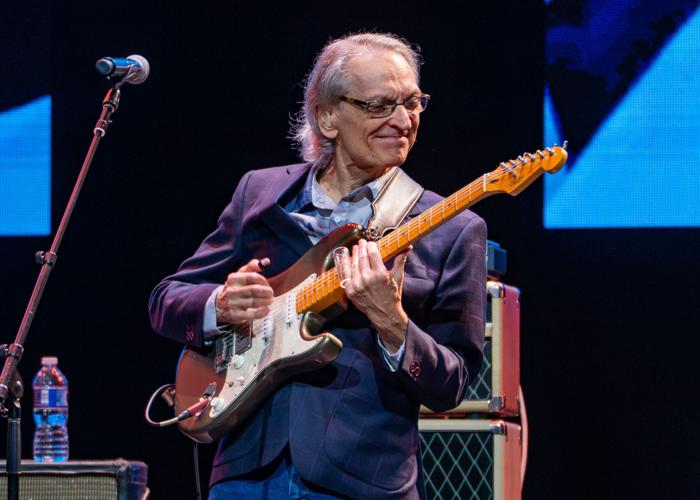
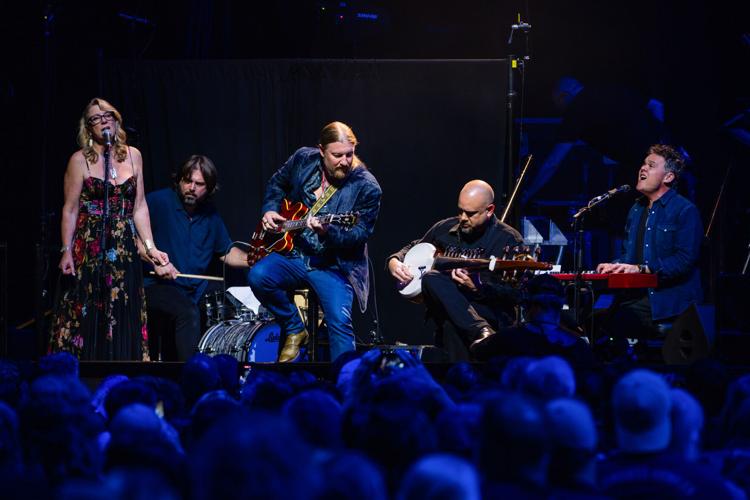
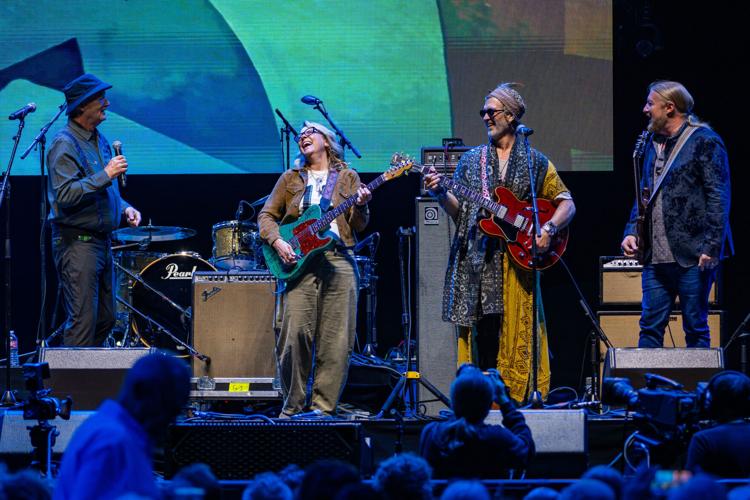
Sonny Landreth made me stop analyzing altogether. He opened again, and this time I could focus on just how unusual his musical language is. Susan Tedeschi, Derek Trucks and Eric Gales joined him early, and once the guests left, Landreth had room to stretch out. He was remarkable. His slide playing doesn't sound quite like anyone else's, and even the musicians around him seemed to approach their instruments differently. At one point, his bassist was strumming the bass almost like a rhythm guitar. Landreth deserves more than a paragraph, and I left Austin convinced he deserves a column of his own.
People are also reading…
Then, the festival changed direction completely. Tommy Emmanuel walked out alone with an acoustic guitar, and that was all he needed. I've heard plenty of extraordinary fingerstyle players, but Emmanuel works on another level, with melody, rhythm, bass line and percussion all seeming to come out of one instrument at once. He played "Here Comes the Sun" along with his own material, and the crowd rose to its feet. For me, he was one of the finest solo performers of the weekend.
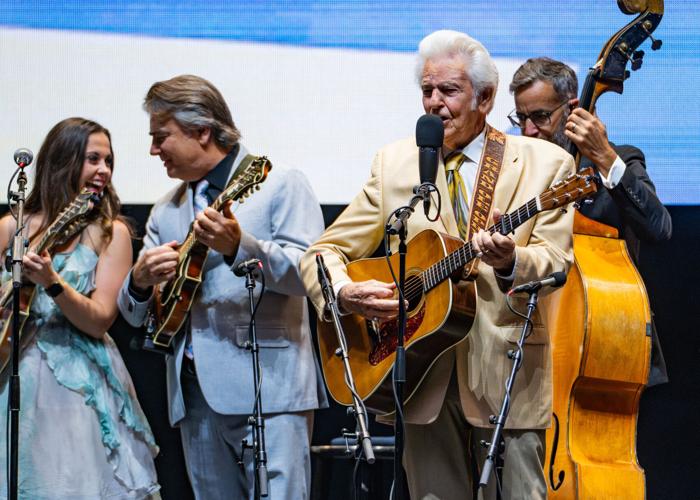
Julian Lage followed with an acoustic set that was fluid, sophisticated and easy to listen to. Jazz ideas surfaced, then blues, then something harder to name, and his technique always served the music. Kurt Rosenwinkel brought another jazz vocabulary, and Jerry Douglas, the Del McCoury Band and Sierra Hull moved the room into bluegrass and roots music. One of Sunday's pleasures was how well the quieter acts held their own against the electric ones.
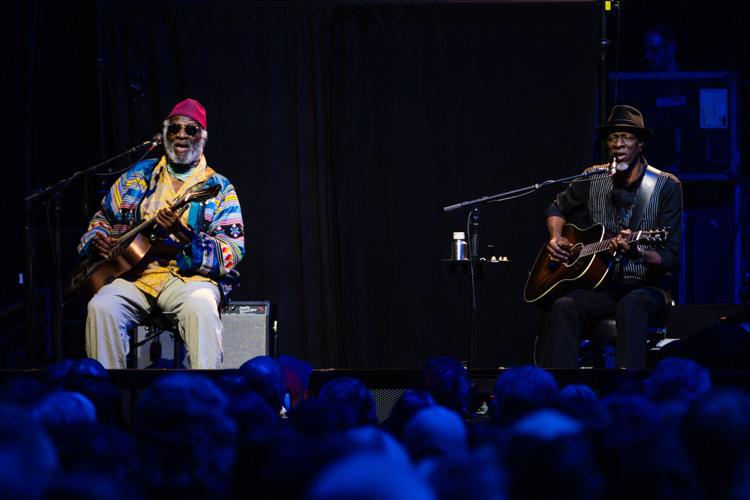
Keb' Mo' and Taj Mahal came next, and what struck me most was how naturally the blues lived in their hands. Nothing was forced or polished for effect. It was raw and easygoing, played with real passion, as if the blues were simply the language they grew up speaking. Taj picked up a harmonica, the mood stayed loose, and "Diving Duck Blues" turned into a singalong.
From there, the voltage started climbing.
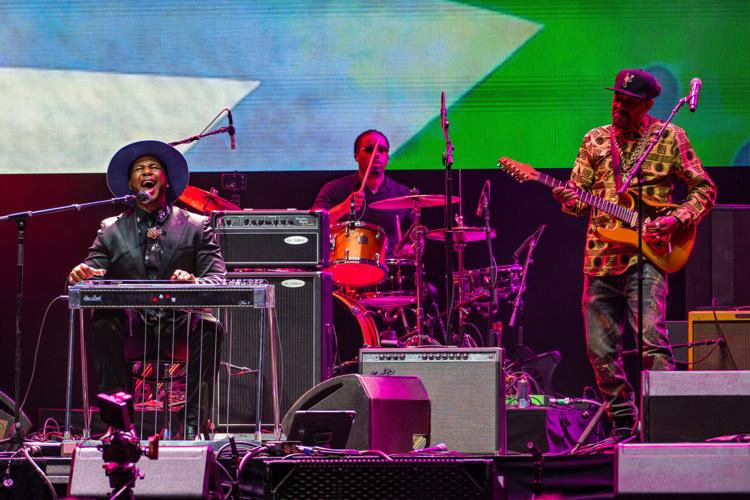
Robert Randolph and Eric Gales were powerful together, with Gales often beginning a solo with something almost classical in construction before it tipped over into rock. Robert Randolph and the Family Band were something else again. Randolph plays the pedal steel with his whole body, and at one point he was standing on the bench behind it. The band was moving, the audience was moving, and restraint was clearly not on the agenda. They put on one hell of a show.
I recognized Marcus King's sound before I had even settled into my seat. It was loud and proud, and the note I scribbled at the time reads, in its entirety, "Oh my God." King's leads filled the arena, and his band had tremendous force behind it. Guests followed: Sierra Hull, then Joe Bonamassa, then Tedeschi and Trucks for Blind Faith's "Had to Cry Today." Then an older guitarist walked out, and when I heard the name King, I wondered if he was Marcus's father. It was Marvin King, and he joined his son for "Blue Ridge Mountain Moon." At Crossroads you can watch musical generations standing side by side.
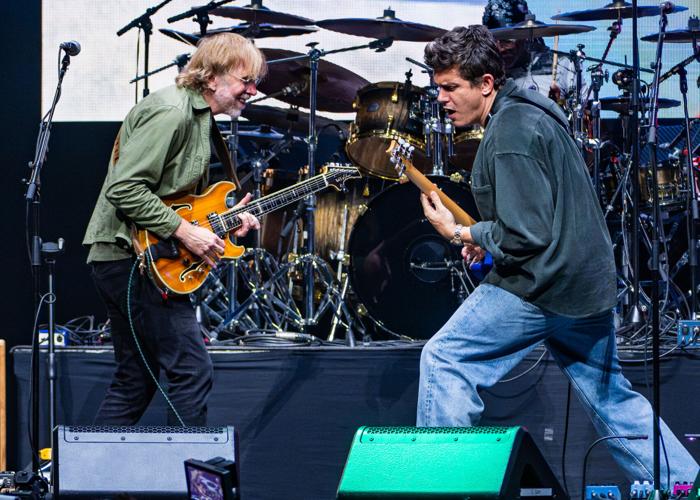
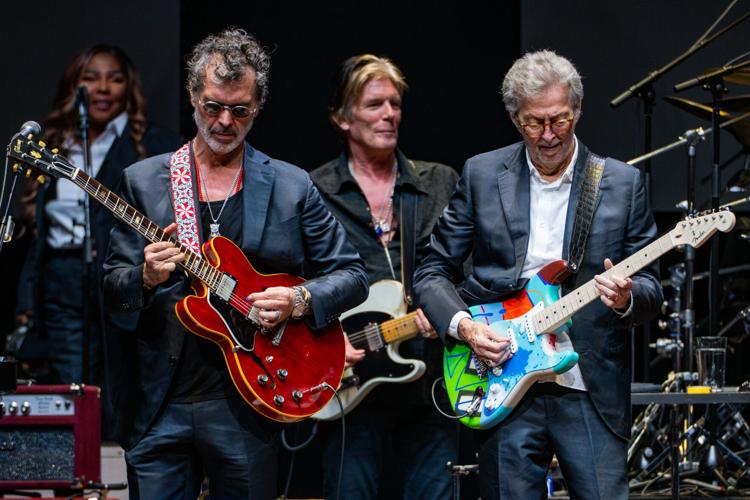
Doyle Bramhall II led another big collaboration with Charlie Sexton, Elle Bramhall and Susannah Melvoin, and then Trey Anastasio joined. Trey makes music you want to listen to, which may sound like a simple compliment, but at a festival full of extraordinary technicians it matters. Technique without musicality can turn into an athletic event, and for all of Anastasio's ability, he keeps the song at the center. When John Mayer joined him, Mayer was grinning, and it was obvious the musicians were enjoying these combinations as much as we were. Some of their twin and triple guitar leads were among the best moments of the festival.
Gary Clark Jr. started on electric guitar before his full band came into focus behind him, Hammond B-3 included. When he picked up a Les Paul, the texture changed immediately and the grit set in. He took that Les Paul somewhere special, then moved to an ES-335 and later to his red Stratocaster. Each guitar changed his attack without changing who he was as a player, and he finished with three guitarists lined up across the front of the stage.
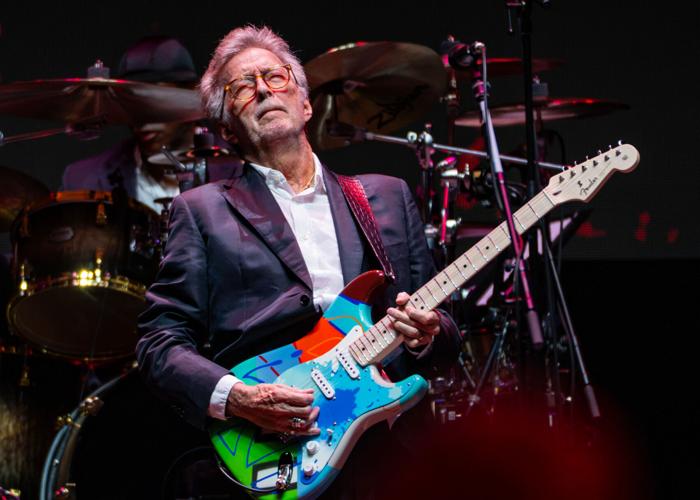
Clapton walked out at about 10:20 to an audience already on its feet, and then he sat down with an acoustic guitar. After everything we'd heard that day, he chose to close by getting quieter. He played "Kind Hearted Woman Blues" and "Nobody Knows You When You're Down and Out," then the acoustic "Layla" and "Tears in Heaven," which the audience sang softly along with him. His delivery of that song, written after the death of his young son, seemed gentler than usual. The same arena that had absorbed Robert Randolph, Marcus King and Gary Clark Jr. was suddenly listening to something close to intimate. John McLaughlin and Kurt Rosenwinkel eventually joined him before much of the day's lineup returned for the finale, and "Cocaine" brought the energy back up for a communal ending.
Over two days, I heard the guitar played as a blues, jazz, bluegrass and percussion instrument, and in Tommy Emmanuel's hands as something close to an orchestra. I watched young musicians stand beside legends and legends step back to listen, and again and again I saw players who could headline their own shows turn up to serve somebody else's song.
After two very long days at the Moody Center, I still couldn't tell you how many different things six strings can say, but I heard far more of them than I thought possible.