Some concerts entertain. Others remind you why you fell in love with music in the first place.

Dr. Barton Goldsmith
That's the kind of night it was earlier this month at the Civic Arts Plaza in Thousand Oaks, California, where Jon Anderson and The Band Geeks played to a packed house — every seat filled, anticipation thick in the air well before the lights went down. When the band finally walked out, the room exploded.
Then, almost as quickly, it went quiet.
Not the restless quiet of a crowd checking phones, but something closer to reverence — the kind of hush an audience gives an artist whose music has earned it. Anderson opened his mouth to sing, and for the next two-plus hours, the crowd seemed ready to go wherever he led them.
The first piece alone ran nearly 20 minutes, drifting through the layered themes and lush instrumental turns that have defined Anderson's music for decades. By the time it ended, almost the entire room was on its feet — and that set the tone for the night. Song after song drew a standing ovation. Not from every single person every time (even devoted fans run out of steam for that), but the overall response was the kind most performers only get during an encore.
People are also reading…
What stuck with me almost as much as the music itself was who was in the seats. Baby Boomers next to Gen Xers, Millennials and fans young enough that these songs predate them entirely. And somehow, everyone knew every word. Instead of drowning Anderson out, they sang along under their breath, like they didn't want to compete with him — just be near the sound.
Anderson is 81 now, and his voice shows it. There's more rasp in it than the old Yes records captured, and a few of the higher notes have eased down into a more comfortable range. But the clarity is still there. The phrasing is still his — instantly recognizable — and he sells every line like he means it. He's not chasing the singer he was 40 years ago. He's just being the person who wrote the songs in the first place.

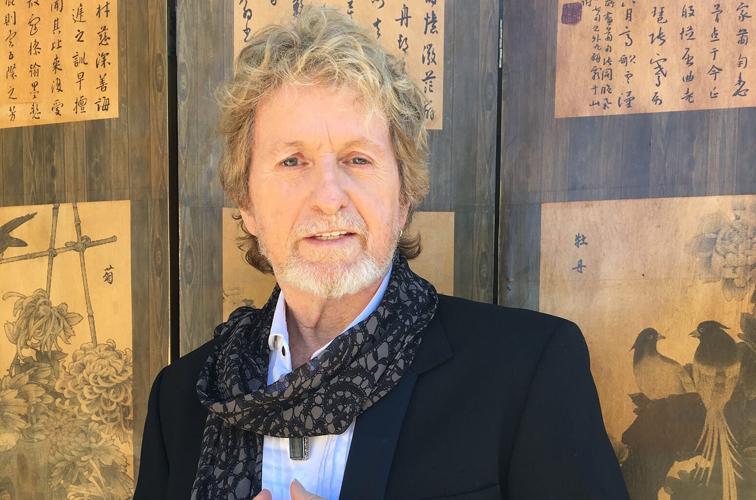
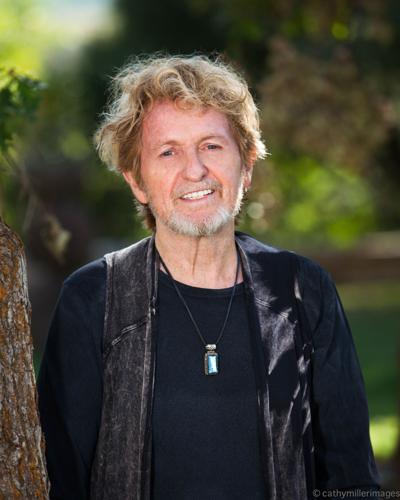
Jon Anderson
His stamina matched it. Anderson stood for the entire show with no disappearing offstage to catch his breath. His energy didn't dip, and the audience's didn't either.
Behind him was one of the tightest touring bands I've seen in a long time.
The Band Geeks lineup: Richie Castellano on bass, guitar, keys and backing vocals; Andy Graziano on guitar; Christopher Clark on keyboards; Robert Kipp on keys and Hammond organ; Andy Ascolese on drums, percussion, keys and backing vocals. On paper, that's a lot of overlapping roles crammed into five people. In practice, it's what let the band recreate arrangements that, on record, took a full lineup of Yes plus overdubs to pull off — one keyboard player would pick up a guitar mid-song, and the drummer would slide behind a keyboard rig when an arrangement called for it, all without breaking stride.
Castellano is the clearest example of why this band works. He's also a member of Blue Öyster Cult, and The Band Geeks actually started as an offshoot of his YouTube channel and podcast — a project built around note-for-note covers — before it became Anderson's full-time touring band. That background shows: This isn't a pickup group learning the songs for a tour, it's a band built specifically around the discipline of reproducing complicated arrangements faithfully.
You could hear the years of playing together in how tightly they locked in; even the most layered passages came across effortlessly, leaving plenty of room for Anderson's voice to sit on top of a sound that was somehow both massive and restrained for five musicians doing the work of many more.
At intermission, I ran into a friend who's followed Yes since the beginning — knows every lineup change, every record, every detail of the band's history. He wasn't into it. The opening stretch of the set hadn't given him what he came for, and he and his wife left before the second half started.
That caught me off guard, mostly because it was so far from what I'd just experienced a few feet away from him.
It's a good reminder that music — like anything we call art — gets filtered through whatever we walked in expecting. Two people can sit in the same row, hear the exact same notes, and leave with two completely different nights.
When I got back to my seat and the house lights dropped again, the crowd roared like it was the first song all over again. Looking around that packed room, I figured there was space for both reactions. My friend's letdown was real. So was the joy on the faces of everyone who stayed.
A great show doesn't need a unanimous verdict. It just needs to leave people with something they won't forget.
Based on the ovations, the singing along, the smiles — Anderson did exactly that.
When the last note rang out and the room stood up one more time, it hit me that staying relevant in music isn't about clinging to what you used to be. It's about still finding ways to connect with people who weren't even alive when you started.
Jon Anderson didn't just revisit his catalog; he reminded a sold-out theater why those songs have lasted more than 50 years — and judging by who showed up to hear them, they're not going anywhere for a long while yet.