Some artists stay on stage because audiences remember who they were. Shawn Colvin has stayed on stage for nearly 50 years because she keeps reminding us who she still is.

Dr. Barton Goldsmith
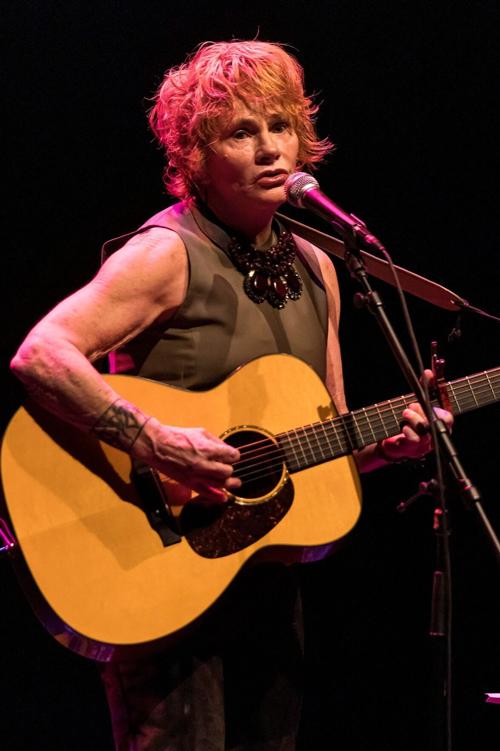
From the folk clubs of Greenwich Village to rooms like the Troubadour in L.A., Colvin built her career on emotional honesty, musicianship and craft. At the Lobero Theatre in Santa Barbara, California, she walked out with one guitar and one voice and held the room without trying.
It was the right room for it. The Lobero is one of those theaters where intimacy matters, and the sound matters just as much. There was nowhere for the music to hide, and Colvin didn't need anywhere to hide it.
I've heard a lot of fine acoustic players over the years. This may be the best folk guitar performance I've witnessed, not because it was flash — it wasn't — but because every note mattered.
People are also reading…
Colvin calls herself a folk artist, and that's exactly what she was that night: one person, one guitar, a set of songs and the stories behind them. But saying it that plainly doesn't get at what she can actually do with six strings.
Her command of alternate tunings was something else. At one point she talked through a G tuning with a C in the bass — and in her hands it wasn't a guitar trick, it was part of the emotional vocabulary of the song, opening up harmonies and bass lines that made one instrument sound like more than one instrument. Her guitar wasn't accompanying her voice. It was singing with her.
"Steady On," the title track off her 1989 debut, was a reminder of just how long she's been doing this. She talked about those early Greenwich Village years and her first world tour, but there was surprisingly little nostalgia in the set. She wasn't asking us to remember who she used to be. She was showing us who she is now.
I've spent most of my career studying human behavior, and I caught myself listening to the emotional architecture of her songs as much as the melody. One of them opens with a visit to a therapist. It's a good device because she doesn't turn it into a punchline, and she doesn't stop to explain what it means. She just opens the door and lets you walk through it yourself.
Moving between that kind of vulnerability and humor without missing a beat — that's a hard thing to do on a stage alone, and she made it look easy.
She also told a story about Steve Earle, with whom she made the 2016 album "Colvin & Earle," about a running competition between them over who could write the better breakup song. It's the kind of story that tells you something about songwriters — even heartbreak turns into material, and apparently sometimes into a contest.
Then there were the songs everyone knows.
"Sunny Came Home" won Record of the Year and Song of the Year at the Grammys, but hearing her play it now didn't feel like watching an artist dust off the obligatory hit. It sat naturally next to everything else in the set. The song has outlived its own success.
"I Don't Know Why" was another reminder of what a serious guitar player she is. She never announced how hard any of it was to play. The playing just served the song, which is rarer than it should be.
And then came "Diamond in the Rough," which did something the rest of the night had only been circling — it didn't just move me, it got under whatever mood I'd walked in with.
I'll admit I wasn't in the greatest mood going into the Lobero that night. I'd been dealing with a California real estate headache, and even with the beautiful drive up the coast and the anticipation of hearing Colvin, some of that aggravation walked into the theater with me. I've sat through plenty of concerts where whatever was bothering me before the first song was still bothering me at the encore.
Not this one. There wasn't a single dramatic turn where it happened — that's almost the point. The music just did what music occasionally does. It moved me somewhere else and I didn't notice the moment it happened.
For the encore, she moved from guitar to piano. The instrument changed, but he intimacy didn't. Same storyteller, same steady hand.
Nearly 50 years into this career, Shawn Colvin can still walk out with no spectacle, no wall of sound, nothing between herself and the room.
I walked in with a knot in my chest. One voice and one guitar untied it.