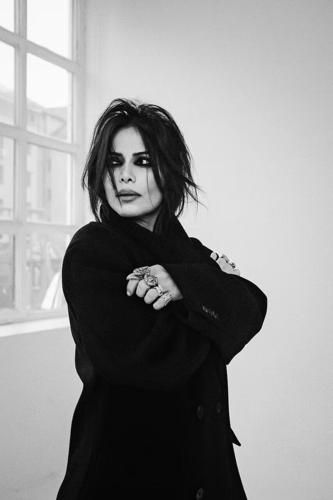
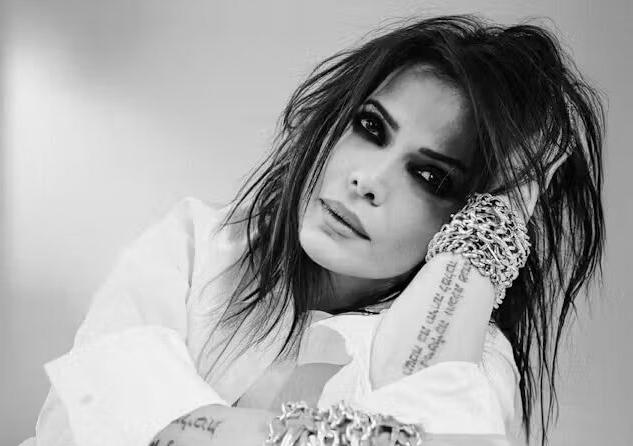
After 25 years of performing, Yasmin Levy has landed where many artists spend whole careers trying to get. She’s free to be exactly who she is.

Dr. Barton Goldsmith
At 50, the internationally acclaimed singer and songwriter isn’t looking back. She considers this her finest stretch, at home and onstage.
“This age is the best after 25 years,” she told me. “I’m happy like never before.”
In a business that prizes youth, Levy talks about age as something she earned.
“You live life,” she said. “People that you love passed away. This is life. It’s amazing that the things that hurt you in life, they are the things that protect you eventually.”
She compares it to becoming an old tree, or a stone, made stronger by weather.
If you’ve never heard her, think of flamenco’s raw ache with Middle Eastern color, sung largely in Ladino, the Judeo-Spanish language Jews carried out of Spain after the expulsion of 1492. Her father, the cantor and composer Yitzhak Levy, spent years preserving those songs. She grew up inside that tradition and still holds it close, though her reverence for it once held her back.
People are also reading…
“I started as a Sephardic Latino singer, but then I realized that because of huge respect for this tradition, I do not dare to be as animal as I am,” she said. Writing her own songs gave her room to let out what she fondly calls her “madness.”
That freedom follows her onstage.
“Stage is the most safe place for me,” she said. “I feel like I can sing for thousands of people, and I feel like I’m in my room.”
The best moment of any night, she said, is the second she walks out and feels the crowd. She called it “touching the sky.”
She’s also clear about what passes between her and the people in the seats.
“I find sadness in my audience,” she said.
I asked whether her sadness meets theirs. She didn’t hesitate. “Yes, I know that today. And I’m the only one who is not ashamed to expose her sadness.”
As a therapist, I’d call that sound psychology. When someone openly names a feeling others keep hidden, the people listening get permission to recognize their own.
In Poland, she noticed a man in a suit who sat through her entire concert barely moving a muscle. She figured he hated it. A few days later he wrote to thank her for letting go in ways his own traditions had never allowed him to.
She came by that openness the hard way. After a painful divorce, Levy was raising two young children and trying to rebuild her life, and her listeners stayed with her.

Yasmin Levy
“My audience are my best friends,” she said. “They accompanied me in my biggest crisis at life.”
So she doesn’t bother with a stage persona. “I’m not performing. I’m just me.”
Her search for belonging recently took her from Israel to Serbia, where she lives with her kids and her dogs.
“I was always like a stranger wherever I went,” she said. “I had home everywhere for my music, but I was always like no home.”
Serbia, among people she trusts, changed that. “I found my place.”
Levy speaks Hebrew, Spanish, English, French and some Arabic, yet she has never recorded a song in English. I told her I’d love to hear what she’d do with it.
She admitted the idea has scared her, given how many great singers already work in English. Lately she’s been reconsidering.
“I owe it to myself,” she said. “I want to have an answer for me, if I can do it.”
Her fans don’t seem to need a translation. They come from Iran, Portugal, Greece, Turkey, America and beyond, and they feel the songs without parsing the words. For Levy, though, each language carries its own music and its own emotional world.
Closer at hand is a new recording, out now, of a piece with music by the Spanish composer Joaquín Rodrigo and lyrics by Alfredo García Segura. Rodrigo’s daughter gave Levy special permission to record it, and Levy calls it the most important recording of her career.
“Listen, this is really the biggest thing I’ve ever done,” she told me.
She’s also writing outside of music. After nine years of work, she has finished the presentation for a crime series she created, darker than anything her fans would expect, and she’s looking for a production partner who believes in it.
“I can never believe I write a series. Come on, I’m a singer, songwriter,” she said, laughing.
Near the end of our talk, Levy pictured herself onstage at 70. She’d be sitting down, maybe with a glass of wine and a cigar, her voice weathered by 20 more years of living, with no costumes or big production, just the songs. She thinks that might be her greatest performance. Having heard what she sounds like at 50, I’d want a seat for that one.