Few upgrades transform a home quite like adding natural light. Skylights aren't just beautiful; they serve a purpose, too: reducing energy use, improving indoor comfort and even boosting individuals' moods due to the light they provide.
Those who are interested in adding a skylight might not want to DIY it before talking to a professional. Here's what homeowners should know before installing a new skylight:
The most energy-efficient skylights for Arizona
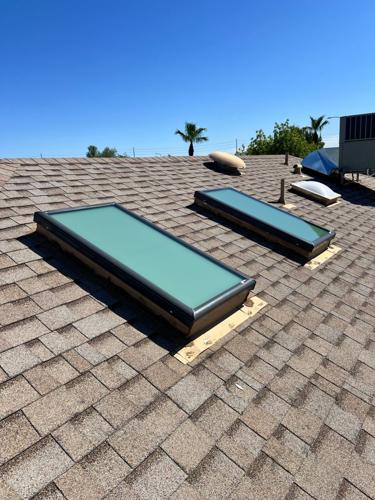
When the temperatures eventually soar into triple digits, efficiency matters. We like VELUX glass skylight units because of their energy efficiency. They come with dual-glazed, low-e, argon gas-filled glass and interior blinds.
The combination is powerful: dual glazing reduces heat transfer, low-e coatings block UV damage and excess heat, and argon gas is a natural insulator. And, because our Southern Arizona sun isn't exactly subtle, interior blinds can help you control brightness and temperature on demand.
People are also reading…

Skylights penetrate the roof and must be installed carefully.
Warranties: What to look for and why they matter
Roof penetrations aren't something you want to gamble with. That's why warranty details matter as much as the product itself when purchasing a skylight. Warranties in this industry can vary by product and manufacturer. It's always a good idea to consult with a sales professional when exploring your options. Make sure to talk through warranty terms before selecting a brand, because professionals may spot limitations that most homeowners overlook.
What's important to note is that installation is the longest-warrantied component (10 years). This warranty covers everyday wear and tear, while the overall product comes with its own guarantee. Upgraded accessories, such as blinds and venting, also come with separate warranties.
Fixed, vented, or tubular? Finding the right skylight
You have options, and choosing the right one depends on how the space is used. There are several types of skylights: fixed, venting, and tubular.
Fixed skylights remain sealed, delivering daylight without airflow — these are perfect for living rooms, stairwells, or vaulted ceilings. Vented skylights open to bring in fresh air, functioning like roof-mounted windows. These are for kitchens, bathrooms, or anywhere airflow matters.

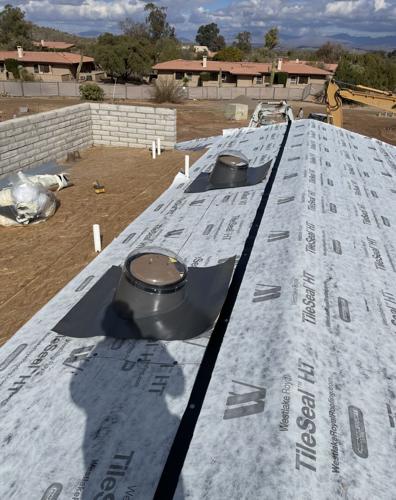
The most common types of skylights are fixed, vented and tubular.
Tubular skylights act like light tunnels for compact spaces. They collect sunlight through a rooftop dome and deliver it down a reflective tube, brightening hallways, closets, and laundry rooms without overpowering the area.
How skylights impact temperature and efficiency
Skylights aren't just pretty; they can help balance indoor comfort. A well-designed model decreases daytime reliance on electric lights, and vented units allow natural air exchange in stuffy areas. Modern skylights use advanced glazing to limit heat gain in the summer and heat loss in the winter.
Poor-quality skylights, on the other hand, can have the opposite effect: extra warmth in July and chilly drafts in January. This is why Phoenix homeowners gravitate toward high-performance glass options over older acrylic designs.
Glass vs. acrylic maintenance
Speaking of acrylic — not all skylights age the same.
Generally, for VELUX glass skylights, routine maintenance is not needed, other than cleaning the glass as you would a window. Acrylic skylights, however, require closer oversight. They can fade, crack, or develop worn-out seals. It is a good idea to keep an eye on the condition of the acrylic models and the weep holes, which are small openings designed to allow water to run off if there is water intrusion through the outer dome.
Glass skylights have better performance and longevity.
The pros and cons
There's a reason skylights often become a homeowner's favorite upgrade. The biggest pro of installing a skylight in an existing structure is the natural light it provides. The additional sunlight elevates mood and interior aesthetics, and in many spaces, skylights can introduce airflow where windows can't be installed.
Vented skylights let hot indoor air escape naturally, much like a chimney effect. They reduce humidity, release cooking fumes, and help refresh stuffy rooms. They allow for fresh air to enter the home just like any operational window.
But — as with any upgrade — there can be drawbacks.
The cons would be the potential for heat loss in winter and heat gain in summer, depending on the type of skylight. Installation costs have also increased in recent years, and structural retrofits — especially in older roofs — can add to the price tag.
Skylight technology is smarter than ever.
If you're imagining a skylight that opens with the press of a button, you're not dreaming.
One of the more reliable and popular products is solar-powered skylights. The battery may eventually need to be replaced.
Skylights used to be simple windows in the ceiling. Today, they're closer to smart home devices.
Again, we like VELUX skylights, as they come equipped with internal blinds to increase efficiency and allow complete light blocking, as well as smart rain sensors to help you remember to close the skylight — but those are for venting units only.
Imagine waking up, tapping an app, and watching your skylights open as the morning sunlight pours in. That's not the future — that's now. Skylights are more than architectural jewelry. Done well, they transform the feel of a home, improve air flow, reduce utility bills, and create a connection to the outdoors that ceiling lights can't match.
The top stories from Sunday's Home+Life section in the Arizona Daily Star.
Join Rosie on the House every Saturday morning 8-11 on KTAR 92.3 FM and KNST 790 AM from 10-11 a.m.
Do you have questions about your house, home, castle or cabin? Reach us by phone at 1-888-767-4348 or email info@rosieonthehouse.com. Follow us on Facebook, YouTube, and Instagram.