When the world premiere of his new song cycle commission was postponed last spring, composer Gregory Spears couldn’t help himself.
He tinkered.
He’s a tinkerer, but he swears the tweaks he made to “Bartleby,” commissioned by the Tucson Desert Song Festival for mezzo-soprano Jennifer Johnson Cano and her Tucson native and pianist husband Christopher Cano, were small.
Hardly noticeable.
Not that anyone attending the world premiere on Tuesday, Nov. 17, would be able to tell.
"This will still be the official world premiere,” Spears said during a phone call from his New York City home last week.

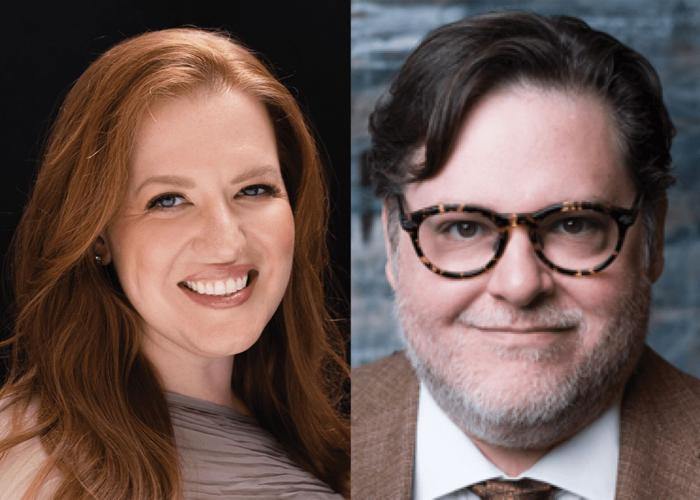
Mezzo-soprano Jennifer Johnson Cano and her husband, pianist and Tucson native Christopher Cano, will perform the world premiere of Gregory Spears' "Bartleby."
When he got the invite two years ago to compose something for Johnson Cano, Spears turned his attention to a favorite subject, mid-19th century American literature.
People are also reading…
Melville's "Moby Dick." Hawthorne's "The Scarlet Letter." Thoreau's "Walden." Whitman's "Leaves of Grass."
In 2018, he focused on Thoreau for a song cycle based on the author's landmark book that recounted his life in a cabin near Massachusetts' Walden Pond.
Melville was in his crosshairs for the Song Festival commission "Bartelby."
Spears, whose opera "Fellow Travelers" was mounted by Arizona Opera in 2019, is set to join the couple on Tuesday, Nov. 17, for the rescheduled world premiere. The recital, sponsored by True Concord Voices & Orchestra as part of the 2026 Tucson Desert Song Festival, was postponed last April due to a death in the Cano family.
Spears said he jumped at the invite to write a song cycle for Johnson Cano, with whom he has worked a number of times, including writing her a pair of operatic roles.
"I always will say yes at any chance to write something for Jen," Spears said in an interview last March. "It was a real pleasure to be able to write for a voice that I really know and have known over the years. She's such a great performer. She has a kind of warmth, but a kind of inscrutable majesty. There's just something so deep about her, whether she's doing an operatic role or singing songs that I think resonated for me with this story."

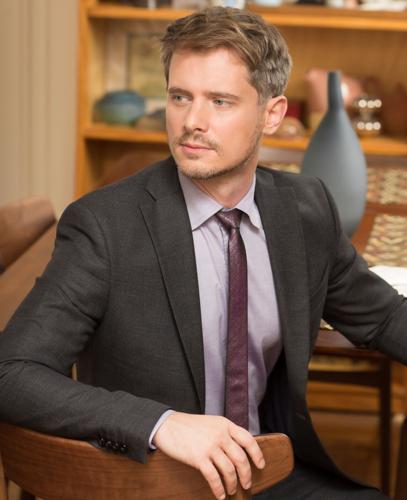
Composer Gregory Spears was commissioned by Tucson Desert Song Festival to write a song cycle for soprano Jennifer Jason Cano. The world premiere will take place Nov. 17.
Spears' "Bartleby" is based on Herman Melville's "Bartleby, the Scrivener: A Story of Wall Street" from his 1856 short story collection "Piazza Tales."
Spears condensed the story into a single page of text that he used to write five songs that recount the story of Bartleby, a mysterious scrivener copying documents for a law firm.
Bartleby starts out furiously copying documents and working really hard. Then one day, he just stops.
The lawyer who employed him continues to give him work, to which Bartleby responds, "I would prefer not to."
Instead of firing Bartleby, the lawyer becomes fascinated by this character "who just kind of refuses to participate in life," Spears said.
"You can read this in all sorts of ways. One way is a sort of refusal of a capitalist system that's trying to turn him into a cog in the machine," he explained. "There's also a kind of rebellious young man versus the conventional lawyer. There's a whole bunch of different sort of lenses through which the story is understood."
Eventually, Bartleby's refusal to work and his refusal to leave the lawyer's office prompt the lawyer to move out. Bartleby is arrested as a vagrant and taken to jail, where he refuses to eat.
"The lawyer goes and visits him and there's a very sad sort of final set of scenes where Bartleby refuses to eat," Spears said. "And the lawyer says, 'You know, Bartleby, you have to eat something.' And of course, he says, 'I would prefer not to’.”
The story ends with the revelation of Bartleby's earlier life as a clerk in a "dead letter office," where undeliverable mail is stored. Among the clutter are letters with money sent to loved ones to save them from some dire situation that never arrives to them.
"There's sort of an existential kind of elegy about what it means to be human, what it means to kind of live life," Spears said.
Spears adapted Melville's language in the texts, simplifying it without dramatically altering it. The music, he said, is tonal and lyrical, "like there's a song behind the song."
"It's like there's a song that you can't hear, and then I've cut all these holes in it and so it's like the full song you can't hear," he explained. "The piano part sounds like this exploded kind of song that you can't quite put together in your head, and the vocal line is very fractured. So in a way, it's trying to evoke musically this tale that's going to have all these kind of holes and emptiness and absence in it."
"I like to think about things like that, like actually approach the problem and foreground it, rather than paste it over with pretty music," he added. "That being said, it's very tonal. It's actually very accessible. You don't have to be thinking about those things when you hear it. ... The music gets more lyrical and starts to feel like there's more coherence in the vocal lines as this narrator is kind of putting together this whole story."
Since the postponement, Spears said he, Johnson Cano and Cano have been “making some nudges ... but essentially, it’s the same piece.”
Tuesday's recital begins at 7 p.m. at Holsclaw Hall, 1017 N. Olive Road in the University of Arizona School of Music. Tickets are $53.50, with discounts for True Concord subscribers through trueconcord.org.
Contact reporter Cathalena E. Burch at cburch@tucson.com. On Bluesky @Starburch

Cathalena E. Burch
Reporter