The apparent breakthroughs in cancer vaccines — deemed one of the fastest-growing segments of cancer research — arrive even as U.S. officials send conflicting signals about the technology's merits and safety.
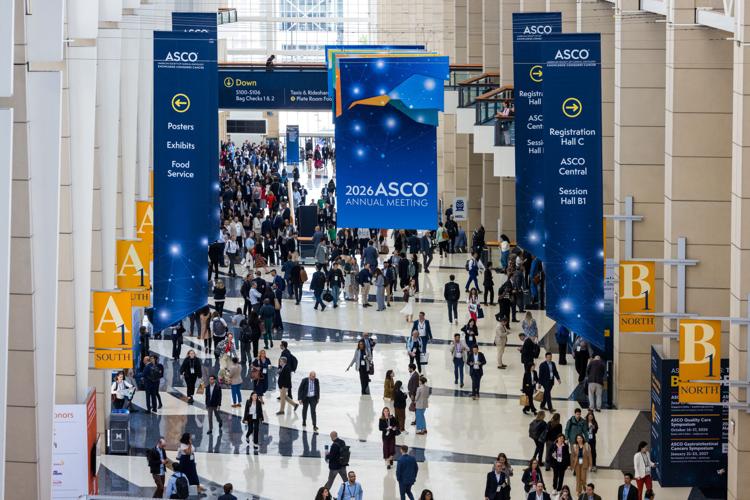
More than 130 studies focused on such efforts were presented at the American Society of Clinical Oncology meeting in Chicago this month.

The American Society for Clinical Oncology annual meeting is held in June in Chicago, Ill.
At the forefront was Moderna and Merck, whose treatment combining a powerful immunotherapy drug with an experimental made-to-order mRNA cancer vaccine kept melanoma at bay for five years, a milestone in efforts to create personalized vaccines to train the immune system to fight cancer.
People are also reading…
The companies are testing mRNA-based therapies in nine large and midsize trials in lung, kidney, bladder and pancreas cancers, and may have early results from their large confirmatory trial in melanoma this year.
Elsewhere, years of early research at university and medical centers progressed to development programs at pharmaceutical companies including Roche and BioNTech.
Market research firm Vision Research Reports forecast the market for personalized cancer vaccines driven largely by mRNA technology could reach $8.5 billion annually by 2034.
In infectious diseases, certain vaccines can teach the immune system to recognize and attack the virus, offering long-lasting protection.
"That principle can now be applied to cancer, and that's a big advance," Merck Chief Medical Officer Eliav Barr said.

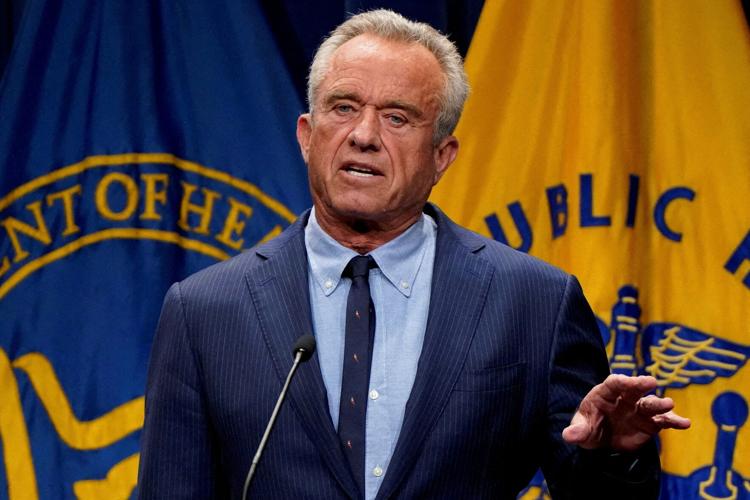
Health and Human Services Secretary Robert F. Kennedy Jr. discusses the findings of the Centers for Disease Control and Prevention’s latest Autism and Developmental Disabilities Monitoring Network survey at an April 16, 2025, news conference at the HHS Department in Washington.
These advances come even as the U.S. Department of Health and Human Services led by anti-vaccine activist Robert F. Kennedy Jr. cut $500 million in mRNA vaccine projects. He attacked the safety and efficacy of mRNA vaccines without evidence and made exaggerated claims about side effects.
Still, the National Cancer Institute is collaborating with the Foundation for the National Institutes of Health on a $200 million public-private partnership to fund trials of promising cancer vaccines, including those based on mRNA.
An HHS spokesperson defended Kennedy's stance on mRNA for infectious diseases but said he sees promise in mRNA technology to prevent cancer recurrence, pointing to the cancer vaccine partnership.
Dividing mRNA research into silos, however, may stunt advances in a promising technology safely given to more than 700 million people during the COVID-19 pandemic, scientists said.
"We have to be able to innovate around technologies that are going to improve healthcare for all," said Dr. Elias Sayour, who directs an RNA engineering lab at the University of Florida and is an adviser to NCI's cancer vaccine effort.
Discovery to potential breakthrough

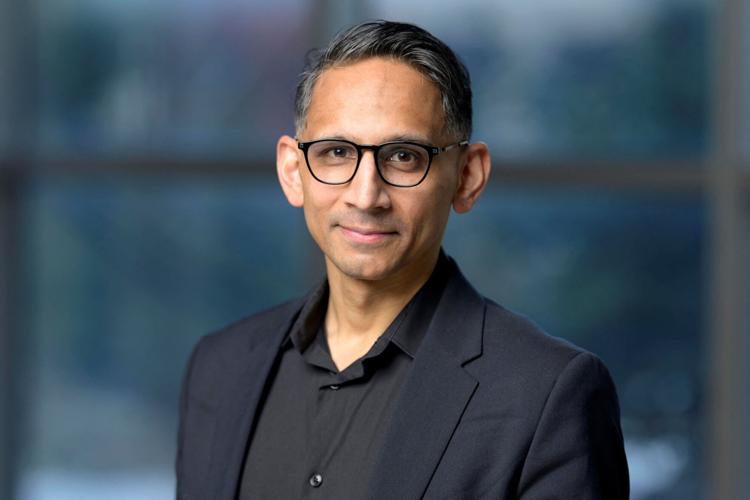
Physician-scientist Dr Vinod Balachandran, director of The Olayan Center for Cancer Vaccines at Memorial Sloan Kettering Cancer Center, poses for a portrait Feb. 5 in New York City.
A decade ago, Dr. Vinod Balachandran of Memorial Sloan Kettering Cancer Center was among the early scientists who saw potential in mRNA to treat even the deadliest cancers.
He noticed in rare cases, some patients were able to survive pancreatic cancer, a disease scientists believed was invisible to the immune system.
Studies revealed that in these cases, the patients' immune systems were able to recognize and attack their tumors. The question was how to make this more common.
Balachandran believed mRNA, which can be made quickly, could be used to devise custom vaccines based on specific mutations found only on patients' tumors after surgery.
A phase 1 trial of 16 patients kicked off in December of 2019 testing a combination of chemotherapy, Roche's ROPC.S immunotherapy Tecentriq and a made-to-order mRNA vaccine from BioNTech targeting mutated proteins based on individual patients' tumors.
At the American Association for Cancer Research meeting in April, Balachandran reported that of the eight pancreatic cancer patients whose immune systems responded to the vaccine, seven were still alive up to six years later.
A 260-patient global phase 2 trial is underway to confirm those results.

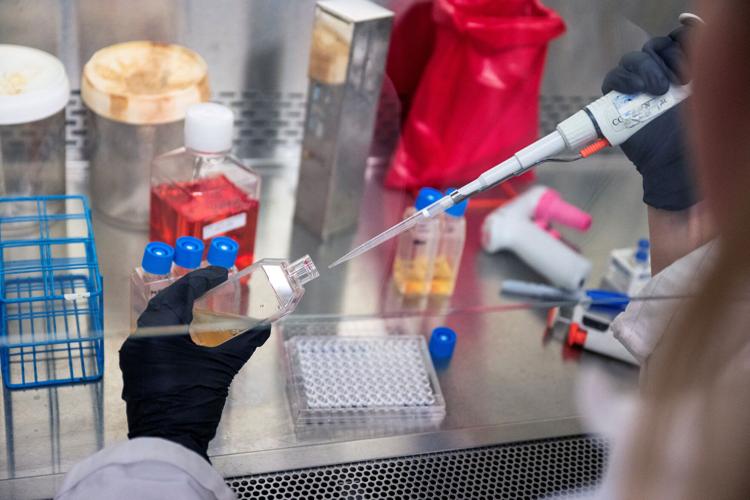
A scientist in Dr. Vinod Balachandran's lab at Memorial Sloan Kettering Cancer Center uses a pipette to prepare samples Oct. 15 in New York City.
Body's software
Messenger ribonucleic acid, or mRNA, is naturally present in every cell of the body. Its job is to carry genetic instructions from the cell nucleus to parts of cells that make specific proteins.
University of Florida's Sayour calls mRNA the software of the human body. It can be reprogrammed to do a number of tasks including making proteins that train the immune system to attack infectious pathogens or rogue cancer cells, he said.
Such work is being done at Mount Sinai, where Brian Brown, director of the Icahn Genomics Institute, developed a method of designing lipid nanoparticles — the fat bubbles that deliver mRNA into cells — to control where in the body it goes.
A study published in Nature Biotechnology in April suggests mRNA could be amplified or quieted to increase the immune response or tamp down harmful reactions, leading to more potent cancer treatments or new ways to treat autoimmune disease.
Sayour designed a vaccine that involves injecting clusters of lipid nanoparticles into patients with glioblastoma instead of a single nanoparticle used in COVID-19 vaccines.
Delivered intravenously, the aim is to quickly spur the immune system to fight the fast-growing brain cancer, which has a five-year survival rate of under 7%.