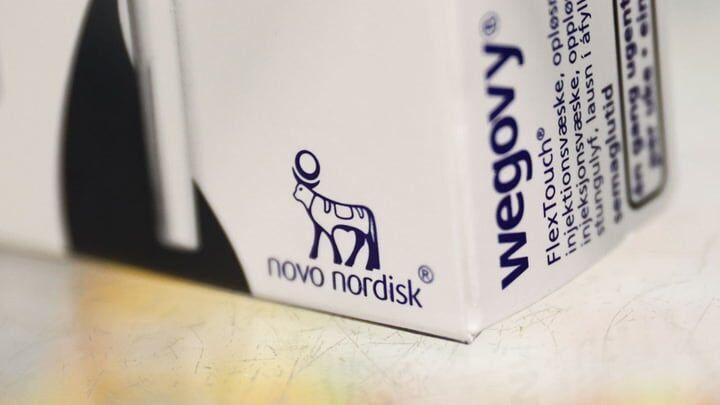
GLP-1 use isn't just drastically changing the lives of those who are on the weight-loss drugs. It's changing the way those consumers shop for food, clothes and health and beauty products, as well as how they eat out.

Megan McDonald of Boxford, Massachusetts, lost 175 pounds and maintained her goal weight for nearly six months on GLP-1s.
Megan McDonald, 36, of Boxford, Mass., noticed her shopping habits changed in the two years she's been on a GLP-1.
Since she began using the GLP-1 Zepbound and lost 175 pounds, she focuses on produce and meats at the supermarket and has no interest in the snack food aisle.
"For myself, there's not much in the middle of the store for myself except for protein bars. But it's mostly the produce, the meats and the dairies that I'm going for," she said. "Those are more expensive, but because I don't need as much, I would say I've redistributed" the costs.
The various industries are taking notice, focusing on reformulating and repackaging their products to keep up with what one industry observer calls a seismic shift.
People are also reading…

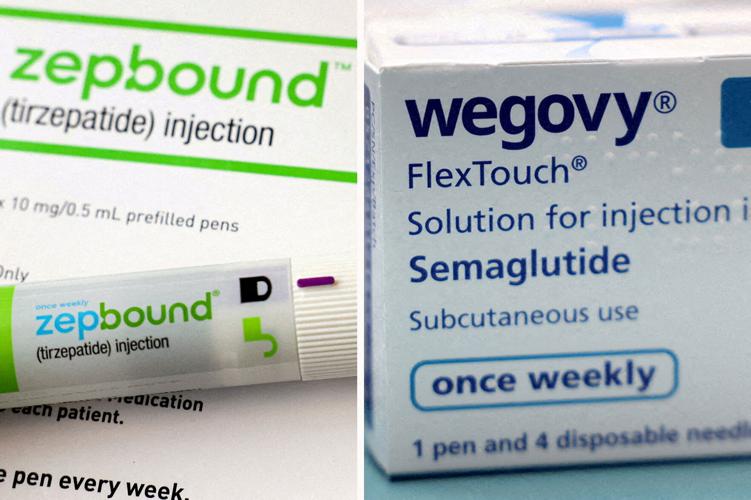
A combination image shows an injection pen of Zepbound, Eli Lilly's weight loss drug, and boxes of Wegovy, made by Novo Nordisk.
Retail revolution
The rapid, growing adoption of GLP-1 and its effects on retail is "one of the fastest consumer disruptions on record," said Ali Furman, U.S. consumer markets industry leader for PwC.
"Our data really shows that these behavioral changes persist over time, and the adoption curve resembles one of the fastest consumer disruptions on record," Furman told USA Today. "We've compared it to the adoption of the iPhone, for example."
"This drug is accelerating the convergence of health, consumerism, retail and creating opportunity for businesses," she added.
Shopping habits — particularly at the grocery store — for GLP-1 users change, said Robin Wenzel, head of the Wells Fargo Agri-Food Institute. Shoppers moved from the snacks and processed foods in the middle of the grocery store to the perimeter, which has fresh meats, fruits and vegetables, she said.
"It's coming in as a decrease initially in spending, but it later kind of gets caught up because now they're buying more health and wellness, more supplements, they're buying new clothes,'' Wenzel said. "So the shopping is actually increasing over time as they're on the drugs and they're starting to see the results and feeling good."
Food manufacturers also adjusted their products as GLP-1 users and Americans follow a healthier diet with new USDA guidelines focusing on fresh foods and proteins, she said.
GLP-1 users initially reduce their spending on groceries as their appetite is suppressed and may not buy in as much volume as they did prior to taking the medication, Wenzel said.
Early studies suggest GLP-1s, such as Ozempic, could help reduce the risk of some cancers, but scientists say there are still more questions than answers and more long-term studies are needed to really understand the potential.
Use soars: at least 1 in 5 U.S. households have at least one GLP-1 user

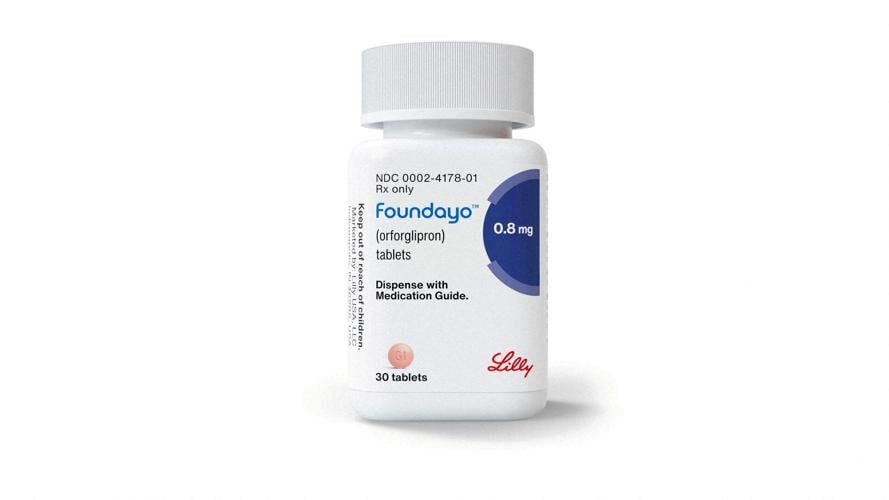
A bottle of Eli Lilly’s Foundayo weight loss pills
A PwC analysis of Numerator data shows that at least 20% of all U.S. households have at least one GLP-1 user as of December 2025, up from 9% the year before, Furman said. That was before the Eli Lilly oral pill recently was approved and before more of the direct-to-consumer channels developed, making the drug more affordable and accessible.
McDonald, who chronicled her weight-loss journey on TikTok, struggled with her weight all her life. She now generally weighs between 136 and 143 pounds.
She said her daytime meals are pretty consistent and include yogurts, protein bars, protein shakes and protein pasta.
When at the grocery store or driving past a fast-food restaurant, she said, she's less tempted to buy an extra or unhealthy snack.
"I don't have that food noise that you hear about," she said, referring to mental chatter — or constant thoughts — about food.

Shoppers looking for different products
Overall grocery basket spends shrunk 3% to 4% for households that have at least one GLP-1 user and shrunk 7% to 9% for single-person households, according to PwC's analysis.
Sales for GLP-1 qualified foods, which tend to focus on protein, fiber and unsaturated fats, steadily increased over the past three years, according to data from Nielsen IQ. Sales in 2023 were up 3.8% and rose 4% in 2024 and 5.1% in 2025. Sales for 52 weeks ending April 18 were up 2.6%, according to NIQ data.
In some cases, initial spending at the grocery store can go up as new GLP-1 users experiment with buying new products and seeing what works, said Sherry Frey, vice president of total wellness at NIQ. It levels off as it is reallocated to other areas such as multivitamins, supplements and organic foods, she said.
Consumers look for more portion precision or resealable packaging, Furman said. As GLP-1 users lose fat, they battle losing muscle density, so there is a lot of focus on eating protein, she said.
Food companies reacted to this.
"You're seeing in the market just a tremendous boom of protein-infused products," Furman said. Vitamins and supplements also saw a large uptick, she said.

Eating habits change with GLP-1 use
There was an overall decrease in eating at quick-service, or fast-food, restaurants and a slight increase in casual dining instead, Furman said.
According to a PwC analysis of consumer data from the GLP-1 Numerator panel, quick-service restaurant spending is down about 4% to 5% overall, and in single-person GLP-1 households, the drop is closer to 10%, driven by fewer impulse stops and less habitual frequency.
GLP-1 users now may spend more on candy or premium desserts — what PwC calls "permissioned self-indulgence." Furman noted, "Because they're eating less, they might gravitate more towards a category like candy, which gives them joy and satisfaction."
Meanwhile, spending on clothing and beauty products starts to go up as GLP-1 users lose weight and feel better about themselves, Wenzel said.
The PwC analysis of Numerator data showed an increase of 4% to 6% in apparel categories such as activewear, denim dresses and intimates for GLP-1 households, "driven by a wardrobe replacement and a move toward more form-fitting clothes to match newfound, more confident identities," Furman said.