GREENSBORO, N.C. — Young Henry knew there was nothing to do except wait for the hearse that doubled as an ambulance in his Black community.
All the other kids had run away. Just minutes earlier, they had been picking up pecans from the ground. They were using sticks to shake them from the tree when Lanny, among the bravest, had climbed to the top to get even more.
When Lanny fell, 11-year-old Henry Smith could make out the bone sticking from his friend's leg and the increasing faintness of his breathing as it slowed to a stop.
He stayed, thinking that going to the hospital could save his friend when in reality that wouldn't happen. Someone would run and tell an adult. Henry didn't want Lanny out there alone.

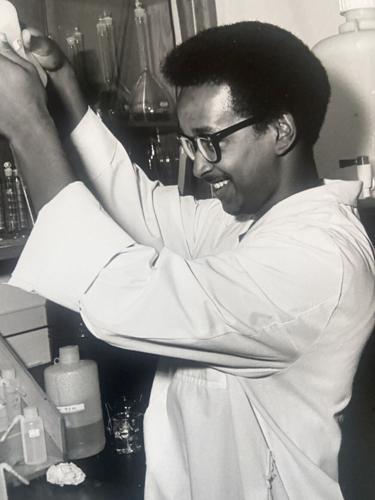
Dr. Henry "Hank" Smith III as a young boy.
He wouldn't know it for years, but that day would change his life and set him on a path that would change others.
People are also reading…
****
As a child of the segregated South who suffered from asthma, Smith had to sit in the "colored section" during visits to one of the Georgia doctors who saw Black patients, but with no guarantee to be seen that day because all the white patients came first. In his rural Statesboro, Georgia, community, the local hospital had four beds set aside for Black patients — near the morgue and the cleaning supplies.
As a cardiologist, Dr. Henry "Hank" Smith III would spend a lifetime saving lives through groundbreaking early heart intervention and helping guide Greensboro, North Carolina's primary health care system as the first medical doctor and first Black person to lead the Cone Health System Board of Trustees.
The Harvard-trained doctor carried the burden of his schoolteacher mom hoping for him to be seen for his asthma, even when he didn't know it. Sometimes they had to stand in the cold and rain outside the building.
"Even as a child I could look up in her face and see fear and pain and anger about the situation," Smith said. "I never forgot that. It resonates with me until this day."
The engaging Smith, who speaks in a gentle, quiet manner, has signed off on his last patient at his practice, but in retirement he is in a position to be an even bigger presence in helping to heal the community's social ills as a founder of the Black Investments in Greensboro Equity Fund, an endowment that was to kick off before the COVID-19 pandemic. The goal is to transform the educational, health and social well-being of the Black community.
For him, it all ties together: There are some burdens you never lay down.
The Greensboro Medical Society gave Smith its "2024 Physician of the Year" award earlier this month where he was called a "trailblazer" and "servant leader." It is the latest in a string of honors.
"He has gone into many different areas of the community to bring thoughtful observation and thoughtful potential solutions to some of the things that trouble this community most," said OB/GYN Dr. Vanessa Haygood, who was in the same Harvard class as Smith. "He doesn't do anything halfway. Everything he undertakes is with his whole heart."
****
Smith, whose father like his mother taught school, earned a full scholarship to Morehouse College in Atlanta, the same historically Black school that counts the Rev. Martin Luther King Jr. as a graduate. A place where his confidence was nurtured.
A professor suggested during his junior year that he consider medicine as a career. At the time, Smith was working on a degree in chemistry.
"I didn't leave home with the idea that I wanted to be a doctor," Smith said.
In retrospect, there were nudges that way. Like that time with Lanny.
"When I think back, I didn't faint. I didn't run away," Smith said of waiting with Lanny for the ambulance. "I didn't wither in the moment."
Seeing two tiers of health care — one white, the other Black — didn't make him bitter, but it made him want to do something about it.
When he applied to Harvard's medical program, Black people were making headway as firsts in lots of professions but still not very visible in the top medical schools. When he got accepted, that Morehouse professor would give him one more piece of advice.
"Make sure you do a good job," the man told him, "because you don't want to make it bad for anyone else."
Smith did just that. He was also in awe and relishing the experience. Textbooks being used there and at other medical schools were written by his instructors.
Still, reality was right behind his dorm. It was a volatile time in Boston with racial clashes in the city.
"Boston was not a friendly place for Black people," he said of the 1970s.
Even with that as a backdrop, Smith excelled academically.
Back home, his parents, Henry Smith Jr., and Sarah Ayers Smith, were his biggest supporters. His mother had always wanted to be a dentist but had little opportunity to do so.
"She was beyond proud," Smith said. "At graduation she couldn't stop crying. Both of my parents were crying."
After graduating from Harvard in 1978, he would go on to specialize in something called interventional cardiology at Emory University in Atlanta.
"My grandfather told me when I was young that he hoped I would become an expert in an area I found interesting rather than be a jack of all trades," Smith recalled.
And that's what he ended up doing.
****
Interventional cardiology was invented in the 1970s when Dr. Andreas Gruntzig, who would later be one of his professors at Emory, performed the first angioplasty procedure in Switzerland, using a balloon to open blocked arteries that can cause a heart attack. Heart attacks destroy the heart muscle and doctors are left with trying to treat the complications.

A professor once suggested that Smith consider a career in medicine. At the time, he was working on a chemistry degree. "I didn't leave home with the idea that I wanted to be a doctor."
"All of us who came through in my time in cardiology had the opportunity to be taught by the person who invented the procedure," Smith said.
When Smith was later recruited by Tannenbaum Medical Associates to start a cardiology practice in Greensboro, he visited Moses Cone Hospital, where he found a cardiac catheterization lab putting those pioneering early intervention methods into practice to stop heart attacks before they happened. He instantly fell in love with the possibilities. The field was just a few years old.
"It said you don't have to be in New York City or Boston to be a great health care system," Smith said.
He would become the first Black doctor in the Tannenbaum practice that eventually became Cone Health HeartCare.
He went on to serve as director of the cardiac catheterization lab at Moses Cone and played a role in Cone Health’s early use of 3D/AI-driven imaging to improve the precision and effectiveness of heart care.
Smith had followed his grandfather's advice when the field was unproven. He would use those skills to stop heart attacks his entire career. That would include a man who had been visiting relatives in Gibsonville, North Carolina, 20 years ago, and while mowing grass suffered a heart attack. He was rushed to Moses Cone, where Smith performed an angioplasty.
The man was able to go home in a week.
For the next decade he would send Smith a card over the holidays.
During the man's episode, patients suffering heart attacks stayed in the hospital for up to a month with roughly 30% not making it out of the hospital. With interventional methods, the stay might now be several days with a 6% mortality rate.
"I've practiced through that great transition in health care, and it's still a miracle to me," Smith said.
When he was asked to serve on the Cone Health Board of Trustees, he declined several times because of his commitment to his patients. And they're appreciative.
Just Google "Cardiologist Hank Smith North Carolina." There are 5-star reviews everywhere.
"He is a presence in the hospital that exudes calm, exudes skill, professionalism, kindness and you just want that in your physicians and you want that in your physician partners," said Dr. Jake Hochrein, a colleague and chief of the Cone Health Medical Group HeartCare.
Eventually, Smith agreed to become a board member and served for 14 years, three as its chair.
"That just points out to me what an influence he was," former Cone Health CEO Tim Rice said. "In terms of policy and direction and governance of this large health system, he had a huge impact.""
****
Recently, Smith and his wife, Cheryl, took off in the middle of the week to drive the nearly 100 miles to attend their 3-year-old granddaughter's birthday party at her school. Another time, it was to see their 6-year-old grandson play basketball. Smith had missed all his games the year before.
"He'll probably get tired of me," Smith said of cheering him on in the stands.
This is retirement, he said.
So is taking on the success of the equity fund, which he sees as a movement that could change generations of people.
The first endowment of its kind in Greensboro, and believed to be one of a few across the country, the focus of the Black Investment in Greensboro Equity Fund is addressing socioeconomic issues within the Black community.
It's not charity. It's breaching barriers.
"It's compassion for others," explained Cheryl, who has known Smith since they went to kindergarten together. "His desire to see all people do well."

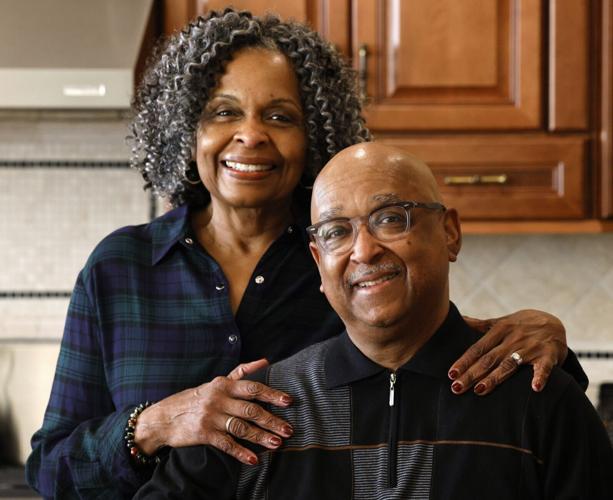
Smith and his wife Cheryl at their home in Greensboro. Both have known each other since kindergarten.
While he and other Black professionals pooled their assets to start the fund and are steering it, they understand they can't do this alone.
The founding board includes Smith and other Black volunteers like retired corporate executive and current Cone Health board chair Mae Douglas, attorney Kim Gatling, Bishop Adrian Starks of World Vision Outreach and Mac Sims of East Greensboro NOW, along with business owners and others.
"We need to have more of the people who look like us involved," Smith said. "It's providing reparations for ourselves."
They want to build a permanent endowment that would go toward issues critical to them.
Health care. The digital divide. Small business development. Hopes and dreams, too.
"It was he who really brought to our attention from a medical perspective the disparities that he encounters each and every day as a practicing physician," Douglas said.
That's because Smith continues to see the plight of "Black Bottom" when he walks through the emergency room and on the drive to his church. That was a part of his hometown where his friends had lived with severe economic deprivation that consisted of shanty houses with no indoor plumbing or heat. The water was not clean. There was mold in the homes.
"All the things that can make you sick," Smith said. "And their opportunities for success were severely influenced by the circumstances in which they were born. It really had nothing to do with their abilities."
His best friend, whom he considered the smartest person he knew, came from "Black Bottom." Once, when the teacher in their eighth-grade geometry class was having trouble with a concept, he ended up teaching the class and was able to help them all understand.
Later, when Smith returned from his freshman year in college, he went to look for his friend.
"He ended up dying in our hometown because he didn't have access to care," Smith recounted. "'Black Bottom' became my metaphor for socioeconomic inequity and disparity. It didn't seem fair to me."
And a person's health colors every other part of their lives, he explained, from gainful employment to being able to provide for their families to everything in between.
He's fighting the sting of "Black Bottom" in every way possible.
Tiajuana Bennett, a Cone Health clinical educator supervisor in the cardiac catheterization unit, said Smith has an uncanny ability to put people at ease. He looks each person directly in the eye. He makes them feel as if he really wants to know their concerns — because he does. And he listens, no matter their plight, Bennett said of Smith, who is her mentor.
"Every patient has a story, and you are that patient's voice," Bennett remembered him telling her.
And he wants to be that voice where he can.
"It's hard for me to get out of my mind people who could do better if they just had the minimal things needed to be successful," Smith said.
The equity group's first $100,000 grant went to Piedmont Business Capital, whose proposal took the organization into the world of bonding and how some Black-owned companies are shut out of bidding for projects in Greensboro because as contractors or subcontractors they traditionally have less working capital than larger companies.
"This whole fight for equity is going to be ongoing for generations to come," Smith said. "This is a years-long fight. It took 150 years to be where we are now, so it's going to take a long time to get to a place of equity. But I'm fine with that. It's better to get started and understand what you are doing and move forward than just being overwhelmed by it and going with the status quo."
He said he'd rather plant that tree for someone else to sit under than for there not to be a tree.
"It's just not in my heart," Smith said.
Vitamin B3, or niacin, has been linked to an increased risk of cardiovascular disease, a study published in Nature Medicine has found. Niacin is a vitamin that is added to bread and flour by the United States Food Industry to prevent pellagra, a disease caused by niacin deficiency. However, researchers have studied a metabolic byproduct of excess niacin called 4PY, which is a potential marker for cardiovascular issues. The study found that participants with the highest levels of niacin in their system have a two-fold increased risk of major cardiovascular events. Those conducting the study argue that niacin causes increased inflammation in the blood vessels, leading to potential heart difficulties. Adults need 14–18 milligrams of niacin a day, which can be found in six ounces of tuna or four ounces of peanuts, among other foods. Americans consume 37 milligrams of the vitamin a day on average, according to the 2017–2020 National Health and Nutrition Examination Surveys.
8 of the greatest risk factors for heart disease
8 of the greatest risk factors for heart disease

In the U.S., heart disease kills someone every 36 seconds and is the cause of 25% of all deaths. About 659,000 Americans die from heart disease annually, making it the leading cause of death across most racial groups, regardless of gender.
The most common type of heart disease among Americans is coronary artery disease, which decreases blood flow to the heart. The condition can cause heart attacks and even lead to heart failure.
There are a lot of lifestyle factors that can increase your chances of developing heart disease like excessive body weight, smoking, and drinking too much. Fortunately, there are many ways to reduce your risk of heart disease as well, such as staying active, following a low-fat diet, and maintaining a healthy weight. In fact, according to the American Heart Association and the Cleveland Clinic, 80% to 90% of heart disease may be preventable.
ACLS Medical Training researched how eight major risk factors can lead to heart disease, citing the CDC.

High blood pressure

High blood pressure not only increases your risk for heart disease, but it can also lead to strokes. Unfortunately, high blood pressure, or hypertension, is a common issue in Americans, affecting half the adults in the country.
Many struggle to control their hypertension and it’s estimated that only 1 in 4 adults with high blood pressure are managing their condition through lifestyle changes and medication. To better control your risk for heart disease, check your blood pressure regularly. This simple measurement can be done by a physician or with an at-home blood pressure monitor. You can take steps to control your high blood pressure by exercising consistently and eating a diet low in fat. If you’re seeing a physician for your high blood pressure, be sure to follow their instructions and don’t stop taking any medication they prescribe without consulting them first.
High blood cholesterol

According to the CDC, roughly 38% of Americans live with high cholesterol. Cholesterol can come from two sources: blood cholesterol (which is produced by your liver) and dietary cholesterol (which comes from consuming meat, seafood, or dairy products). High cholesterol can stem from a number of risk factors including family history, smoking, physical inactivity, being overweight, Type 2 diabetes, and a diet that contains a lot of trans and saturated fats. To avoid high blood cholesterol, you can limit alcohol intake, stop smoking, eat a balanced diet, and stay physically active. If you’re living with high cholesterol, consult with your physician for medication options, monitor your cholesterol, and stick to a healthy diet and exercise.
Smoking

It’s no secret that smoking is bad for your health—yet, as of 2019, 34.1 million Americans regularly smoked cigarettes. Like high blood cholesterol and blood pressure, smoking tobacco can put you at high risk for heart disease. It can also lead to an addiction to tobacco, so quitting can be challenging. Counseling and medication can help you break your addiction and manage withdrawal symptoms. You can use nicotine patches, gum, and lozenges as well as prescription nasal sprays and inhalers.
Diabetes

Diabetes occurs when your body can't move sugar from your bloodstream into cells. It’s a chronic issue and is a serious health condition that impacts millions of people annually.
There are several types of diabetes including Type 1 diabetes, Type 2 diabetes, gestational diabetes, and prediabetes. Typically, those who are overweight, over the age of 45, and have a family history of diabetes are at the greatest risk for developing Type 2 diabetes. Unfortunately, diabetes does not have a cure, but treatments are available. Exercising regularly, eating a balanced diet, and managing your weight can help to maintain healthy blood glucose levels. Regularly checking in with your physician is also an important aspect of living with diabetes.
Obesity

Excessive weight gain can lead to a host of chronic health issues, including heart disease, cancer, and diabetes. However, being overweight is a complex problem that can stem from a number of issues ranging from genetics and health issues to diet and exercise.
Maintaining a healthy weight can start with consulting with your physician and a nutritionist. Both can help you develop strategies to create and stick with a nutritious eating plan. Being physically active can also help with managing your weight. The CDC recommends that most adults get 150 minutes of exercise per week, and this activity should include aerobics (like walking or swimming) and strengthening your muscles.
Physical inactivity

Physical inactivity is a widespread issue across the U.S., but particularly in Alabama, Arkansas, Kentucky, Louisiana, Mississippi, Oklahoma, and West Virginia. When surveyed, more than 30% of adults from these states said they did not participate in any physical activities outside their job in the last month. An active lifestyle can not only help you avoid issues like heart disease and Type 2 diabetes, but it can help you live longer and improve your mental health.
To learn more about becoming more physically active, talk to your physician. You can also take steps like joining a gym and working with a fitness instructor. Or you can add more activity into your daily routine, like taking walks on your lunch break, using the stairs instead of the elevator, or biking to work instead of driving (if possible).
Excessive drinking

While some believe that a glass of red wine a day is good for your heart, consuming too much alcohol can lead to a host of negative health effects. Heavy drinking is hard on your body; not only can it result in heart disease, but it can weaken your immune system and increase the risk of cancer, stroke, high blood pressure, alcohol poisoning, and more.
Drinking excessively is also known as binge drinking, which the CDC defines as four or more drinks for women and over five for men. Drinking too much alcohol can also lead to addiction or even risky behaviors such as driving while intoxicated. To avoid long- and short-term health risks, the Dietary Guidelines for Americans advises adult women to have no more than one drink a day and for men to only have two drinks or less.
Unhealthy diet

Knowing what foods to eat and how much of it to eat can be confusing, but the CDC recommends that the more naturally colorful your plate, the better.
The Dietary Guidelines for Americans recommend that adults limit their daily caloric intake and eat a variety of proteins, vegetables, and whole grains. It’s also important to incorporate lots of fiber, minerals, and vitamins into your diet, which you can find in dark green vegetables, nuts, and fruit. You’ll want to limit sugars, salt, and alcoholic beverages. However, it’s important to keep in mind that it’s beneficial to maintain balance and enjoy comfort foods in moderation.
This story originally appeared on ACLS Medical Training and was produced and distributed in partnership with Stacker Studio.