
For Mark Cesnik of Tucson, Lenten food translates into one thing: "Fish."
But the penitential season of Lent means so much more than fish sticks and fasting to this life-member of the Dominican Order.
"The real benefit is to pare away the distractions, i.e. hours of TV, everything we take time for that is materialistic," said Cesnik, a communications consultant who lives in the secular world — and teaches aqua aerobics — while obeying the rules of his monastic order. "As a culture, we work really hard not to be alone with ourselves, much less to be alone with God. If I'm successful in stripping away an extra distraction, that's a successful observance."
One week into the 40-day penitential season that ends in the celebration of Easter, Southern Arizona's more than 300,000 Roman Catholics — and many other Christians — are avoiding meat, fasting and giving up favorite indulgences as a form of spiritual training and preparation.
People are also reading…
From Bishop Gerald C. Kicanas, a vegan who may do without his beloved peanuts for the season, to the folks in the pews, they are united in a spiritual tradition as old as Christianity itself.
"Lent reflects the going out into the desert by Christ when he was growing in his relationship with his Father," Kicanas said. "We, too, enter this desert time in order to encounter this Christ in a deeper and fuller way. . . . The fasting of the Christian during Lent is based on the desire to seek the kind of emptiness in my life that can only be filled by God."
This spiritual season can also pack some physical benefits, said Jim Glaser, a nutritionist at Canyon Ranch Resort in Tucson, as people move away from eating too many of the unhealthy saturated fats found in red meats and toward consuming healthier vegetable- and fish-based dishes.
"Lent is a great time. People do things dietarily as part of a spiritual focus. It's a good time to look at your diet as well. . . . I think if it gets people to expand their horizons with their diet and try new things — to try fish or a tofu stir-fry — then that is a good thing, nutritionally speaking."
Glaser added, "There are so many wonderful ways to make healthy food taste good. . . . If the average family would add two new dishes to their repertoire each year, they would be making lightening-fast progress compared to what most people do."
Here are some ways, to go about it, fishy and not.
The Church specifically enjoins Catholics to avoid eating meat on Fridays — a familiar practice to the many who grew up in the pre-Vatican II era, when "Fish Fridays" happened every week. And many Catholics do, indeed, resort to the traditional fish stick.
According to Gorton's, the country's leading purveyor, 20 to 25 percent of the up to 400 million pounds of those little breaded fish fingers the company sells every year are consumed during the six weeks of Lent.
"Lent is the one time of the year we have fish sticks on the menu in my house," diocese spokesman Fred Allison said via e-mail. "The challenge is not to dress them up so much that the Lenten spirit is missing!"
With an eye toward more upscale and tastier Lenten observances, Gorton's picked this Lent to launch its new line of "Shrimp Temptations" — sauce-covered, quick-to-fix frozen shrimp. They come 17 to 21 large shrimp per package for a suggested retail price of $6.99, and they are naturally low in calories and fat.
Vegetarian entrees — soups, Asian stir-fries, pastas and curries — are alternatives to fish and meat.
In the Sonoran Desert, they frequently include nopalitos, prickly pear cactus pads stirred into egg dishes or used instead of meat in traditional recipes. Or families make big pans of capirotada, the fruit-and-cheese-laced Mexican version of bread pudding.
Cesnik, who grew up in Wisconsin, retains a deep fondness for his family's vegetarian lentil soup.
"You can do a lentil soup with a vegetable stock," he said. "If you cook stock with a lot of garlic, plus stir garlic into the soup, it has a very meaty taste for those of us who are meat lovers. The key is really good stock and plenty of garlic."
Cesnik, 54, also recalls that his father used to add chunks of sharp Wisconsin cheddar cheese and cornflakes to his bowl. "It had the consistency of dry concrete mix. You could patch a road with the stuff. But a bowl of that would get you through a minus-30-degree winter day."
Cesnik still enjoys the cheese but admits he passes on the cornflakes.
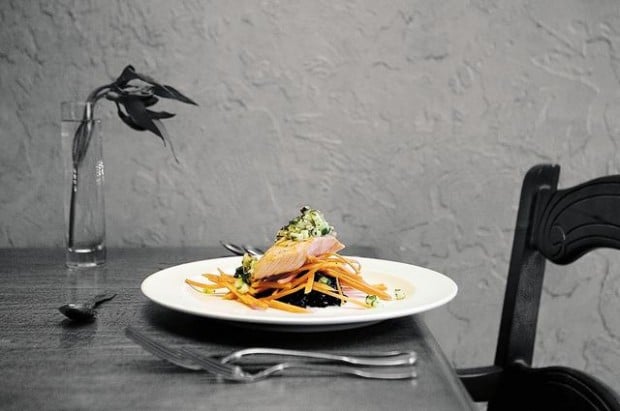
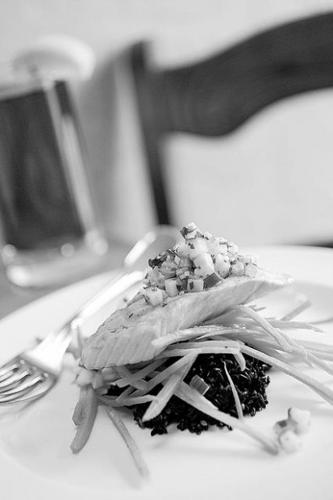
At Canyon Ranch, where the cooks and dietitians specialize in making healthy food taste good, a spicy and rich-tasting Mongolian barbecue sauce, laced with fresh and dried ginger, sake, soy sauce and more of that garlic, is crucial to many fish and veggie entrees. Ranch chefs toss the sauce into simple vegetable stir-fries, dip steamed cabbage rolls in it and use it as a marinade for everything from tofu to an elegant salmon.
And if the prospect of Broiled Salmon with Cucumber Lemongrass Salsa doesn't seem quite Lenten enough for you, you can always eat well but turn off the TV.
"Fasting can be giving up something that has become too important in our lives — things like watching television or going on the Internet," Kicanas said. "All those things can become controlling of our lives. Fasting is a way of letting go."
For more recipes go to
The Roman Catholic Church sets out some specific rules for what Catholics are to do to observe Lent, the 40-day period of penitence and preparation leading up to Easter. Three of those rules cover what is commonly thought of as fasting.
● True fasting. Catholics are enjoined to fast on Ash Wednesday (the start of Lent), and on Good Friday, the anniversary of Jesus' crucifixion. Fasting in the Catholic definition means eating only one full meal that day.
● Abstaining from meat. On Ash Wednesday and all Fridays during Lent, Catholics do not eat meat. Fish is OK, and traditional.
● Mortification. Perhaps the most familiar to non-Catholics is the idea of giving up some indulgence during Lent. It needn't be food, but popular choices do run to things like chocolate and alcoholic beverages.
● Members of Protestant denominations may or may not observe Lent. Some ignore the season because it is not specifically found in the Bible.
Even so, the Rev. Mark Roessler, senior pastor at Catalina Foothills Church, says that periods of fasting and self-denial are firmly rooted in the Christian gospels. Roessler, a member of the evangelical Presbyterian Church in America, notes that Jesus himself told his disciples how to fast. "Jesus said, 'When you fast,' not 'If you fast,' " Roessler said.
For details of Roman Catholic Lenten practice, see the National Conference of Catholic Bishops Web site at www.usccb.org online.