

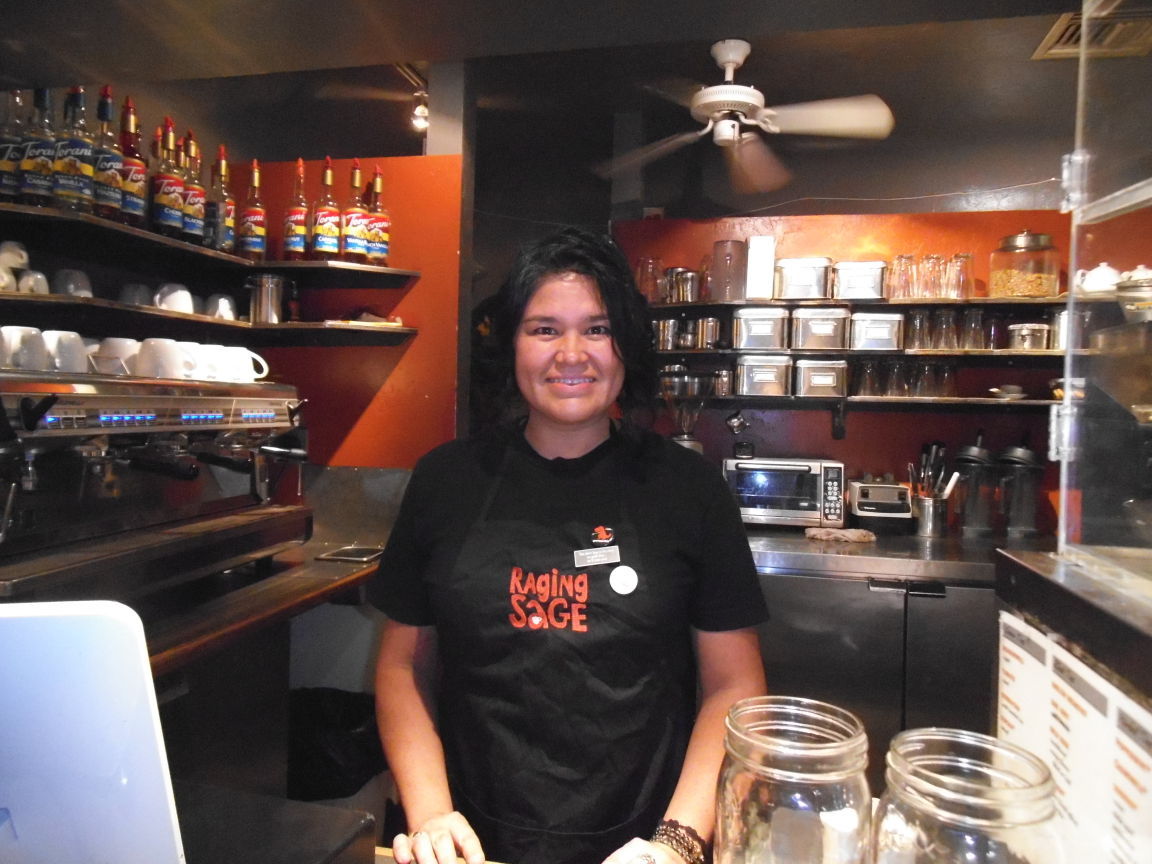
Nothing beats a satisfying cup of joe, whether it be for breakfast, to cap off a delicious meal, or accompany a cookie.
Raging Sage Coffee Roasters, 2458 N. Campbell Ave., counts on that. This December, it celebrates 17 years of serving locally roasted coffee. The family-owned business, started by Roger and Julie Sliker, and daughters Shelby and Jennifer, was inspired by Roger’s love of baking and Shelby’s knowledge of coffee, says Kay Quinn, manager of the café for nearly 10 years.
Quinn has done everything from hosting to roasting during her tenure with the company. We had a few questions:
How do you select coffee beans?
“We work with a broker who makes sure we’re pulling from the best crops at plantations in Africa, Costa Rica, India, Peru and Indonesia, primarily. All of our beans are Arabica; the other widely known bean is Robusta. The difference is Arabica has less caffeine, which helps improve the taste. We look for beans that are earthy, have low acidity and are strong in flavor. Colombian supremo and Sumatra are both very popular with our customers, but we also like to expose our patrons to other beans.”
People are also reading…
What are the differences in the roasting processes?
“The range of roasting degrees defines the type of roast. There’s City, which is the lightest, followed by Full City, which is more of a light-medium roast; followed by Vienna and French, which are darker roasts; and Italian, which is the darkest of the dark.”
What kind of beans are used in the Raging Sage signature blend?
“It’s a blend of South American and Indonesian beans. The beans are roasted three parts French and one part Full City. During the holidays we also have a special blend that uses South American and Indonesian beans and is the only time we offer an Italian roast, which we blend with Vienna roast.”
What’s your favorite type of coffee ?
“Before I started at Raging Sage, it was Sumatra, and then I discovered Monsooned Malabar. This is the only bean we get from India. It is amazing. It has such a strong distinctive flavor. If you love the taste of coffee, you’ll love this bean.”
Is there a key to making a good cup of coffee?
“First, you have to begin with fresh, clean, filtered water. Then use freshly roasted beans. There’s some contention about how to keep beans fresh. For us, we roast small batches of beans daily and then freeze the beans. They’ll be fresh for up to six months. Some people don’t believe in freezing, but greasy beans are the result of off-gassing from beans stored at room temperature. Finally, you have to grind the bean properly for the type of pot you’re using.”
What tips would you offer for home roasters?
“A bad roast is a bean that has been scorched on the outside and not roasted thoroughly on the inside. You avoid this by keeping the beans in motion during roasting. Also, ... coffee beans are extremely flammable.”