


Think cheese in this country, and it's apt to be a yellow brick — maybe a half circle — of some kind of longhorn or cheddar.
Or you may picture a white rectangle of Monterey Jack cheese or a ball of mozzarella. Maybe even a plastic bag of something shredded called "Mexican cheese" — usually a mixture of Jack and cheddar.
But there's a whole world of cheeses — Gouda, brie, Asiago, provolone, Munster, blue, Gruyère . . . the list goes on — with different flavors and different uses in cooking.
The list includes Mexican cheeses, many available here in Tucson.
Our culinary guides are Adolfo (Aris) Cabrera and Karen Hursh Graber.
Cabrera is the executive chef at Doubletree Inn Tucson. Graber is senior food editor for Mexico Connect (www.mexconnect.com).
People are also reading…
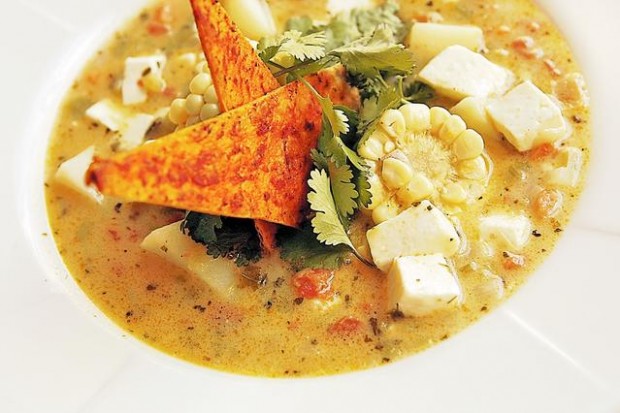
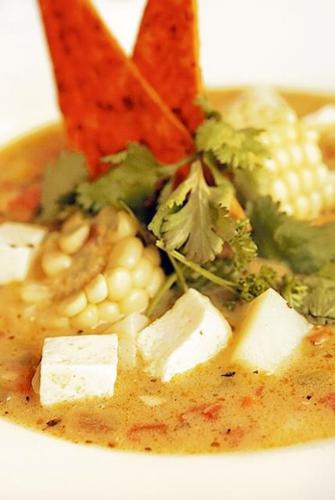
Cabrera also offers a soup recipe, Caldo con Queso, that is great as a first course or as the main course served with a tossed salad and hot tortillas, Mexican dinner rolls or crusty French bread.
Add fresh fruit for dessert and you've got a satisfying dinner for family or guests.
Graber's contribution is a primer on Mexican cheese.
Caldo con Queso
Yield: 8 servings
• 1 tablespoon olive oil
• 1 yellow onion, diced
• 1 carrot diced
• 1 stalk celery, diced
• 1 tablespoon Mexican oregano
• 1 tablespoon garlic, minced
• 6 cups chicken stock
• 1 yellow corn, cut in 1-inch rounds
• 1 red skin potato, diced
• 1 cup tomatoes, diced
• 1 cup roasted green chiles, diced
• 4 tablespoons butter
• 4 tablespoons flour
• 6 tablespoons milk
• 8 ounces queso fresco, diced
• 8 ounces queso panela, diced
Put olive oil into a medium pot. Add onion, carrot, celery, oregano and garlic, and sauté until onions are translucent.
Pour the chicken stock into the pot, and add corn, potatoes, tomatoes and green chiles.
Simmer until potatoes are soft.
In a separate pan, melt the butter and stir in the flour until you have a pale paste. Add this to the soup and simmer for 5 minutes.
Finish the soup by adding milk and all cheeses. Simmer for 2 minutes.
Executive chef Adolfo (Aris) Cabrera
Mexico's new diet
It was the Spanish who introduced cows and goats into Mexico and changed the country's culinary history, says Karen Hursh Graber.
Graber, who has lived in Mexico for more than 20 years — mostly in Puebla in the country's interior — is senior food editor for Mexico Connect (www.mexconnect.com), an electronic monthly magazine.
She has written two Mexican cookbooks and is working on a third. Her latest, "The Cuisine of Puebla," is available online at www.lulu.com/ content/2316360.
Up to the early 1500s, when the Spaniards conquered Mexico, the people lived on vegetables, fruit, fish, fowl and some wild game, Graber says. But then came cows and goats.
And once that happened, milk and cheese weren't far behind. Then it was a brand new ballgame — or culinary concept. The Mexican diet was never the same.
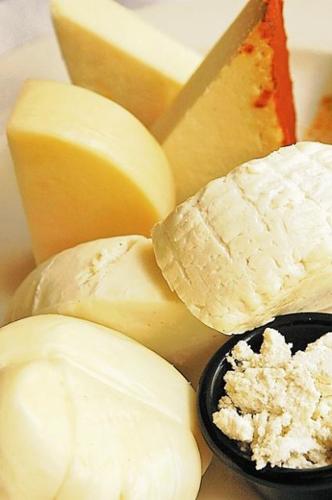
Now, Graber says, whether you go to more modern urban markets or to small village varieties, you're sure to find cheese: in baskets or wooden hoops, rolled like twine into balls, wrapped in corn husks, pressed flat into white discs.
Because Mexican cheese was developed at ranches with cattle descended from Spanish animals, the industry often is steeped in family traditions. And the cheeses reflect the regions where they are made.
Graber, who has been writing food stories for more than 10 years —"a natural consequence of living here," she said in an e-mail interview with the Star — says it's hard for her to pick a favorite cheese "since different cheeses have distinct places in Mexican cooking."
"I really like requesón because it can be mixed with so many different ingredients to make an easy spread for crackers or dip for totopos."
Although not all Mexican cheeses are available in the United States, some local supermarkets carry a variety, including Food City, some Safeway markets and Costco.
Mexican cuisine cheeses
Karen Hursh Graber, senior food editor
for Mexico Connect, a monthly electronic magazine on all things Mexican, lists the cheeses most frequently found in Mexico:
Fresh cheeses:
• Queso blanco — Creamy, white cheese made from skimmed cow's milk and described as a cross between cottage cheese and mozzarella. Softens when heated but doesn't melt. Good for stuffing enchiladas.
• Queso fresco — A spongy white cheese, used to crumble over snacks as well as on enchiladas and taquitos. Usually made of cow and goat milk. A very mild feta is an acceptable substitute.
• Queso panela — Also called queso de canasta because it carries the imprint of the basket in which it is molded. A soft, white cheese most often served as part of an appetizer or snack tray. It absorbs other flavors easily, and is sometimes coated with a garlic-and-chile paste, or wrapped in toasted avocado leaves, to be served with cocktails.
• Requesón — A loose, ricotta-like cheese used to fill enchiladas and to make cheese spreads. You may substitute a mild but not salty ricotta.
Soft cheeses:
• Queso añejo — An aged version of queso fresco. Classified as a soft cheese, but can become quite firm and salty as it ages. Used primarily as a garnish, crumbled or grated over a variety of dishes. Substitute Romano.
• Queso Oaxaca — Also called quesillo. The most popular cheese for quesadillas. A stretched curd cheese, kneaded and wound into balls. Pull it apart into thin strings before using to fill tortillas or melted on cooked food. Substitute mozzarella or string cheese.
Semi-soft cheeses:
• Queso asadero — Specifically a melting cheese, used to make the Mexican fondue called queso fundido, a dish that adapts well to other ingredients and is usually eaten as a late-night supper. Fontina and Monterey Jack are fine substitutes.
• Queso Chihuahua — Also called queso Menonita, after northern Mexico's Mennonite communities where it was first produced.
It is pale yellow and varies from mild to a nearly cheddarlike sharpness. Used in a variety of dishes; especially good in queso frito, a breaded, fried cheese dish. Chihuahua cheese is available outside Mexico, so substitutes shouldn't be necessary.
However, you could use a very mild cheddar or a flavorful Jack cheese in many recipes.
• Queso jalapeño — A smooth, soft white cow's milk cheese with bits of jalapeño chile in it. Serve as a snack or use to make quesadillas.
Semi-firm cheeses:
• Queso criollo — Pale yellow; a specialty of the region around Taxco, Guerrero. So similar to Munster, one easily can be substituted for the other.
• Queso Edam — Although not considered a Mexican cheese, Edam has become such an intrinsic part of Yucatecan regional cooking that it is worth including here. The cheese round is scooped out, filled with a seasoned meat picadillo, and steamed in the oven the same way a custard is prepared. It then is presented whole, accompanied by a salsa roja.
• Queso manchego — Introduced to Mexico from Spain's La Mancha region. Buttery yellow and also popular outside Mexico. Good for melting or serving with fruit or crackers. Widely available in the U.S., but Monterey Jack may be used instead.
Firm cheeses:
• Queso añejo enchilado — Queso añejo with a spicy red chile coating. Aged to the point where it serves as a condiment. A strong feta cheese could be substituted for it.
• Queso Cotija — Named for the town of Cotija, Michoacan, where it originated. A sharp, crumbly goat cheese called "the Parmesan of Mexico." Usually served over beans and salads.
• Queso manchego viejo — As its name implies, this is manchego aged to the point where it hardens with a more intense flavor. Quite often shaved over botanas, appetizers or snacks.
Information from Karen Hursh Graber. See: www.mexconnect.com/en/articles/ 2155-a-guide-to-mexican-cheese-queso-mexicano
Chef knows cheese
Executive chef Adolfo (Aris) Cabrera of the Doubletree Hotel Tucson at Reid Park has lived in the United States since he was 21.
He had come to visit a brother and ended up getting a job in Rio Rico. That led him to Pima Community College, where he studied to become a chef.
He has been with the Doubletree for almost three years, and before that he was a chef in Sedona for nine years.
But it was in his hometown of Tecomán, Colima, Mexico, where he learned to make a variety of cheeses.
And he does know his cheeses.
So when he starts talking about them, explaining their uses, it's drool-time: You just want to run out and buy some.
More important, you want to start cooking with them:
• A quesadilla — that's simple enough. Tortillas topped with melted cheese. You can use fontina or Jack cheese and get tasty results, Cabrera says. But wow! Try some queso Menonita from Chihuahua. Yum.
• Or next time you need a crumbly cheese to garnish a plate of pasta or enchiladas, try one of Mexico's most popular cheeses, queso fresco. Also called queso panela or queso canasta.
• Cabrera calls queso Oaxaca the mozzarella of Mexico. It's also good for quesadillas, he said.
• And queso Cotija, named after a town in the Mexican state of Michoacan, is a Parmesan-like cheese. It's dry (aged) and crumbly, or can be shaved.
These cheeses are usually available at Safeway, Food City and Costco.