


To grow and get strong, do you opt for good nutrition or health-damaging steroids?
Tom Pew feels gardeners too often apply the steroid method to growing plants.
In a Sept. 16 talk to the Tucson Organic Gardeners, he hopes to convince growers to provide natural nutrition instead.
“We know we can increase human performance by taking steroids and growth hormones,” says Pew, whose business, Merlin Organics, helps companies and organizations improve soil for plant growth.
“You can make your plants turn green and grow fast by basically doping them,” he adds, “but you do the same thing to the health and the immune system of the plant as you do to the body.”
Instead of using fossil fuel-based salts fertilizers to add nutrients such as ammonia phosphate and nitrate into the ground, Pew maintains they should create a natural, biological environment that includes bacteria, protozoa, fungi and nematodes.
People are also reading…
Bacteria feed on sugars secreted from plant roots. Protozoa and nematodes feed on the bacteria, which “releases minerals (into the soil) in a form that roots can use,” Pew says.
Many chemical fertilizers contain salts, which kill the microbes in the soil. Its use “in effect destroys this whole biological system.”
That leaves the soil, and the plants in it, vulnerable to harmful fungi, microbes that cause diseases in plants, and attacking bugs.
Pew’s formula for a more organic amendment includes using vermicompost, in which worms are added to the compost pile. He also suggests always having something planted in the soil to continually feed bacteria.
He encourages adding compost tea to plants and surrounding soil.
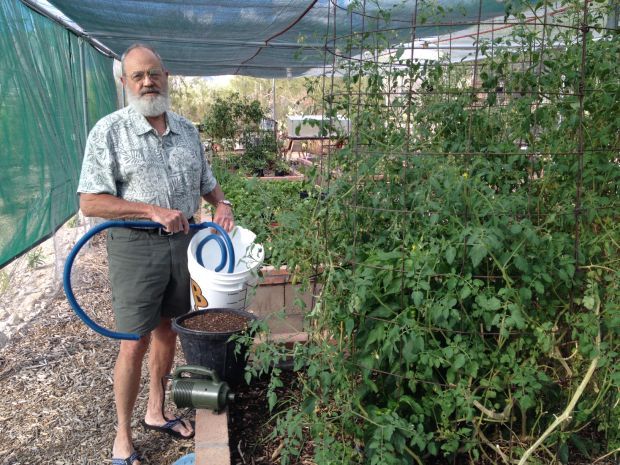
Compost tea, which can be made at home, is water full of microbes that is sprayed onto plants and poured into garden soil.
Gardener Abelino Sanchez swears by compost tea.
“When I started doing that I realized how healthy and strong the plants were,” says Sanchez, who lives on the west side. “It was insane.”
He says his edible plants seem more resistant to pests and produce more fruits and vegetables.
Sanchez plans to adapt the use of compost tea to his aquaponics garden, a system in which plants grow in water that is circulated through a fish tank.
The waste from the fish enriches the water with nutrients.
In his talk at St. Mark’s Presbyterian Church, Pew will demonstrate how to make compost tea and discuss details on creating an organic biological system for home gardens.
“I’m going with the system that the plants want,” he says. “The other system is the system that man has devised using fossil fuels.”