

Now that daytime temperatures are once again in the 90s, it's time to think about ways to conserve moisture in your potted patio plants.
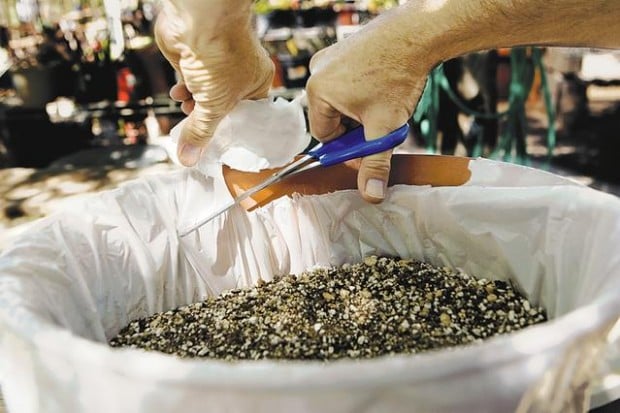
The best way to avoid sudden plant death from dehydration is to line clay pots with a plastic liner. Clay is porous and, as such, will seep moisture out the sides of the pot. The sides won't actually appear wet, but even though you can't see it, water molecules are streaming out through literally millions of tiny pores in the clay.
In the winter, or in wetter climates, it's an advantage to have excess soil moisture bleed off in this fashion, but not here in the desert.
To retain moisture, line clay pots with plastic before planting. Waste paper and trash bags make ideal liners because they come in a variety of sizes. The color of the bag doesn't matter.
Use the bags to line new pots before planting and to repot plants currently growing in unlined clay containers. Just be sure to poke holes in the bag to line up with the drainage holes in the bottom of the pot.
People are also reading…
Be careful when you fill the pot with soil to keep these drainage holes lined up. After filling, trim off the top of the bag to conform with the rim of the pot.
Another advantage to using plastic liners is that they'll prevent salt stains from forming on the outside of the pot. Salts in our irrigation water build up over time and cause a white staining on the outside of clay pots. With the plastic liner in place, water can't seep through and deposit these salt residues.
Some clay pots come pre-painted with a black inner coating used to water-proof the pot sides. This coating is a tar compound and can be toxic to some plants. So if you purchase one of these pots, use a plastic liner. It will provide a barrier between the tar compound and the soil.
Plastic liners will significantly reduce moisture loss from potted plants compared to unlined clay pots.
You should pay close attention, however, when watering. Smaller pots can store less water in the soil, so the plant will need watering more often. The smallest container that I can recommend using outdoors on the patio is one with a 16-inch diameter.
Check the moisture level in pots every day to determine how frequently to water. Use a plant moisture meter, available in garden centers and garden departments of most stores. For potted cacti and succulents, allow the meter to fall into the dry range before applying more water.
For all other plants, keep the soil evenly moist and the meter's indicator needle in the moist range at all times.
As the weather changes from warm to hot, use the moisture meter to check and make adjustments to your watering schedule.
Even with plastic lining, potted plants in full sun are likely to require daily watering when temperatures approach the century mark.
● John P. Begeman is the urban horticulture agent for the University of Arizona-Pima County Extension Center. If you have questions, call 626-5161 to reach a master gardener.