



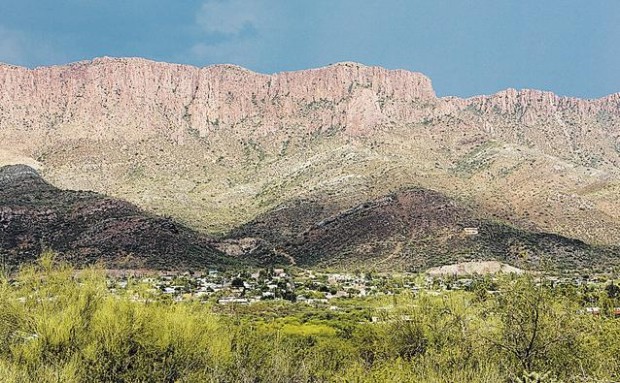

Winkelman. Hayden. Kearny. Superior. Miami. Globe. These communities in the rugged, hard-rock highlands north of Tucson were born of mining — and the ore-rich heritage shows through today, more than a century after the early boom days. While mining history and Old West ways are the backbone of this colorful region, the area is also treasured for its spectacular canyons, pine-topped peaks, quaint downtowns, antique shopping and savory Mexican food. A loop trip through the towns and wild country along the way offers a rich mix of sights and experiences. History buffs, hikers, antique lovers, photographers and those who savor small-town flavor are likely to hit pay dirt on the route. It's possible to make the loop drive from Tucson — 235 miles or so — in a long day trip. But an overnight stay will give you more time to explore. See the cover story inside for a word-and-picture guide to a trove of mining history and timeless natural splendor.
People are also reading…
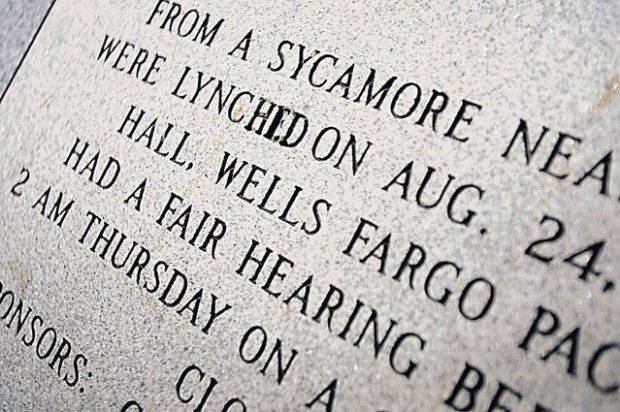
GLOBE — You know you're in a rough-and-tumble Old West kind of town when one of the prominent monuments is a plaque commemorating "The Hanging Tree." • The plaque in downtown Globe notes that two men — L.V. Grime and C.B. Hawley — were lynched on a sycamore tree near the site on Aug. 24, 1882, in connection with a hold-up and murder. • "Saloons were closed and it was an orderly lynching," the plaque notes. • All righty then. Comforting as it is to learn that the lynching was carried out with all due decorum, the monument is a stark reminder that this historic mining region 100 miles north of Tucson had a wild and woolly past.
It's that mother lode of Western history — along with a scenic setting and other attractions — that makes the area a popular tourist destination.
Today, we offer a guide to a loop route that will take you to historic mining displays, craggy canyons, lushly wooded mountains, a fast-flowing river and an archaeological site — not to mention The Hanging Tree monument. Along the way, you'll encounter plenty of small-town color, streets brimming with antique shops and some delectable Mexican food.
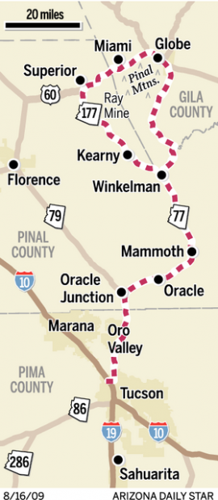
The route follows Arizona 77 from Tucson to Winkelman and continues on Arizona 177 through Hayden and Kearny to Superior. It then follows U.S. 60 — crossing a high point known as Top of the World — to Miami and Globe before returning on Arizona 77 to Tucson.
The basic driving route covers about 235 miles, but side trips in some of the towns and into the pine-topped Pinal Mountains will add mileage. While the loop drive is doable in a day, you'll have a more leisurely trip if you allow two days for the journey and stay overnight in one of the towns or a campground.
An important note: Arizona 77 between Globe and Winkelman has been undergoing road work that's scheduled for completion in early September. A spokesman for the Arizona Department of Transportation says the road is open on weekends with possible delays of up to 15 minutes. On weekdays, the road will be closed from 6 a.m. to 4:30 p.m. until the project is completed. Call 1-888-472-1930 for updated road information before beginning a trip.
Take a tour around these pages for a preview of sights to see along the loop.
Launch
Get an early start from Tucson and savor a drive on Arizona 77 as you head north along the craggy western flanks of our own Catalina Mountains.
As the highway swings to the northeast, you'll pass near Oracle and San Manuel and drive through Mammoth — communities with deep connections to mining.
Down by the river
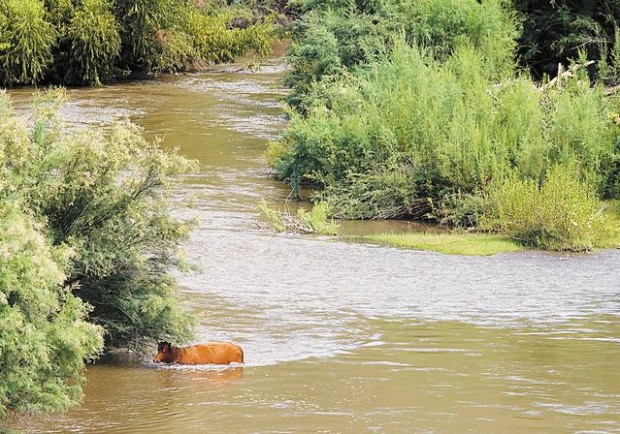
At Winkelman, where the loop part of the drive begins, travelers get an opportunity to experience an uncommon sight: a river flowing through arid desert terrain.
After crossing a bridge over the Gila River, watch for a right turnoff leading downhill to a riverside park. The site is popular with anglers and picnickers, and it offers an appealing rest stop for tourists.
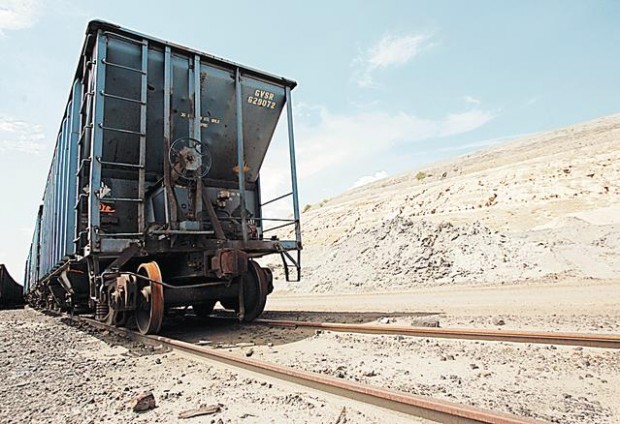
In Winkelman, huge mountains of tailings and a towering smelter smokestack drive home the point that you're now entering the heart of mining country.
Memorial to miners, kin
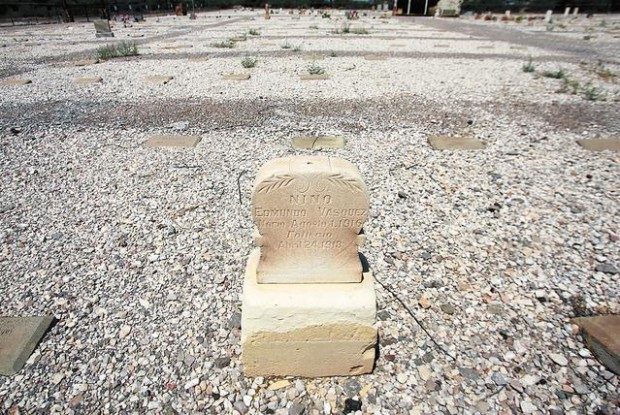
Drive northwest out of Winkelman on Arizona 177, passing more tailings and equipment used in copper mining, and you might notice the Ray Memorial Cemetery on the left side of the road.
The site is quite unlike the green-lawned graveyards familiar to many Americans. This one — in a stark setting consisting mainly of simple headstones set upon a gray-rock surface — was dedicated in 1974 by the Kennecott Copper Corp. after remains that had been buried elsewhere were relocated to the site.
A registry near the cemetery entrance records the names of miners and members of their families who were buried here.
The simple markers speak of lives long and short:
• Grandmother — Dora F. Ganem. 1846-1931. R.I.P.
• Niño — Edmundo Vasquez. August 1, 1916-April 24, 1918.
Coffee in Kearny
You'll taste the flavor of a copper-mining town — and good coffee, too — during a stop in Kearny.
The community, along Arizona 177 between Winkelman and Superior, was founded by the Kennecott Mining Co. to house miners and their families.
Kearny's Web site notes, "The town is a planned community, with most streets elegantly lined with trees, and many houses have similar, yet inviting and unique construction."
A drive through the town's residential neighborhoods suggests an easygoing small-town atmosphere.
Businesses along the main street include everything from a pizza place and Family Dollar to the General Kearny Inn and the Cosmic Coffee Co.
"Our most popular drink is the Mocha Cosmochino," says owner Amanda Kelley, carrying out some cafe chores with her 2-year-old-son, Ashton, in her arms. "It's $2.95 and it's like a frappuccino."
Kelley's husband, David, works as a welder at the massive Ray Mine up the road from Kearny.
Some travelers take one look at the gargantuan open-pit mine and pronounce it an environmental abomination. But Kelley, expressing a common sentiment among Kearny residents, says, "The Ray Mine pit is gorgeous!"
The highway winding northwest from Kearny to Superior goes right past the vast pit. Watch for a public overlook point and pullouts where you can take a gander into the ore-rich depths.
A Superior experience
The quest for precious copper, silver and gold — at sites such as the Silver Queen Mine and Magma Mine — drew miners and their families to Superior and the surrounding area in the late 1800s and early 1900s. Boom times have come and gone, but mining in various forms still plays an important role here.
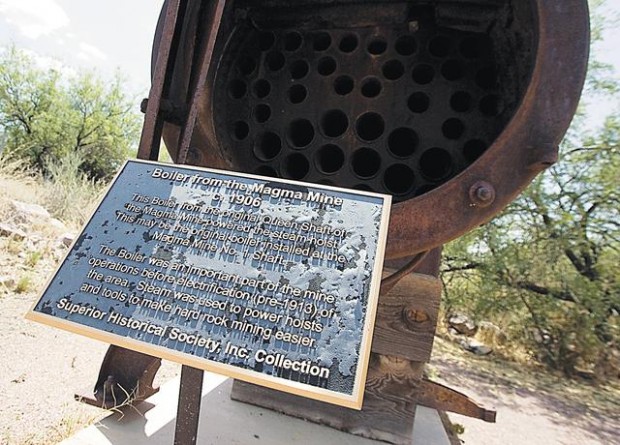
One place to get a close-up look at some of the equipment and artifacts that shaped the town's mining heritage is on the Superior History Trail. It's in a park setting along U.S. 60 in the heart of town.
Displays include a boiler from the Magma Mine dating to 1906, a steam hoist from the Apache Mine in the early part of the last century and a compressor from the Belmont Mine in the 1920s.
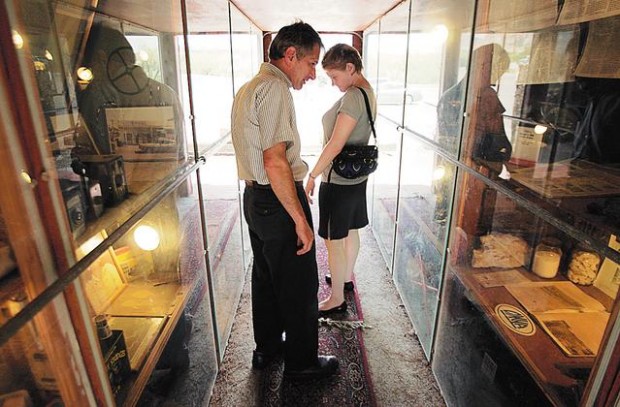
For a somewhat more quirky excursion into the past, drop in at The World's Smallest Museum at 111 Highway 60.
About the size of a small shed, the free museum features an eclectic collection of old newspapers, old typewriters, old cameras, old record players, old campaign buttons and — well, you get the idea — all kinds of old stuff.
"I like seeing all these old kitchen things," including washboards, bowls and irons, says a tourist, Irene Various, from Edinburgh, Scotland. "It makes me appreciate all our modern appliances."
Lunch in Superior?
Restaurants offer fare varying from sandwiches to Mexican food and ice cream. The Buckboard City Cafe, next to The World's Smallest Museum, serves up a hefty Double Cheezburg ($6.78). It comes with a choice of soup or fries.
If you've got plenty of time, you might backtrack through town and follow U.S. 60 west about two miles to the Boyce Thompson Arboretum. It's a sprawling collection of plants that grow in Arizona and elsewhere around the world. For visitor information, go online to arboretum.ag.arizona.edu
To the Top of the World
Continue on the loop by following U.S. 60 northeast out of Superior and into a spectacular canyon with rock formations reminiscent of those at Chiricahua National Monument southeast of Willcox.
Three to four miles after leaving Superior, you'll pass a signed turnoff for the Oak Flat Campground, with 16 free campsites, tables and fire-pit grills.
A little farther up the way, where the highway crosses a 4,600-foot pass, you might see a sign identifying the spot as the "Top of the World." The words "wishful thinking" and "not exactly" come to mind. Even for Arizona, this is not a particularly remarkable high point — and anyone who has traveled in the Himalayas might find the "Top of the World" label laughable.
Still, you'll get some pleasing views from the top and along the drive down from the pass toward Miami.
Miami without the beach
The town of Miami — oh so far from the seaside location of Miami, Fla. — is flanked by the enormous mine sites that have played such an important role in its history. Some copper mining operations continue, but production has been affected by changing copper prices and international competition.
As mining activity has waned, another type of business has experienced a sort of boom in Miami: antique sales.
The town's many antique shops — especially those in the Sullivan Street district, a block north of U.S. 60 — offer almost endless prowling opportunities for those enthralled with treasures from yesteryear.
"You'd be surprised at some of the amazing stuff that walks through the front door," says Larry House, co-owner of the Grandma Weezy's Attic shop at 411 W. Sullivan St. "There's lots of old stuff in a town like this."
House points out one of his most unusual items — a chuck wagon pantry from the late 1800s that he's offering for $2,200.
"It's just a real cool piece," he says.
Down the block and around the corner at Gramma's House of Antiques and Treasures, 123 N. Miami Ave., a shopper, Mike Million, marvels at well-preserved household items from days gone by.
"Antique shops are an escape in time," Million says. "If you reach back in time, I like it."
Globe trotting
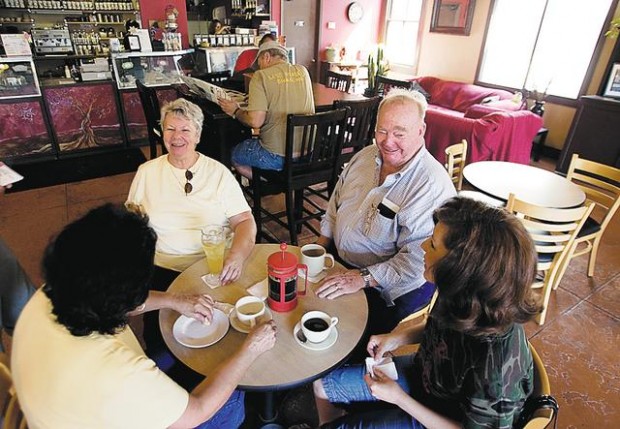
"Welcome to Globe! It's a beautiful place to live!" enthuses Carol Haugh as she shares morning coffee with friends at the Vida e Caffé coffee shop, 157 W. Cedar St.
"I like the small-town attitude, I like the can-do attitude, and I like the people in Globe," says Haugh. "I just love it here. I could work for the Chamber of Commerce!"
Haugh's husband, Joel, and two friends — Gloria Duff, a stained glass artist, and Pat Dodd, gallery manager for the Cobre Valley Center for the Arts — nod in agreement.
Not everyone has been utterly enthralled with life in Globe, of course. Those two fellows who were lynched in such an orderly fashion on The Hanging Tree come to mind. But many locals talk up their hometown as a little gem in the heart of mining country.
"It's a lovely area with a lot of history behind it — mining history and Old West history," says Dennis Chroninger, a retired miner. "You've got a lot of historic buildings in town. And with just a short drive up to the Pinal Mountains, you're in pine trees."
Visitors can get a sense of the historic setting with a stroll down Broad Street in downtown Globe. Have a look inside the Center for the Arts at 101 N. Broad St., and check out a timeline painted on a sidewalk outside the center.
Excellent Mexican food is one of Globe's claims to fame. Among the popular restaurants is Libby's El Rey Cafe at 999 N. Broad St. The Number 7 Combination — with red or green chile con carne, beans and a flour tortilla — costs $6.25 for a hearty serving.
Into the hills
The Pinal Mountains south of Globe, with pine-topped peaks poking nearly 8,000 feet into the sky — offer residents and visitors a cool, green escape similar in some ways to the Catalina Mountains near Tucson.
The Six Shooter Trail, with a name fitting nicely into the Old West theme, is one popular hiking route in the range.
The mountain heights, accessible on unpaved but generally well-maintained forest roads, are known for plentiful wildlife and uncrowded campgrounds.
To reach the mountains from U.S. 60 in Globe, turn onto Hill Street and follow signs toward the Pinal Mountain Recreation Area. Along the way, you might consider a stop at the Besh-Ba-Gowah Archaeological Park, which features a partly reconstructed ancient Indian pueblo and centuries-old artifacts.
Homeward bound
Complete the loop by following Arizona 77 south from Globe to Winkelman and back to Tucson.
Along the way, you'll see some unusual geological formations, in which once-horizontal deposits have been tilted almost to a vertical position.
You'll drive along a lush stretch of the Gila River as the highway approaches Winkelman.
Be sure to call the number in the introduction to this article to check on possible travel restrictions on Arizona 77.
On StarNet: See a slideshow of photos at azstarnet.com/slideshows