
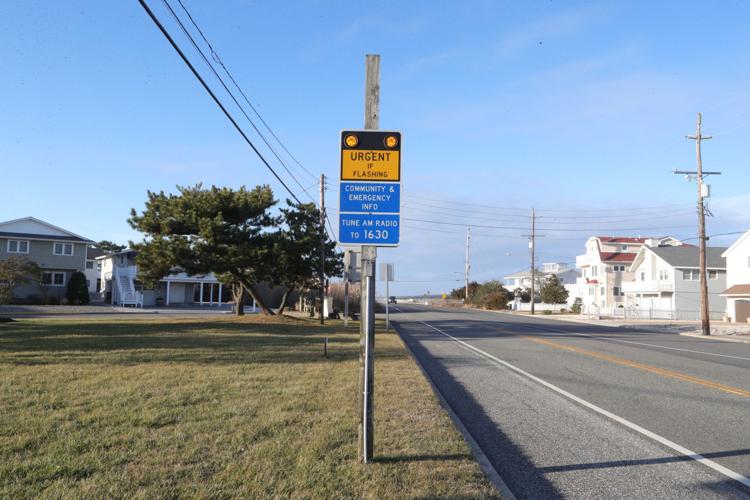


AVALON — Local property owners will notice a drop in their flood insurance premiums this year.
The borough has jumped from Class 5 to Class 3 status in the Federal Emergency Management Agency’s Community Rating System, which evaluates a municipality’s flood mitigation practices and adjusts its flood insurance rates accordingly. The lower the class rating, the greater the discount.
Avalon earned points for developing watershed management and floodplain management plans. Using a 10-class scale, each move toward Class 1 corresponds to a 5 percentage-point reduction in premiums. Avalon’s Class 3 status translates to a 35% reduction.
“This two-level increase by the borough of Avalon in this program is extremely significant and a true reflection on the borough’s best flood mitigation practices, recognized on the national level,” Mayor Martin Pagliughi said.
People are also reading…
Of the more than 1,700 municipalities that participate in the CRS program, Avalon joins Sea Isle City as the only two in the state and 13 in the country to achieve a Class 3 rating. CRS classes are based on 18 creditable activities, organized under public information, mapping and regulations, flood damage reduction and flood preparedness.
SEA ISLE CITY — Water creeped into the center of the street at 40th and Central Avenue during Monday morning’s high tide as minor flooding hit the Jersey Shore.
The result will save Avalon residents a total of $1.6 million in insurance premiums in 2020, said Scott Wahl, the town’s business administrator and public information officer.
“The property owners are thrilled that Avalon has been able to achieve this rating,” Wahl said. “They certainly recognize the financial benefits of a much larger discount on flood insurance, but they also know that resiliency is not a once-in-a-while discussion, it’s an everyday discussion, and the town is reasonably protected in the event of a major storm event.”
The following are tips that you can take to mitigate damage from a natural disaster long before one occurs:
The CRS is part of the National Flood Insurance Program. Implemented in 1990, the CRS was developed by FEMA to encourage communities to reduce and mitigate their flood risk, using reduced flood insurance premiums as incentives.
“Flood mitigation is not a once a year but an everyday practice among our employees, professionals and volunteers,” said Pagliughi. “The CRS program has recognized the borough’s level of excellence in making our community more resilient and protected from future storm events and sea level rise.”
Towns along the Jersey Shore have been able to pool their collective resources to obtain a higher class rating.
The New Jersey Coastal Coalition, which a majority of shore towns in Atlantic and Cape May counties are a part of, including Avalon, hosts monthly workshops to talk about common issues.
“That’s the key to the coalition, the interchange of ideas. ... They’ve (Avalon) been talking about going to a level 3 rating for a few years. ... Going from a 5 to 3 would be pretty much unprecedented,” said Tom Quirk, executive director of the Coastal Coalition.
Tom Quirk, Executive Director of the New Jersey Coastal Coalition, kicks off the first non weather roundup interview of "Something in the Air" podcast. Tom talks about how Hurricane Sandy inspired the "Coalition", what Jersey communities are in on this, how they're helping to lower your flood insurance rates and what the future holds.
The coalition was formed in response to Hurricane Sandy in 2012.
Francis Bruton, an engineer with Mott MacDonald, said some towns may drop down a class in the CRS on May 1, 2023, but not Avalon. Towns in South Jersey received points in the aftermath of Sandy for new advisory base flood elevation mapping, based on the 1% annual chance flood event, according to FEMA.
“The borough was awarded a prorated amount of ABFE credit since the borough regulates to the elevations indicated on the preliminary maps. ... When these points expire, the borough will still be within the range of a Class 3,” Bruton said.

PAGLIUGHI