

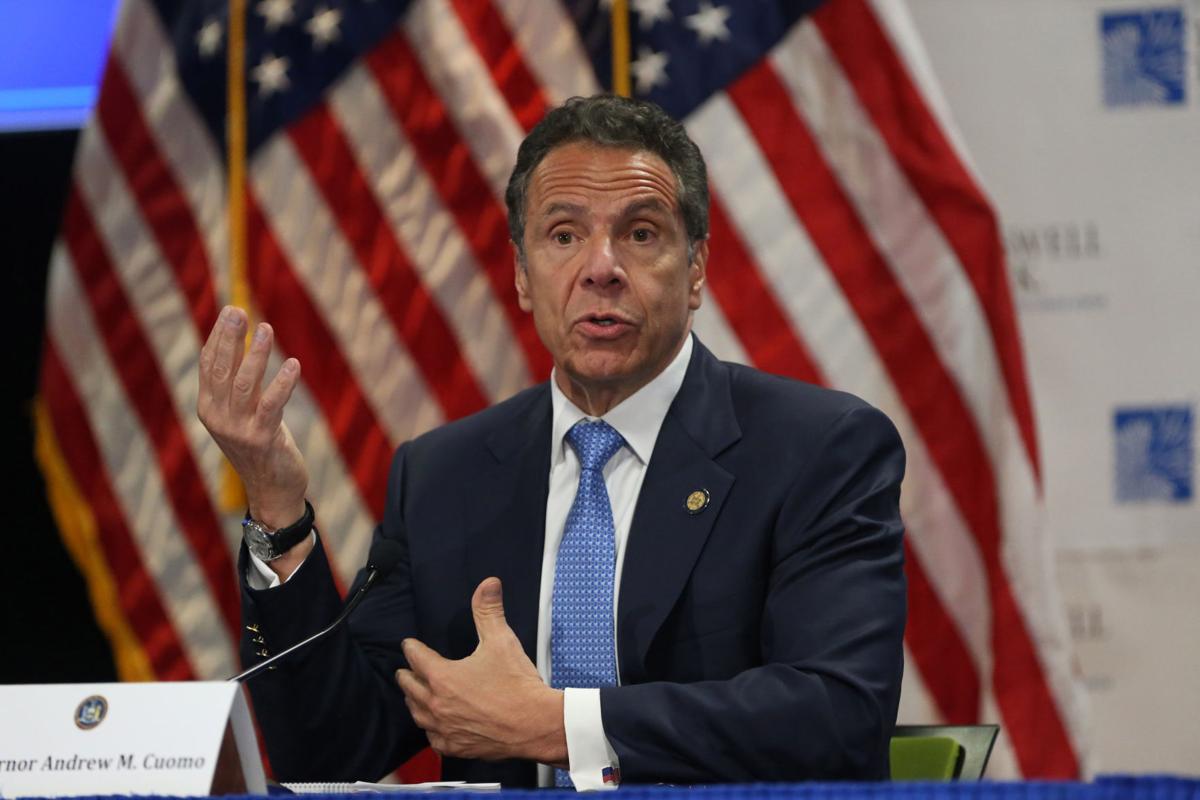
ALBANY – On the day he shut down schools and ordered new economic restrictions in Erie County, Gov. Andrew M. Cuomo had a message for Western New York: You weren’t paying enough attention to Covid-19.
During an often contentious news conference at the state Capitol, and later during an interview with an Albany radio station, the Democratic governor said Covid-19 just wasn’t real for many Western New Yorkers until numbers began spiking more recently.
“They didn’t hear the sirens all night long," Cuomo said on WAMC radio Wednesday afternoon in comparing Western New York in the spring to New York City and Long Island.
“They didn’t have their neighbors die. They didn’t go to the funerals of their niece or nephew," Cuomo said of Western New York residents.

The color-coded zones are part of the state's microcluster strategy, designed to target hot zones while avoiding more sweeping regulations like the state's "pause" this spring that shuttered all nonessential businesses and schools.
The governor’s comments come after at least 980 people in Western New York have died this year from Covid-19 and 25,000 people have tested positive for the virus. Some local officials criticized the governor's characterization.
People are also reading…
Republican Erie County Legislator Joseph Lorigo said on Twitter that for Cuomo "to say WNY has 'never felt the wrath of Covid' is absurd."
Tonawanda Supervisor Joseph Emminger, who endured his own difficult battle with Covid-19 earlier this year, said he knows people in this area “weren’t too happy” with the governor’s remark, given what we endured in the spring and summer.
“There was a lot of pain and a lot of suffering by people here,” said Emminger, a Democrat.

The orange zone designation means businesses designated as "high-risk nonessential," such as gyms and salons, must close.
Erie County Executive Mark Poloncarz, also a Democrat, said he felt the governor was comparing our reality to the more dire situation in New York City. He also acknowledged that more than 750 people have died in Erie County and their loved ones might be offended.
“I think the governor was just talking about a comparison of what New York City and downstate was dealing with,” he said. “We did not deal with that. But that doesn’t, it shouldn’t, limit the pain that people in our community have felt because of the loss of a loved one, or someone who’s dealing with the serious aftereffects of Covid-19. And on behalf of myself and the people of Erie County, we certainly want to offer our deepest condolences to those who’ve lost loved ones. Let’s hope we never have to deal with what New York City did.”
Under New York state's new "microcluster strategy," orange zone hot spots would have to adhere to the following restrictions.
Earlier Wednesday, after high Covid-19 caseloads that have been underway for a couple of months – in Erie County, in particular – Cuomo sent Buffalo and most suburban communities in Erie County into the “orange zone” status. That requires schools to close and go to remote learning until widespread testing of teachers and students is carried out; an end to indoor dining; the shuttering of gyms and hair salons and other personal care services; and restrictions on attendance at houses of worship.
Cuomo likened what is happening today in Western New York to high caseloads recently in South Dakota. Both areas, he said, didn’t fully appreciate the dangers of Covid-19, as seen in New York City when the pandemic first hit.

New York State moved Erie County's yellow zone to an orange zone Wednesday, as well as adding a part of Niagara County as a yellow zone.
“I just don’t think they thought it could ever happen there to the same extent," he said of Western New York.
At the Capitol, where an impatient Cuomo sparred repeatedly with reporters asking him about such things as the spike in Covid-19 cases in New York State that has sent rising numbers of people into the hospital and ICU wards, the governor first raised his theory about what is happening in Western New York.
“Western New York never faced that same reality," he said of the region.
“Western New York never lived the full pain of a Covid spread," he added.
The problem, Cuomo said for many in the region, was: “It wasn't real to me.”
News Staff Reporters Sandra Tan and Stephen T. Watson contributed to this report.


