

If Teresita Urrea lives today mostly as an historical figure, our next folk saint, Jesus Malverde, may never have existed, but he is very much alive in the hearts and minds of his devotees.
According to legend, Malverde was a bandit near Culiacán, Sinaloa around the year 1900. He robbed from the rich and gave to the poor, but was finally betrayed and hanged. The Governor of Sinaloa, it is said, forbade the body to be cut down on pain of death.
According to one legend, a friend of Malverde's was driving a mule team laden with gold from Durango to the Sinaloa coast. When the mules went astray one night, the muleteer prayed to Malverde to find them. They returned, and the grateful man cut Malverde's bones down from where they were hanging and buried them.
Another story has Malverde appearing to an elderly woman named Tomasa and telling her where a pot filled with gold coins was buried. In exchange, he only asked that Tomasa visit his death site. Stories like this get around, of course, and soon the site had many visitors, each with his or her petition. Malverde acquired the sobriquet of el bandido generoso — a title that persists to this day.
People are also reading…
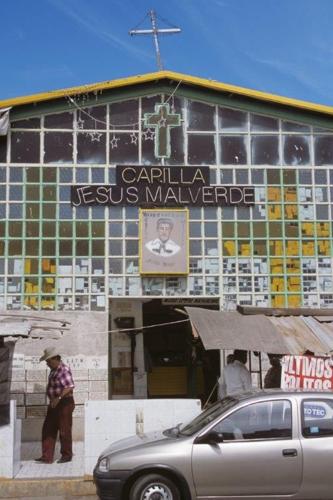
Years passed, and the city of Culiacán expanded to include Malverde's death site. The state government erected a new office building over what had been Malverde's shrine ... but the glass kept popping out of the windows nearest to where the shrine had been. So the state donated land for a new shrine, which still stands, and is a popular local landmark, visited by hundreds of people each day.
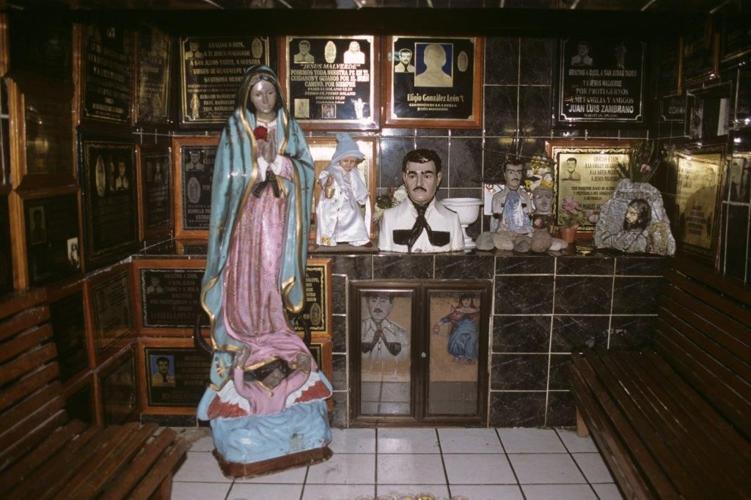
Who visits this shrine? Many different kinds of people, but Malverde has become particularly associated with those in the drug trade, to the point where he is often called el narcosantón, or the “big drug saint.” Many people in that business carry images of him, and he appears in roadside chapels in Northern Sonora, usually on north-south routes. I have been told that the narcotraficantes are very generous with their return gifts to Malverde. This money is then used to provide burial services and other benefits to the very poorest of Culiacán’s poor. And in this way, one man told me, Malverde is still doing what he had always done — robbing from the rich and giving to the poor. However, in this case the rich are Sinaloa’s drug lords!
You can read more about Malverde in Chapter 4 of my book Victims, Bandits, and Healers: Folk Saints of the Borderlands, Tucson: Rio Nuevo Publishers, 2003.


