

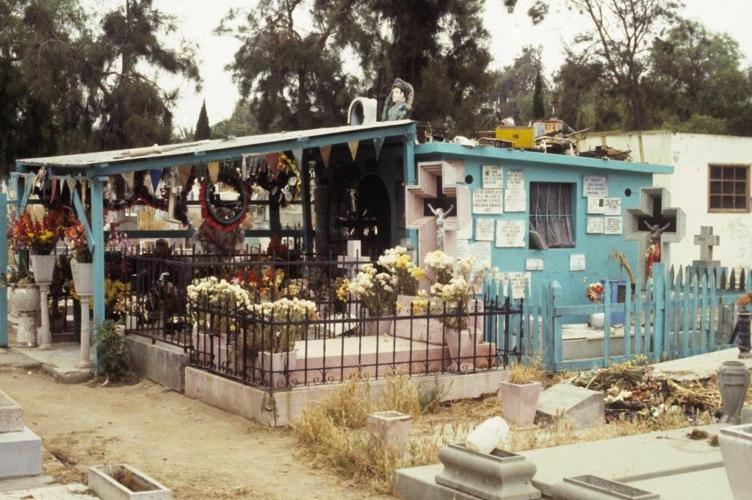

Our third folk saint, Juan Soldado, is better known in Tijuana than he is in the Pimería Alta. His real name is Juan Castillo Morales, and he died in Tijuana, Baja California, on February 17, 1938.
Tijuana in the late 1930s was going through hard times. Prohibition in the United States had ended, and streams of big spenders no longer crossed the border to drink, gamble and otherwise enjoy themselves. Unemployment was rife, little money came into the city, and the social tinder was just waiting for a spark.
That spark arrived on February 13, 1938, when a nine-year-old girl was raped and murdered, and twenty-four-year-old soldier named Juan Castillo was arrested for the crime. A lynch mob gathered downtown, and managed to burn down both the jail and the Municipal Palace. Seeing that the civil authorities were helpless, the army stepped in, tried Juan, and executed him.
People are also reading…
Although some people believed — and still believe — him to be guilty, many saw Juan as an innocent victim of government brutality — an easy point of view to take in Mexico then and now. Folks who left flowers and piled rocks at his death and grave sites apparently noticed that their prayers were answered, and these believers constructed a chapel near his grave, as well as a shrine at his death site in the same cemetery.
Many, if not most, of Juan’s petitioners have problems concerned with immigration. One man, for instance, had lost his wallet containing his immigration papers. He and his wife searched the house for it but couldn’t find it. He prayed to Juan Soldado, and found the wallet … inside his wife’s purse!
Although Juan’s popularity is greater along the California border than here, I have seen his holy cards offered for sale in Tucson and in Magdalena, and there used to be a chapel dedicated to him on the highway just south of Magdalena. The only hand-carved statue of Juan Soldado I have seen was found in a Tucson antique store by an old friend of mine, and given to me. So this young man is a part of the lore of this region.
Readers who remember my essays on El Tiradito may find similarities between the two sets of stories. El Tiradito’s identity is lost in the mists of legend, while we have a name and a face for Juan. But nothing is told about either man except for his death and his supposed miracles.
There are several of these individuals along the western border, and I call them “victim intercessors.” Each one is dead, each one works miracles … and that’s all we know about them. I may tell you some of their stories later.
- Information about Juan Soldado can be found in Chapter Two of my book Victims, Bandits and Healers: Folk Saints of the Borderlands. Tucson: Rio Nuevo Publishers, 2003.
- A more thorough treatment is in Juan Soldado: Rapist, Murderer, Martyr, Saint. By Paul J. Vanderwood, Duke University Press, 2004.


