

This is the first in a series of three blogs about folk saints of our region — individuals to whom some people pray for miracles, but whom the Catholic Church would never recognize as saints.
The first of these is Teresa Urrea (1873-1906), the illegitimate daughter of a wealthy Sonoran hacendado. At the age of sixteen or seventeen, she suffered some traumatic experience, and went into a coma, regaining consciousness only as her wake was being held. After months of slipping into and out of trances, she became a changed person, possessed of great healing powers.
As word of these powers spread, hundreds of people came to the hacienda to be healed by Teresita. The place came to resemble a constant fiesta, with pilgrims coming and going, people selling food, and Teresita in the midst of it all, curing folks and giving advice. Many of those who came were the poorest of Sonora's poor, among them the nearby Mayo Indians, who were under great pressure to give up their rich farmlands. They had recently joined with the Yaquis in rebellion against the Mexican Government and were in a state of ferment.
People are also reading…
Then in May, 1892, Mayos attacked and sacked the town of Navojoa, reportedly crying "Viva la santa de Cabora." That was enough for the government, who ordered Teresa and her father into exile later that year. They came to Arizona, settling first in Nogales, and finally in Clifton.
Meanwhile her messages of independence from Church authority and calls to “respect and love one another” were being listened to, with sometimes disastrous results. In September of 1892 the town of Tomochic, Chihuahua, which had been having its own troubles with both Church and State, formally seceded from the Republic of Mexico and declared itself “for God and the saint of Cabora.” This threat to the social and economic stability of the Diaz regime was put down brutally, as were many similar threats then and later. Some of these abortive attempts at revolt invoked the name of Teresita, who may herself have had little or nothing to do with encouraging them.
Meanwhile her reputation as a healer spread. She became national news after she healed a three-year-old boy afflicted with spinal meningitis. A San Francisco businessman offered her a large sum to make a national healing tour, which left her tired. She returned to Clifton, and died of tuberculosis on January 11, 1906.
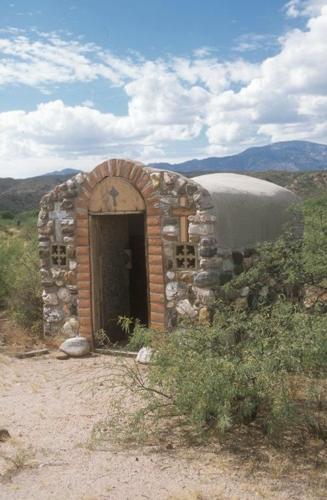
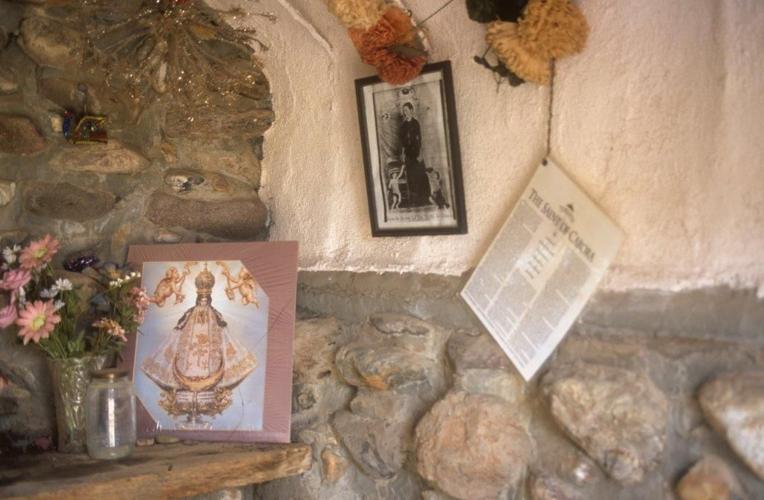
What is her legacy? Mostly that of an historical figure. I know of one chapel dedicated to her, but as far as I can find out, few invoke her aid in Sonora or Arizona.
Accounts of Teresa Urrea may be found in the following books:
- Griffith, James S. Victims, Bandits, and Healers: Folk Saints of the Borderlands. Rio Nuevo Publishers, Tucson, 2003. Chapter 3.
- Holden, William Curry. Teresita. Owings Mills, Maryland: Stemmer House, 1978.
- Urrea, Luis Alberto. The Hummingbird’s Daughter. Little, Brown, 2005.


