

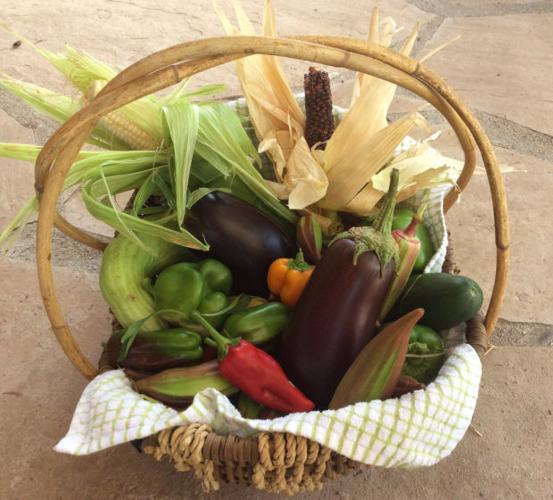
Harvesting corn is like opening your Christmas stocking: maybe there’s a beautiful diamond bracelet — or maybe just a few lumps of coal.
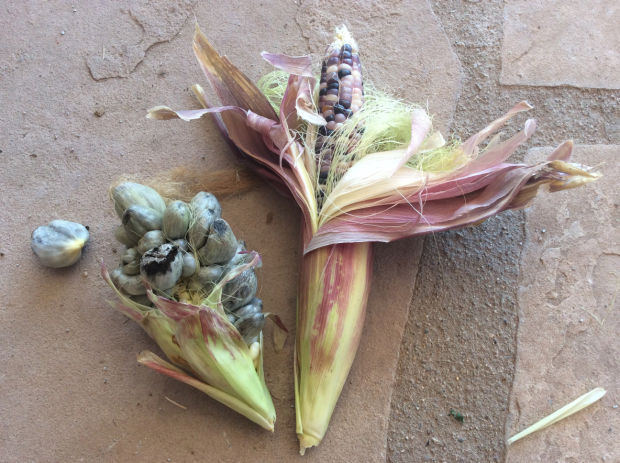
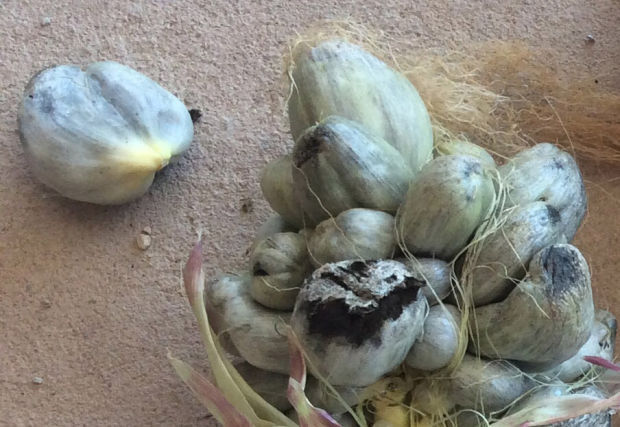
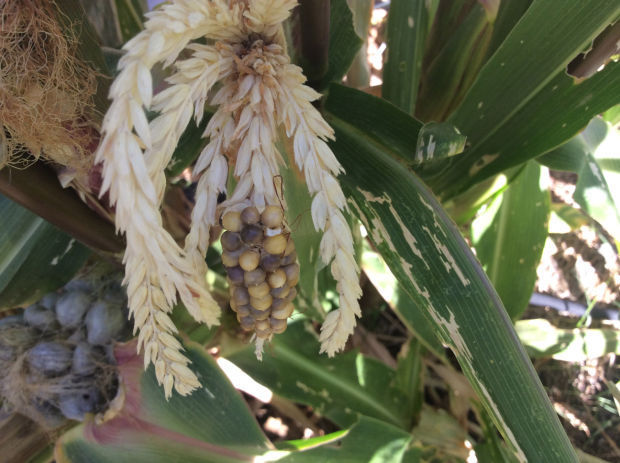
Each ear is unique; some are sweet and tender, others are filled with mutant black growths that look like moldy garlic.
I was dismayed at first to find so many ears marred by this black plague, but then I was told it's not just edible but is considered a delicacy — a delicacy that the Aztecs and their descendants have been eating for centuries in Mexico. Hence the name “Mexican corn truffle,” which sounds a lot better than “corn smut.”
According to Chad Borseth, Tucson’s go-to guy for corn questions, “the blight you are having is a desired (in some circles) fungus called corn smut. It is a highly sought after fungus in this area and sold as huitlacoche, (wee-tlah-KOH-cheh),” he said via email.
People are also reading…
As a first-time corn grower, I didn't know what to expect. It turned into a pretty cool science experiment, involving several varieties of squash and beans as well. (More on that later.)
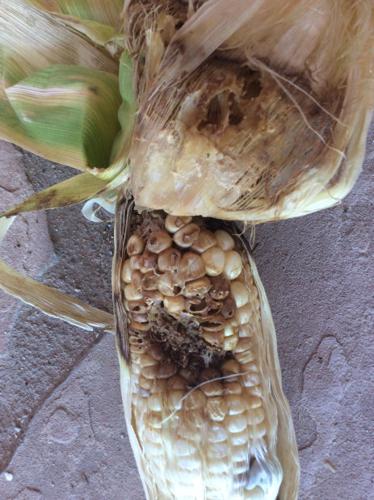
The use of fish emulsion and compost tea brought a pesky house fly invasion that finally ceased with the onset of cold weather. And then came the biggest disappointment: finding ears filled with worms and decay. Ick.
But what surprised me the most about my backyard adventure was how soothing it was to sit outside in the middle of the circular cornfield.
On many warm summer nights, I would sit there after work and nurse a glass of wine. With a flashlight, I’d watch leaf cutter ants making their way among the plants. Mostly they would tackle dead matter like alfalfa straw but I also caught them chowing down on squash blossoms.
With a flashlight, I could see just how much pollen was spewing across the field, and for a while a fat spider would keep me company, moving her web each night to a different spot.
So here’s what I learned:
- There will be fungus. Why? Perhaps it’s all the rain we had. Or maybe some soils have more fungus among us? Either way, you just have to make the best of it. If you don’t acquire a taste for it, give it to someone who loves it. They’re out there.
- Baby corn is great. The tiny, immature ears can be eaten whole. I don’t know why they didn’t develop, but again you have to make the most of it.
- Watch the timing. If you plant popcorn/polenta corn and sweet corn near each other, be careful with the pollination times, as you don’t want them cross-pollinating. The sweet corn ears had occasional kernels of purple that were too crunchy and tough. (Remember, corn is wind pollinated.)
- Pests love corn as much as we do. Corn earworms damaged many, many ears. Sometimes just the tips were eaten but others had been munched throughout the cob. (See gross photo above.) Next year, I’ll try spraying natural BT or dabbing mineral oil on the tips as they develop.
- There will be a next time. Growing corn is addictive and I'll plant it in the spring and again with the summer monsoons. It requires a lot of space but it's worth it.


