

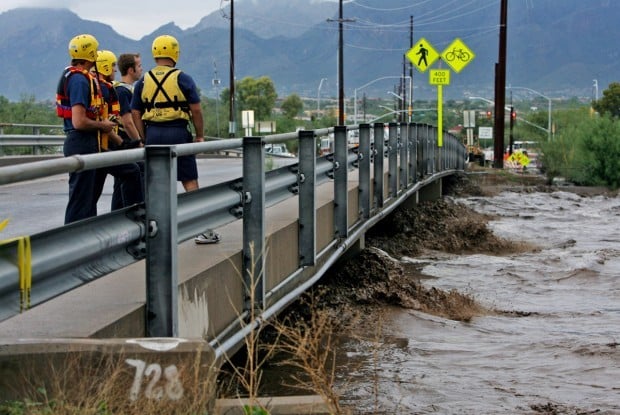
Note: The National Weather Service has proclaimed this Monsoon Safety Awareness Week, and each day the Star will examine a different, potentially dangerous weather concern that is part of the desert's rainy season.
It's ironic that we here in Arizona worry about rain — we're lucky if we see just 12 inches fall on our parched ground in one year. Half of this total, however, typically falls during monsoon. And we in Pima County have a history of major flooding events.
What is a flash flood?
It is a rapid rise in water that occurs after a heavy rainfall. A flash flood typically involves high-velocity flows of water combined with mud, trees, rocks and other debris. In Tucson, flash flooding is common in washes, arroyos, drainage channels and low-lying street crossings that are normally dry.
People are also reading…
Flash floods are the main weather-related killer in the United States. Here in Arizona, nearly one-third of all weather-related fatalities are attributed to floods. So, what can you do to stay safe? First, recognize the dangers.
Flash flooding dangers
Pima County has lots of low-lying crossing and dips that are known to be impassible when under water. It's best to learn which ones are on your typical routes, and what some possible alternatives are, before the first monsoon rainfall. If you notice a road, wash or storm-drain that requires maintenance, then contact the City of Tucson Stormwater Managment Program. In Pima County, call 243-1802. If major flooding covers a roadway in Tucson, then report it to Streets & Traffic Maintenance by calling, 791-3154. For road closures in Pima County, call 740-2639.
Realize, also, that flooding can occur miles downstream from a rain event. It could take hours for runoff to reach into valleys and deserts, where the hardened soil can't absorb the intense rainfall. Washes, especially, are extremely dangerous places to be near after a heavy rain. In this video, for example, the Silvercroft Wash at Grant Road becomes flooded in just 40 seconds!
Here are some additional ways to stay safe during monsoon:
- In general, avoid areas that are subject to flooding and do not attempt to drive over a flooded road, stream or bridge. As little as six inches of flowing water can knock you off your feet. Most vehicles can be swept off the road in just 18 to 24 inches of water.
- Before you head out, check the weather forecasts. Be willing to change your plans if storms threaten.
- Do not drive around barricades in flooded areas. Under Section 28-910 of the Arizona Revised Statutes (nicknamed the "Stupid Motorists Law"), you could be financially responsible for the rescue costs if you knowingly drive into a flooded area and require assistance.
- Stay away from washes. Don't allow children to play in or near them, and don't park a vehicle within them. Camping within a wash is never a good idea.
- Use extra caution at night. About 75 percent of fatalities occur after dark, when it is more difficult to recognize the dangers of flooding.
- Stay alert to the dangers of flash flooding when hiking in canyons. Even when it is not raining where you are, flash flooding can develop from distant showers or thunderstorms.
- If you see someone fall into a flooded wash, river or arroyo, don't jump in or try to save the victim — you could become a victim, too. Call 911 immediately. Swift-water rescue teams will respond quickly.
- Sign up with the Tucson Urban Area Security Initiative to receive local emergency and weather alerts on your cell phone. You choose the types of alerts you want to receive, and select if you will need assistance in the event of an emergency evacuation.
- Do you need flood insurance? Check with the National Flood Insurance Program and Pima County.
Be weather savy about watches, warnings and advisories
The following flood-related advisories are released by the National Weather Service in regard to floods
- Hazardous weather outlook: A public alert that hazardous weather, including flooding, could develop. This product provides information to those who need considerable lead time to prepare for an event.
- Flood/Flash flood watch: Issued when a flood event is forecasted to happen in the next 48 hours, but where it will happen or when is uncertain.
- Flash flood warning: This advisory is issued when flooding is imminent. Those in the warned area should take immediate precautions to protect themselves and their property.
- Flood warning: Issued when there will be longer-term flooding of specific geographic areas or rivers, and threats to property and lives.
- Small-stream flood advisory: This product is generally issued when there will be non-life threatening flooding near river or stream flows, or ponding of water in urban areas.
- Flood/Flash flood statement: After a flood or flash flood warning has been issued, this advisory provides follow-up information on the event.
Embrace the rain
Now that we've covered the potential hazards of monsoon, let's check out its benefits:
- This is a great time of year to have a water harvesting system in place at your home. The City of Tucson provides this guide on how to get started.
- Have a 4-inch manual rain gauge? Sign up with the Community Collaborative Rain, Hail & Snow Network (CoCoRaHS) to add your observations to this organization's database, which is supported by the State Climate Office for Arizona and the National Weather Service.
- Get accurate rainfall totals from around the area at the Pima County Regional Flood Control District website.


