
A reporter asked Gov. Kathy Hochul last week whether she set metrics – say, a high vaccination rate or a low hospitalization number – for lifting her statewide mask mandate.
“What is your message to those small business owners that say that this is going to crush them?” the reporter asked.
Minutes earlier, Hochul had delivered a presentation describing the impending spread of Omicron and the “rough ride” New York will face this winter. Her response was terse. “I’m just curious: Has anybody heard what I’ve said today about the situation we’re in?” Hochul said. “This is a crisis. This is a health care crisis, and people are going to die. It’s not hyperbole. That is based on the facts that are in front of us right now.”
The governor isn’t alone in her frustration. Our pandemic lives are marked by masks and restrictions, positive test percentages and hospitalization data. And now by Delta and Omicron, words that once would have made you think of a fraternity house, but now describe the Covid-19 variants that infect our reality.
People are also reading…
Alluding to a winter surge that had already begun, Hochul warned at her news conference, “We are in for a rough ride."
In this “Pandemic Lessons,” we examine what those facts may mean for our winter.
What’s happening that has Hochul – and other public officials, along with medical experts – speaking in such strong terms?
Delta was already surging in New York – and especially here in the western part of the state – and now the Omicron variant is spreading fast. On Dec. 16 – the day Hochul spoke – 21,027 people tested positive in New York. That’s an all-time record, topping the previous high of 19,942 last January.
Testing is more available now than it was a year ago, so the comparison isn’t direct; nonetheless, the spike is sharp. Consider: New York’s percent positive rate was 7.98% on Dec. 16. One week earlier, it was 4.17%.
"It looks like this will get worse before better," said Dr. John Sellick, an epidemiologist with Kaleida Health, Veterans Affairs and the University at Buffalo. "We are getting much more data now that shows Omicron spreads even more efficiently than Delta. Couple that with the fact that we are headed into another holiday and weather has pushed us indoors."
Americans face an uncertain and anxiety-filled holiday season for the second consecutive year, as the highly contagious Omicron variant threatens to intensify an already alarming surge of COVID-19 cases. Gavino Garay reports.
The rise wasn’t a surprise. Public health officials saw it coming with the arrival of the more contagious Omicron, and protective protocols were already being put in place. On Dec. 10, Hochul announced a statewide masking mandate for all indoor public places, which essentially gives businesses a choice: They either need to require everyone who walks in the door to be vaccinated, or require everyone to wear masks.
The National Football League, meanwhile, detected a surge in Covid cases among its players last week. Many of those cases were mildly symptomatic or asymptomatic and found in people who are fully vaccinated. Those facts suggest Omicron is the culprit; the newer variant has been found to be milder, but also better at slipping past vaccine-induced protection, especially when someone is several months out from their second shot and hasn’t had a booster.
“We’re entering a new phase of the pandemic,” said Dr. Allen Sills, the NFL’s chief medical officer, during a media briefing. “Something that’s different than what we've seen before, where really the rules have changed.”
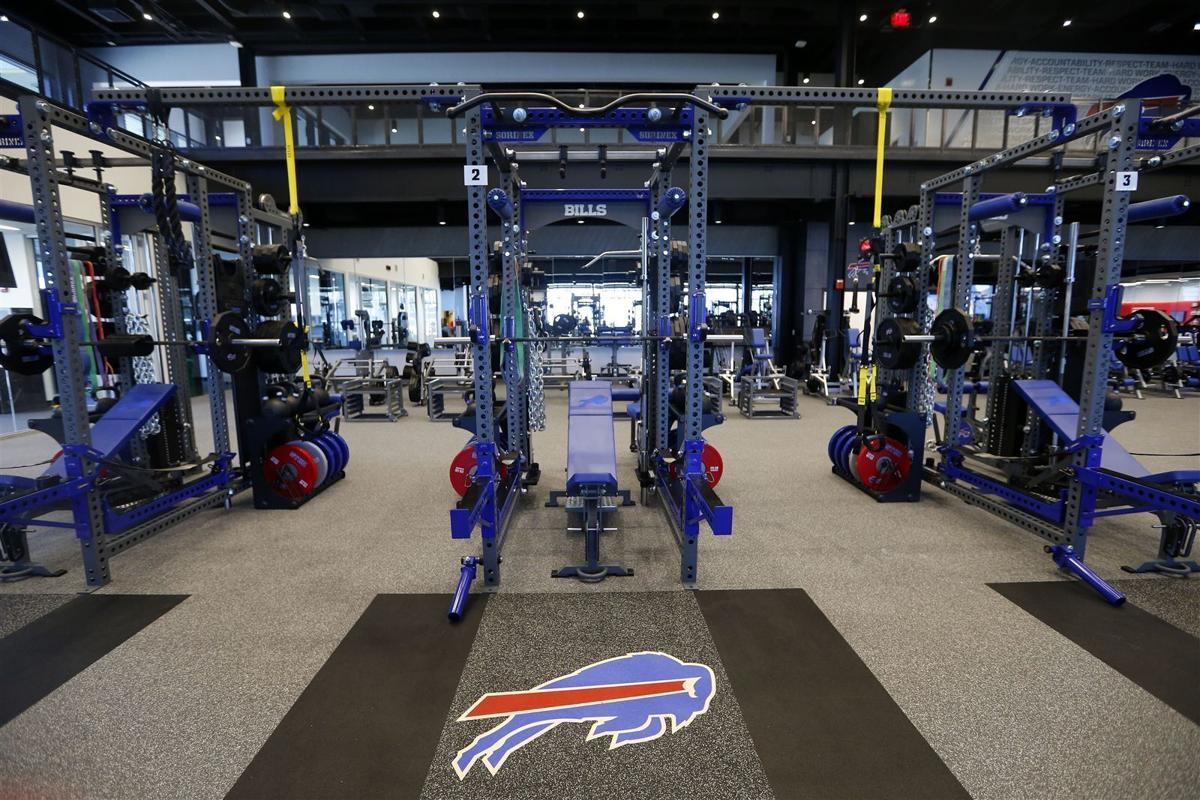
Heading into this past weekend, the league postponed three games and heightened its Covid protocols. That includes mandatory masking for all personnel, regardless of vaccination status, as well as halting group meals, capping capacity in weight rooms, limiting activities outside of the team facility and disallowing visitors on team travel.
The league also updated its requirements for returning players who have tested positive to active status. In a move that can be construed as a small but significant step toward learning to live with the virus — and a nod to what scientists and doctors have learned about the virulence of Covid — the NFL set up rules that may return some fully vaccinated athletes back to active status even as soon as a day after testing positive.
“The dynamics of the pandemic have changed for us,” Sills said. “I think that's going to cause us to challenge some of our previous assumptions and also update our strategies and our solutions.”
That’s great for the NFL, but is a multibillion-dollar football league’s approach to Covid applicable to the rest of us?
Yes. Sports leagues like the NFL and the National Basketball Association, which shut down quickly at the start of the pandemic and also created a “Covid bubble” in the summer of 2020, have enormous resources. That allows them to project and detect what’s coming, and also to conduct research and create protocols that can be informative for the rest of the world.
With that in mind, here are some relevant highlights that Sills shared with reporters:
• Testing in the NFL indicates that Omicron is spreading fast and will “become the dominant variant in our country very quickly.” It also verifies a widespread concern of doctors and scientists: Vaccine-induced immunity “is going down,” Sills said, for people who were immunized several months ago. In a study of the antibody levels of 572 fully vaccinated league personnel, Sills said, “we have a lot of people in the NFL who have fairly low levels of antibodies.” The people with the highest levels, he added, were those who received booster shots and those who had a recent Covid infection. “Boosters clearly restore and get you to that highest level of antibody that we see on the chart,” Sills said.
• The league is encouraging all its personnel, including players, to get booster shots. “We think it's our best protection against this new variant, against Omicron,” Sills said. “It certainly remains our best protection against Delta. People who are boosted are going to be less likely to test positive. They're going to have less severe illness. We think (there) is reasonable data that they are less likely to spread their illness as well.”
Sills noted that the boosters are safe and that “significant” side effects “have not been seen either in (the) NFL population or in other populations,” and that the risk of severe symptoms and outcomes is “far more likely” to come from a Covid infection than from vaccination or getting boosted. He also offered encouraging information on the durability of the boosters, noting that antibodies “don't seem to wane as quickly after you've been boosted as they do for the native vaccine.”
What about the mental side of this? We’re heading into the third year of the pandemic, and to borrow the governor’s words, there’s seemingly no end in sight to this “rough ride.”
Acknowledge what you can’t control, and then take charge of what you can.
“We don’t have control over other people’s behavior,” said Karestan Koenen, a professor of psychiatric epidemiology at the Harvard T.H. Chan School of Public Health, in a September interview with The Buffalo News. “The challenge with Covid is, ‘My staying healthy depends on people around me as well. I may influence other people, but I don’t have control over them.’”
You do, however, have control over wearing a good face covering, like a surgical mask or N95 respirator, which are effective if worn well, and over getting vaccinated or boosted. “Get that booster,” Sellick said. “(It) will provide protection against the bad outcomes.”
You also have control over your actions: who you’re with, where you go, and how much risk you’re willing to accept.
“You know there’s more risk indoors than outdoors,” Koenen said. “You can make decisions in operating your life around that. It gives us at least a little more sense of control … It’s still a pretty big stressor, but we do have more tools to manage it which will help us feel less distressed.”