Another Tucson neighborhood has officially disposed of a racist relic lurking in its founding documents from the dark days of institutional housing discrimination in America.
Residents of the historic San Clemente subdivision near Randolph Park recently amended their neighborhood covenants to remove race-based restrictions that were outlawed decades ago but continued to show up in their property records.
When this collection of curved streets and Spanish revival homes south of Broadway between Alvernon Way and Columbus Boulevard was first developed in the early 1930s, its property covenants only allowed owners and residents “of the White or Caucasian race.”
People are also reading…
Similar rules also governed well over 200 other neighborhoods in Tucson and thousands more nationwide during the first half of the 20th century.
The Fair Housing Act of 1968 finally banned race-based property restrictions once and for all, but those unenforceable rules have remained on the books in many neighborhoods, largely because of the difficulty and expense involved in amending private agreements among homeowners.
The new interactive map compiles 56 years of race-based neighborhood covenants.
A law, passed by the Arizona Legislature in 2024 with overwhelming bipartisan support, made it easier to strike such outdated and illegal language by giving the governing boards of neighborhood associations full authority to get rid of it without a vote of their full membership.
Several Tucson neighborhoods have since used the law to amend their founding documents.
The residents of San Clemente filed their notarized paperwork with the Pima County Recorder's Office on April 10, then celebrated with a community-wide picnic on April 12.
One of the leaders of the effort, Margot Veranes, said the filing was the culmination of about four years of research and petition gathering. “A lot of neighbors really stepped up to collect signatures,” she said.
They ultimately tracked down six, slightly different sets of covenants, conditions and restrictions that had been recorded for portions of the neighborhood between 1927 and 1940. Local real estate attorney Jason Smith volunteered his time to help the neighborhood craft amendments removing the race restrictions from all six sets of covenants, Veranes said.
The goal was to recognize and reject the past, not erase it.
The amendments spell out the offensive language to be removed from the original documents, followed by an acknowledgment by current homeowners of “our community’s racist and exclusionary history” and other forms of housing discrimination, which have “resulted in enduring, harmful inequities in San Clemente and our broader community of Tucson.”
The amendments go on to state that repealing the illegal and unenforceable property restrictions was necessary to “send a message of welcome to all future homeowners that San Clemente abhors discrimination and stands in favor of inclusivity.”
In 2023, researchers at the University of Arizona published an analysis — and an interactive map — of more than 750 local subdivisions built between Arizona statehood in 1912 and 1968. More than a quarter of them had discriminatory covenants on file with Pima County.
Many San Clemente residents, Veranes included, had no idea such racist language was still on the books. Others remembered the shock of finding the old restrictions — or having them pointed out by their real estate agents — in the thick stack of papers they had to sign when they closed on their homes.
As far as Veranes is concerned, the petition drive was a positive exercise in education, understanding and unity for the neighborhood.
“We all feel really proud of this achievement, especially in the context of growing feelings of political division,” she said.

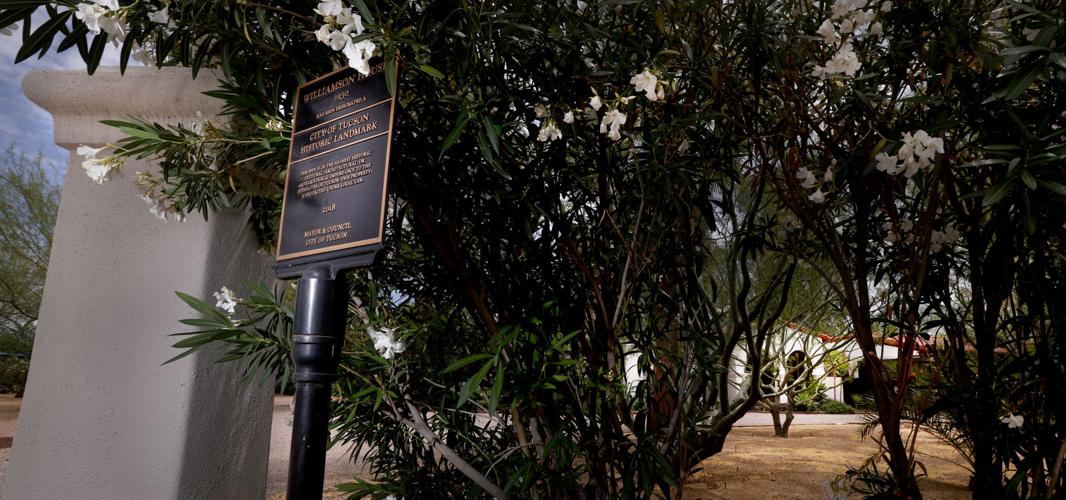
A plaque outside the house at 39 S. Palomar, in the San Clemente neighborhood, designating the Williamson House a City of Tucson Historic Landmark.
Fellow resident Leslie Cohen agreed. “Collecting signatures to remove the race restriction helped current residents learn about and understand how legal mechanisms perpetuated housing segregation in our community,” said Cohen, who also helped spearhead the amendment process.
In the end, they collected signatures from the owners of 163 of the neighborhood’s 274 single-family homes.
For most, it was a symbolic act, but Veranes said a few people told her they were increasingly worried about what could happen in today’s climate if the Fair Housing Act were to be weakened or struck down by the courts.
Among those who signed onto the amendments is the current owner of a historic, Spanish revival home in the neighborhood that was built in 1930 by Stanley Williamson, a prominent local developer credited with creating and naming Tucson's Miracle Mile of motels and commercial businesses.
Williamson also developed the San Clemente neighborhood and other subdivisions with race-based restrictions that only allowed white people to live there. He considered it a selling point, as noted by the Arizona Daily Star in a 1936 article about the San Clemente development: “In all of the Williamson developments there are rigid restrictions against undesirable buildings and inhabitants” that keep the properties “at a high value year after year, he pointed out.”

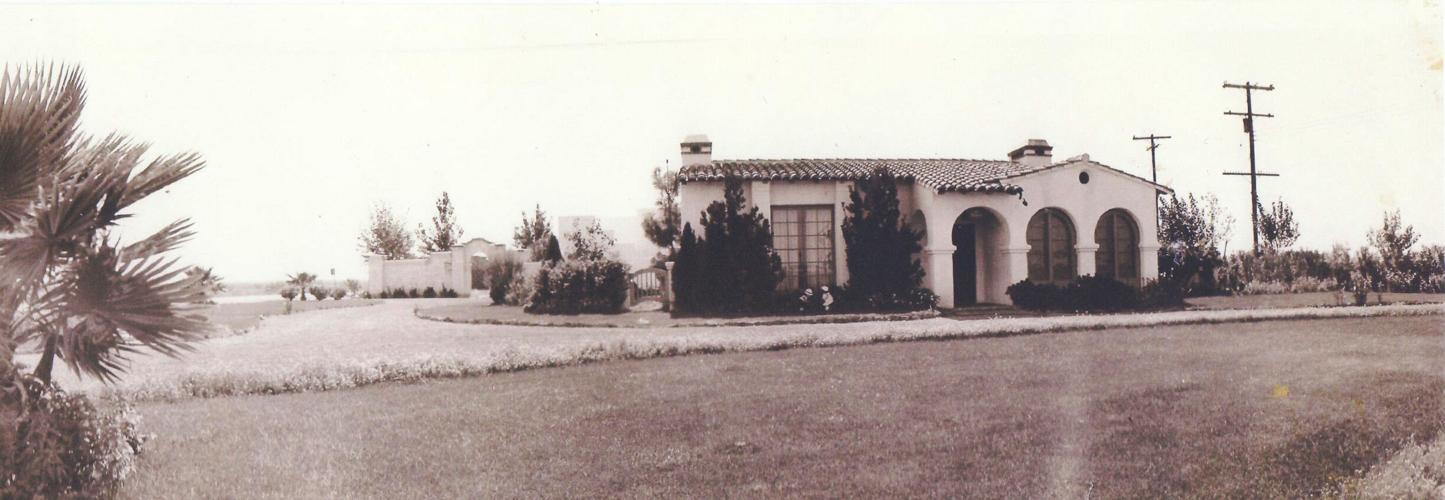
Stanley Williamson's house on Palomar Drive in the San Clemente subdivision, circa 1931.
Williamson also worked as a property valuator for the Federal Housing Administration at a time when the agency actively fueled housing discrimination and segregation by preventing minorities from getting home loans or mortgage insurance, backing the development of white-only suburbs and even suggesting boilerplate language for racist covenants.
The City of Tucson designated Williamson’s home on Palomar Drive as a historic landmark in 2018.
It’s a beautiful house in a beautiful neighborhood, said Veranes, who has lived in San Clemente since 2011. She loves it there so much that she helped organize a fund-raising home tour in 2017, and when her growing family needed more space, they moved to another, larger house in the same neighborhood.
But Veranes is also painfully aware that she, as a woman of Cuban ancestry, and her husband, who is Black, would not have been welcome in the San Clemente of just 60 years ago. As you might imagine, amending the neighborhood’s covenants was a bit more personal for them.
“It doesn’t feel like ancient history,” Veranes said. “It really struck a chord with our family.”



 Researchers map Tucson's history of race-restricted neighborhoods