
Brian Edwards used to see a large neon lantern when he looked across the street. Now, he sees nothing but darkness.
“I was really disappointed when I saw the big, neon lantern get taken down,” said Edwards. “It had a lot of charm to it.”
He was talking about the Ye Olde Lantern restaurant sign on North Oracle Road. The restaurant closed in 2006 and the neon sign was taken down in 2007. It was saved from the junk heap and was last in the backyard of a residence.
Neon signs were a noted part of Tucson’s history. The glow from these signs once filled main corridors such as Miracle Mile, Oracle Road, Drachman Street and Speedway.
Now, few old neon signs remain and even fewer still light up. But the city is trying to preserve some of these iconic landmarks in hopes that they’ll glow once again.
People are also reading…
Two years ago, $125,000 was allocated to restore these iconic neon signs. The city’s Historic Preservation Office is identifying historic neon signs and sending notices to owners. Two old signs are being restored under the program.
“It’s a part of our history that’s really unique,” said Jennifer Levstik, a preservation lead planner for the preservation office. “We have to start recognizing these historic resources of the past.”
Tucson’s sign code played a big part in the decline of the glowing signs. The code, created in 1966, deemed many signs to be too tall, too big or too close to the highway, said Carlos Lozano, a neon sign enthusiast and chairman of the historic landmark sign subcommittee of the Tucson-Pima County Historical Commission.
The code also made it difficult for property owners to repair a broken sign. If a sign ever came down, it couldn’t be put back up.
“A lot of business owners were scared to deal with sign compliances,” said Lozano. “Some didn’t even bother with it, while some just tried to repair it while it was on the pole.”
Some people were turned off by the neon signs.
“They were seen as gaudy visual clutter”, said Lozano. “People saw it as visual pollution that was obstructing the view of the mountains.”
Life Magazine published an article about the matter in 1970. It referred to Speedway as “that loathsome road,” writing “this garish thicket marks what a dirt trail to the mountains was once.”
Since then, it seems many have had a change of heart. The sign code was amended by the city in 2011, giving more leeway for neon sign owners.
“They’re very magical,” said Lozano. “We have some of the best neon signs in the country, and people go out of their way to come see these signs.”
The city will notify a sign owner that his or her sign may qualify for restoration help. Once a property owner receives the letter, he or she can apply for the restoration grant program.
In order to be eligible, one must own a blighted neon sign, get two estimates for the cost of repair, apply for Historic Landmark Sign designation and agree to keep the sign up for at least 10 years.
The owner is responsible for paying 25 percent of the cost, while the city covers the remaining 75 percent.
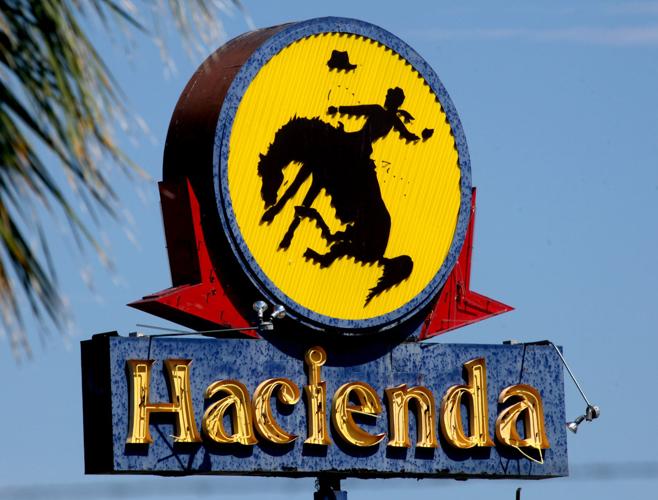
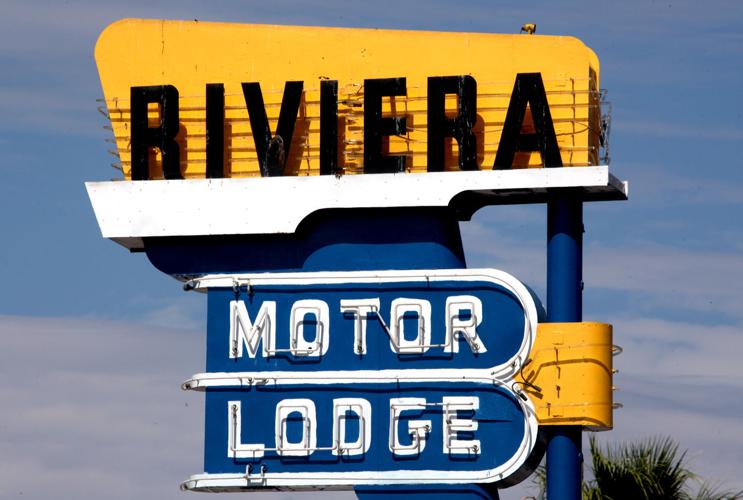
The two property owners currently undergoing the sign restoration process are the Riviera Motor Lodge and Hacienda Motel.
Brian and Nouria Edwards, owners of the Hacienda Motel, say it was an opportunity they couldn’t pass up.
“It’s very pretty and beautiful” said Nouria Edwards. “It’s good advertising for our business and we’d love to preserve it because it’s a part of Tucson’s heritage.”
Kethia Kong, a University of Arizona journalism student, is an apprentice at the Star.



 Nancy Guthrie's Tucson neighbors: Life with streamers 'unbearable'