

The trees came from Spain, Morocco and the Canary Islands, surviving months of sea and overland travel to find homes in the infrequent oases of New Spain.
They were planted wherever the presence of water allowed establishment of missions and presidios.
They were planted by Jesuit missionaries at Tucson's birthplace along the Santa Cruz River, where seasonal floods and perennial springs had supported agriculture for 4,000 years.
Those mission trees disappeared long ago, but their offspring survived as cuttings and transplants - propagated generation by generation in the yards of Tucson homes and in the riparian creases of nearby mountains.
They are returning, this time with utility connections and irrigation lines, to the place where Tucson began, as part of the re-created Mission Garden at the foot of Sentinel Peak ("A" Mountain).
People are also reading…
Local groups interested in preserving the heirloom trees joined with a community group advocating for the cultural and historical features approved in the 1999 Rio Nuevo vote. They want to restart the moribund plan to re-create the orchards and gardens of Mission San Agustín - a fortified mission and Convento built in the 1770s at a site now bounded by West Congress Street and South Mission Road.
An adobe-block wall currently surrounds the 4-acre site where pea gravel covers future planting areas. The wall is in turn surrounded by a chain-link fence that wards off graffiti vandals.
The Friends of Tucson's Birthplace, whose ultimate goal is to push for the reconstruction of the entire mission complex promised in the Rio Nuevo vote, raised $15,000 to kick-start the planting of 100 trees, an amount matched by a grant from the Arizona State Forestry division.
It's a down payment, said Bill DuPont, chairman of the local group.
The group is now looking for Tucsonans interested in adopting the trees - $200 buys a one-fifth of a share and a plaque on the wall with the buyer's name on it.
The heirloom trees were found and gathered in an effort headed by Jesús Manuel García-Yánez of the Arizona-Sonora Desert Museum's Kino Fruit Tree project - named for Father Eusebio Francisco Kino, who founded the Spanish missions in present-day Sonora and Arizona.
"The fantasy would be to have the trees put in before the Kino anniversary in March," DuPont said. March 15, 2011, is the 300th anniversary of Kino's death in Magdalena, Sonora, where his bones remain on display in the courtyard of the mission church that he established there.
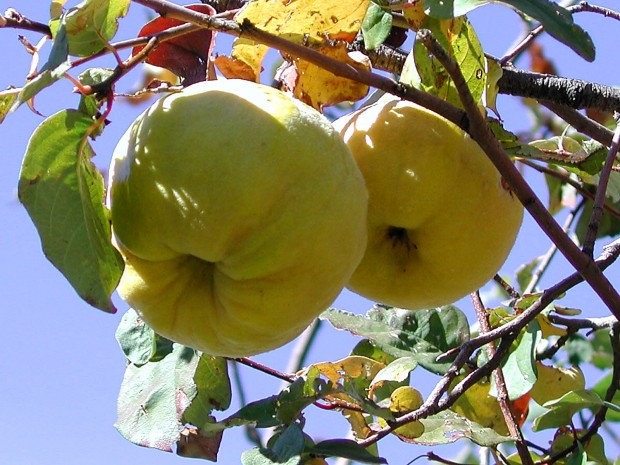
García was born and raised in Magdalena. The smell, taste and feel of the quince, sweet lime and pomegranate are his sensual heritage. His late father cultivated the trees. His mother, now 86, still makes quince jam.
"It's a normal way of life," García said. "You buy a house, you plant some trees - apricots, plums, whatever. You go to any house, and any individual backyard will have a variety of 10 different fruit trees. Tucson used to be like that, especially among Mexican families."
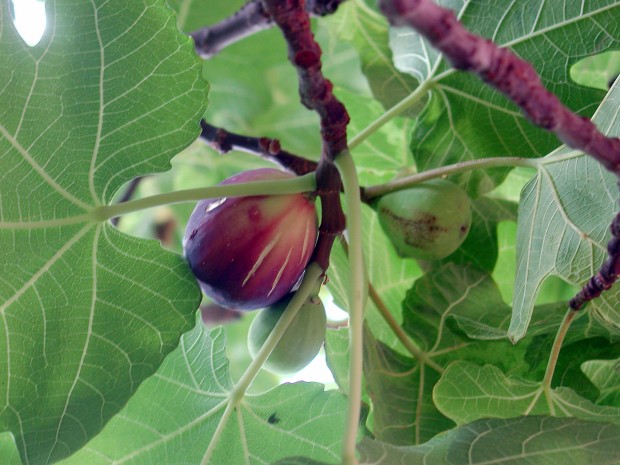
García has been working for more than 10 years to help re-create mission orchards, first at Tumacacori National Historical Park south of Tucson, where 60 to 70 quinces, pomegranates and figs now grow on a site identified as the original gardens for that mission, founded by Kino in 1691.
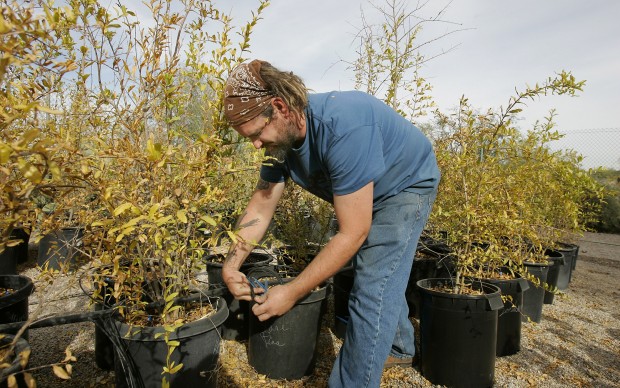
García began collecting trees for the Tucson Origins Mission Garden project seven years ago, bringing them to Desert Survivors Nursery, at 1020 W. Starr Pass Blvd., for cultivation.
The meltdown of the Rio Nuevo projects has produced one benefit, said nursery director Jim Verrier. He now has a big enough stock of heritage fruit trees to supply the Mission Garden and to offer them to customers.
The trees sit in plastic pots, leaves blasted by the recent frost, labeled with the locations at which they were found.
An Oro Blanco fig comes from the former mining camp in the Atascosa Mountains of Santa Cruz County. A Sosa-Carrillo pomegranate comes from the yard of the historic home surrounded by the parking lots of the Tucson Convention Center.
García's favorite is one he found in a backyard in the Menlo Park neighborhood. It's a sweet lime, "the biggest, healthiest one in Tucson. It is a sweet, sweet citrus, no acidity whatsoever - as sweet as an orange," García said.
"That is my childhood."
Finding the trees has been an exercise in social history. None of them were alive in the time of the missionaries, but they are direct descendants.
It's easier to find heritage varieties in remote mission sites, such as Baja California. García worked with naturalist Gary Paul Nabhan on a study that compared mission records with existing groves, finding nine Baja sites they suggested as refuges for the heirloom varieties.
They found mission olive trees that five members of the expedition couldn't girdle holding hands. They located a 200- to 300-year-old grapevine.
Nabhan said some genetic tracing has been conducted, and the links don't end in Spain or Morocco. They come from Damascus and Baghdad. The quinces are believed to be from the Indian subcontinent.
The organizations funding the project don't have money for genetic typing of these trees, but García found families that knew the histories of their trees.
The danger of genetic mixing is lessened by the method of propagation. "You lop off a branch and put it in soil," Nabhan said. "In most cases, with figs and pomegranates, they are still genetically identical."
"This is living history," he said. "It connects us to our past."
Jonathan Mabry, the city's historic-preservation officer, said the Mission Garden will "connect visitors to Tucson's past and ensure the survival of the heirloom fruit trees and grapevines of our region."
"When they are mature enough to take cuttings, these rare historical varieties will be made available to the public, so that they proliferate and become part of our household gardens and community identity again."
Contact reporter Tom Beal at tbeal@azstarnet.com or 573-4158.


