

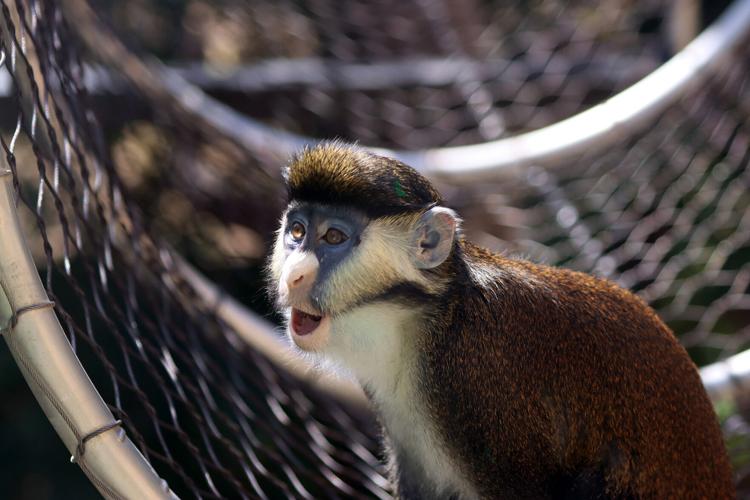
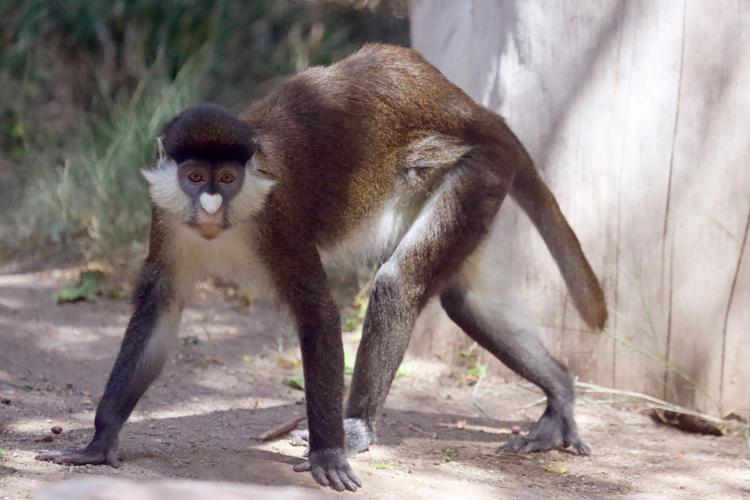
A playful troop of Schmidt's red-tailed monkeys named Alan, Charlie and Ziggy now lives at Reid Park Zoo.
The species is known for its long red tails, white noses and expressive faces, the zoo says.
“The monkeys have been introduced to each other and are settling in well. They are already a crowd favorite,” said Adam Ramsey, the zoo's director of animal care, in a news release Friday.
“Their distinct personalities are apparent. One of the monkeys is very cautious, while another has taken on the role of a social mediator. It’s been interesting to watch their bonds develop," he said.
The news release describes the trio, part of a primate species new to Reid Park: Alan, the only male, is the largest of the three monkeys, has the longest tail, and is the most inquisitive, loving to engage in enrichment activities provided by the zoo.
People are also reading…
He is very respectful of Charlie, his sister, and especially of Ziggy, the most subordinate, the zoo says.
“Charlie is our trouble maker,” said Tori Miller, assistant curator of animal care for carnivores and primates. “She loves to get into things and cause a ruckus for keepers.”
Ziggy, who is the oldest member of the troop and has a hunched back, is cautious in new situations "and hasn’t fully warmed up to Alan yet, but she has a sweet dynamic with Charlie," the news release said.
Reid Park Zoo is open from 8 a.m. to 2 p.m. Alan, Charlie and Ziggy can be seen at a habitat next to the zoo’s Conservation Learning Center "as they play and frolic."
Native to the rainforests and woodlands of central and eastern Africa, Schmidt’s red-tailed monkeys are currently listed as “stable,” but their populations are declining in some areas, the zoo says. The primary threats are habitat loss and fragmentation caused by agriculture, logging, road construction and human settlement.
"You can support Schmidt’s red-tailed monkeys in the wild by shopping sustainably," the zoo says. "Supporting sustainable forestry practices, such as choosing Forest Stewardship Council (FSC)-certified products, can help protect the forests these monkeys depend on."


