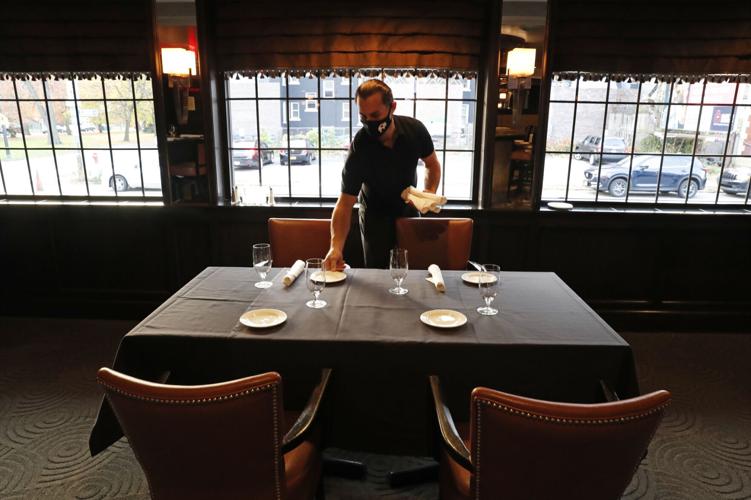
Mike Shatzel, whose roster of Western New York taverns includes such favorites at Coles, Colter Bay, Brennan's and Liberty Hound, heard the news he didn't need Wednesday afternoon: In order to slow the spread of Covid-19, Gov. Andrew M. Cuomo ordered that all bars would have to close by 10 p.m.
The way Shatzel sees it, it could have been worse.
"It seems a little drastic," he said. "But I'd rather give up two hours now than have to shut down for a month later."
It is one of the latest measures Cuomo has employed to stop the surge of Covid-19 cases statewide – and it comes just two days after the state declared a large swath of Erie County a "yellow zone," which meant bars and restaurants were told they couldn't seat more than four to a table and must close by midnight.
Beginning Friday, bars and restaurants licensed by the state Liquor Authority must close by 10 p.m. Restaurants are limited to curbside, food-only pickup after 10 p.m.
People are also reading…
"A bar and restaurant should be closed by 10 p.m. If the lights are on, and people are drinking, they get a summons," Cuomo said in a conference call with media Wednesday afternoon.
It's more bad news for the bar and restaurant industry in New York, which could do takeout and delivery only for months since March and is being forced to operate at half capacity since reopening under a slew of new regulations.
But the restrictions don't end there; the governor also also said all gyms, which the state considers a high-risk business, must now close by 10 p.m. And private gatherings must be limited to no more than 10 people statewide. He referenced Halloween and football parties as a major source of Covid-19 spread.
Now that much of Erie County is officially in a state-imposed yellow zone aimed at reducing the spread of Covid-19, the question is: How long are we going to be here?
Both Erie County and the Western New York region reported all-time daily highs in coronavirus cases Tuesday.
Western New York's five counties combined to report 576 cases Tuesday, an increase of 151 of the previous high of 425, reached on Saturday.
Erie County reported Wednesday afternoon a daily positive rate of 7.1% and a seven-day positivity rate of 5.8%. And the "yellow zone" within Erie County had a daily positive test rate for Tuesday's tests of 8.12%, the state reported Wednesday. The yellow zone's seven-day rolling average rate is 6.55%.
Almost eight months into the pandemic, the virus continues to upend lives and business. Allegany County health officials asked residents to limit Thanksgiving dinner to a "small dinner with only people who live in your household." And Regal Cinemas announced it would temporarily close its theaters in New York and California at the close of business Thursday, just three weeks after reopening.

Western New York's five counties combined to report 576 cases Tuesday, an increase of 151 of the previous high of 425, reached on Saturday.
Melissa Fleischut, president and CEO of the New York State Restaurant Association, called the news "a huge blow to the restaurant industry that is desperately trying to stay afloat."
She questioned why the state had decided to impose the new restriction on every bar in the state.
"We understand the logic behind micro-cluster restrictions, but at this time we have concerns about blanket statewide restrictions like this," she said in an emailed statement.
The state’s new rules for bars will hurt more on the weekends than weekdays, said Sean Weber, co-owner of Wine on Third in Niagara Falls.
The wine bar, which doesn’t have a heavy weeknight crowd, has already been “battening down the hatches,” running leaner with the hopes of just making it to the spring, Weber said.
Wine on Third doesn’t do enough takeout volume, so if Covid-19-related restrictions get tighter, relying on that aspect of the business wouldn’t really help, he said.
The situation is stressful and aggravating, Weber said, but he understands why the new rules are being put in place.
“If they’re going this far now, I imagine the next step would probably be closing down,” he said.
Mike Cracchiola, a manager at Colter Bay bar and restaurant on Delaware Avenue and Allen Street in the Allentown neighborhood, said the new rules will place a hardship on the establishment, but understands that it is intended, ostensibly, for safety.
“If there’s a danger, it should happen,” Cracchiola said of the new rules, as he hosted a late afternoon total of seven patrons spread out over four tables Wednesday.
“I don’t think that the restaurants are causing the issues,” he said, regarding the spread of the Covid-19 virus.

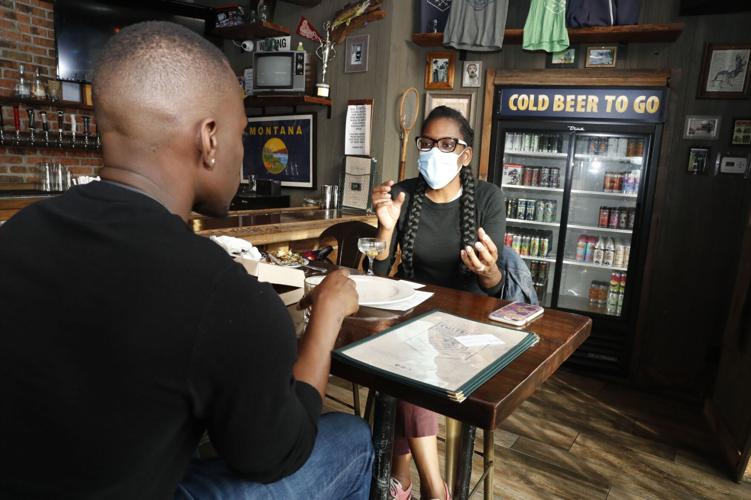
Siblings Evelyn Kessler, right, and Brian Ngambi enjoy drinks and lunch at Colter Bay restaurant on Delaware Avenue in Buffalo on Wednesday, Nov. 11, 2020.
Max Muscato, of South Buffalo, a patron at Colter Bay, said he believed the new rules will hurt small businesses and restaurants.
“I feel like we do have a good grasp on things. It could spread more but, at the end of the day, businesses need to go on. People need to eat and socialize,” Muscato said.
“I don’t understand some of the moves that the governor is making, but I hope we can prevail through it,” he added.
At D-Tour Martini Bar and Kitchen on Chippewa Street, executive chef Travis Gilley and bartender Cameron Norris were setting up the restaurant for their evening patrons.
“I just feel the governor is doing what he’s mandated to do, but it’s also crippling the restaurant and bar industry right now,” Gilley said.
Rus Thompson, a conservative activist who has been critical of Cuomo's handling of the pandemic, blasted the new 10 p.m. regulation.
"Enough is enough," he said in a Facebook post. "Governor Cuomo has again put more rules in place specifically targeting bars and restaurants. ... For months, bar and restaurant owners have modified their business plans, bent over backwards and dealt with the unfathomable regulations to comply."
Thompson was already promoting a "party and protest" in Niagara Square dubbed "Save Our Bars" on Friday evening when Cuomo made his announcement.
Some bar owners said they already had made adjustments to their schedules and won't be badly hurt by the 10 p.m. closing time.
The state’s new rules likely won’t be a huge issue for Prosper Brewing in North Tonawanda, said co-owner Kevin Whipple, who noted times are already tough.
The Webster Street bar and nanobrewery had already cut back its hours because business has been fairly slow; it had already been closing at either 10 or 11 p.m., Whipple said.
The business has been planning to expand into available space next door, but they’ve had trouble finding a contractor, Whipple said. The new space would basically double Prosper Brewing’s capacity, which in the end would just bring it back to its “normal,” pre-Covid-19 capacity, he said.
“We’re just trying to get through until we’re allowed to have more people,” he said.
For Nancy Abramo, who runs the Parkside Meadow Restaurant and Bar on Parkside Avenue, her day-to-day operations won't change much because of the new mandatory closing time.
Since March, the tavern has been open from 4 to 8 p.m. four nights a week.
"It's just 16 hours of operation. It's really a shame. But I'm paying my bills. We're holding on," she said.
The one new rule that does bug her a little bit? The one announced Monday limiting tables to parties of four.
"I have three tables that seat six. I have one table that seats 10. ... Now, that table is never going to seat more than four," Abramo said.
Abramo and Shatzel said their customers have been very compliant about wearing masks. Shatzel said as the evening wears on and the drinks are flowing, some customers need to be reminded to put them on when they take a walk to the bathroom.
"We haven't had issues in quite a while," Shatzel said.
Whatever the future brings, restaurants are sure to struggle, he said.
He asked people to continue to go to local bars and restaurants – or do takeout – and consider buying gift certificates to local businesses for the holidays to help them get by.
"Anything helps at this point," Shatzel said.
News Staff Reporters Keith McShea, Sandra Tan and Harold McNeil and Albany Bureau Chief Tom Precious contributed to this report.
Maki Becker