When I dropped into a presentation by three fiction writers at the Tucson Festival of Books in March, I knew nothing about them.
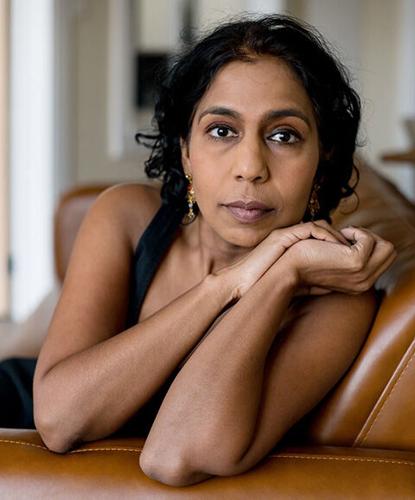
But unconsiously, I thought I knew something about one, Shobha Rao. With a name like that, she was probably Indian.
Then I heard her start talking about her new novel "Indian Country" — the title is a double-meaning reflecting a story about Native Americans and immigrants from India in Montana — and realized she grew up in the United States. You could hear it in the way she molded her words, even some of her conceptions of the world.
Born in India but raised in Indiana, among other places, she was clearly an American. But also, I found out later, Indian.
The debate about American identity stretches back even to before French diplomat Alexis de Tocqueville famously probed the American character in his 1835 book "Democracy in America."
People are also reading…
The point of view that has long prevailed in this country is that anyone can become an American as long as they believe in a few basic principles, such as self-government, hard work and individual rights.

Shobha Rao
In his last speech as president, Ronald Reagan expressed this view by quoting a letter he had received: "You can go to live in Germany or Turkey or Japan, but you cannot become a German, a Turk, or a Japanese. But anyone, from any corner of the Earth, can come to live in America and become an American.”
This is the "creedal" version of what it means to be an American, and it used to be widely accepted, as Ryan Dawkins, assistant professor of political science at Carleton College in Northfield, Minnesota, explained to me.
"That creedal definition has always been that, to be a true American, you embrace certain values. It doesn’t matter the color of your skin. It doesn’t matter your religion or your ethnicity, so long as you embrace certain values, you’re American."
But as the country turns 250 years old, that notion is being challenged by people as prominent as Vice President J.D. Vance, Dawkins said.
Vance argues that simply agreeing with a few American principles is not enough to really make you American. In his 2024 speech accepting the vice presidential nomination, Vance told listeners about the graveyard where generations of his family are buried and said America is "not just an idea."
"That's not just a set of principles. Even though the ideas and the principles are great. That is a homeland. That is our homeland."
'Thick' and 'thin' cultures
Cultural researchers describe some national cultures as "thick" and others as "thin." The thicker cultures have not just shared languages and laws but deeply held, often restrictive social norms, shared religious beliefs and a hierarchical social system that emphasizes order but also brings a sense of belonging. Think of Japan, or Saudi Arabia.
The thinner cultures are those that have milder social demands, are more individualistic, emphasize ideas such as rights, liberty and justice and give a lesser sense of belonging. That's us in the United States.
And it's visible especially in our creed that views newly arrived immigrants as practically as American as those who have been here for generations. The way Vance describes it, we have gone a little too far in treating newly arrived immigrants as equivalent in their Americanism to people who have many ancestral generations buried in the country's soil.
"Social bonds form among people who have something in common," he said in a 2025 speech at the Claremont Institute. "If you stop importing millions of foreigners, you allow social cohesion to form naturally."
He went on: “We should demand that our people, whether first- or 10th-generation Americans, have gratitude for this country.”
Dawkins, the Carleton professor, said the country's demographic diversification is driving the backlash toward the creedal view of American identity.
"When they think about what it means to be a real American, people have different idea what that looks like," Dawkins said. "Some people have a vision of American identity that is rooted in our European heritage — it’s white Christians. This is where J.D. Vance is coming from."
Others, such as President Barack Obama, embraced the traditional vision of America as a melting pot united by shared ideas and experience.
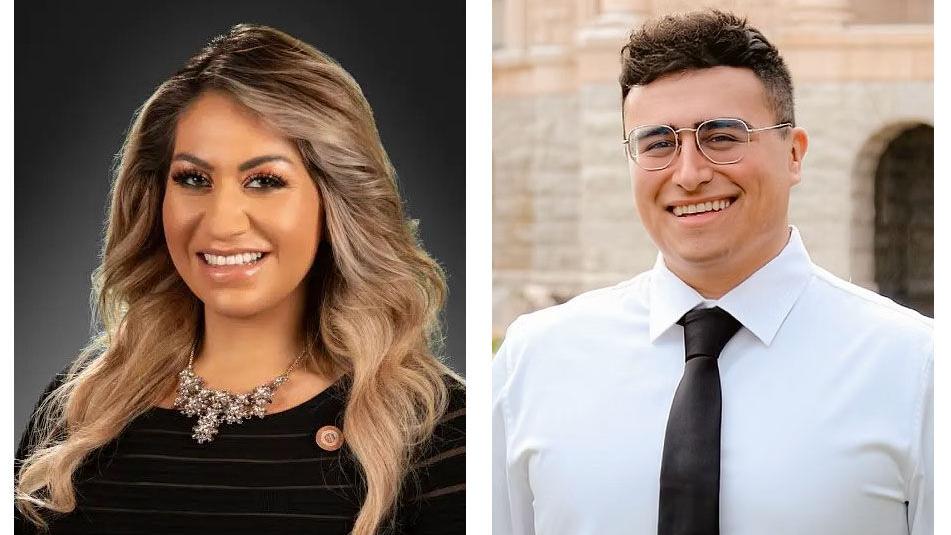
That's something Sergio Arellano Jr., the chair of the Arizona GOP, saw when he was serving in the Army. Arellano was born and raised in Tucson, the son of two Mexican immigrants from Sonora, one of whom benefited from Reagan's 1986 amnesty. He joined the Army at 17 and served in the First Infantry Division in Iraq.
"In the service, all walks of life are with you," he said. "You don't see race anymore. You just see the uniform of the brother next to you. But there was cultural pride everywhere."
People would celebrate their Puerto Rican or Panamanian or whatever other heritage, he said.
"Every culture that was embedded in the military was proud of their background, but they never turned their back on America."
Finding home
Sometimes I hear people argue that our immigration and expanding social diversity are splintering the country. Most of those people, I think, need to spend some time outside the United States. As diverse as it is, our shared culture is like the water we swim in — something we don't notice or appreciate until we leave it.
Rao, the author, has seen the country from the inside and outside, as she has often gone back to India after moving to the United States at age 7, she told me Friday. Both of her novels, "Girls Burn Brighter" and "Indian Country," feature people from India arriving in the western United States and experiencing its great expanses of land.
"The first book I read entirely in English was Little House on the Prairie," Rao said. "That was my first understanding of my new country. The prairie and the pioneer spirit and the endless horizon. As I’ve grown up, that idea has become incredibly complicated."
She added, "I’ve always been enamored of those vast open spaces, big-sky country and the majesty of the western United States. That finds its way into my writing."
But along with the openness and individual freedom of American culture, she sees desolation.
"I find a deep loneliness in the American consciousness," she said. "I don’t see that in India."
That's a downside of life in a "thin" culture where you're free to choose your own adventure. You're on your own.
What Rao sees in citizens of both huge, diverse countries is not a search for a national identity, but a desire for a home, a place of belonging much smaller than a vast nation like India or the United States.
"We're so rich and we carry within us so many worlds,' Rao said. "So, home is India, home is America, home is literature, home is, you know, where the ones I love happen to be."
Building community
Vance's position on national identity appears ironic, or contradictory, given his family situation. His own wife, the mother of his children, Usha Vance, was born in San Diego County, California, to immigrants from India.
But it may be consistent in the sense that he sometimes talks about his wife as a different kind of American, as he did June 21 when lightheartedly discussing recent negotiations with Pakistani officials over the Iran war.
“I have joked that I have two very, very important people in my life, an Indian and a Pakistani. The Indian is my wife, and the Pakistani is Field Marshal Munir."

Then republican vice presidential candidate Sen. J.D. Vance speaks during the 2024 Republican National Convention in Milwaukee.
Usha Vance wasn't an Indian-American in this telling, or just plain American — she was "Indian." But actually, she's American, born and raised, if not ancestrally. She played flute in the marching band of her San Diego high school.
This smaller scale of belonging may be what's missing in the simmering debate over what it means to be an American. What our American identity often means at its most basic level is that we live together in the United States. We don't have to derive our identities from our nationality, but we do have to find a place to belong within our vast national landscape, whether it be Tucson, Arizona or Penobscot, Maine.
India, established in 1947, has persisted despite serious religious conflicts and being a country of 22 different officially recognized languages, each spoken by many millions. Here, we're doing it largely in one language, English. People like Arellano, the GOP chair, grew up speaking Spanish at home but picked up English at school, a common immigrant-family experience.
In my mind, it's not generational ancestry but those experiences — growing up and playing out lives in U.S. places like Tucson — that form the building blocks of what it is to be American.
Contact columnist Tim Steller at tsteller@tucson.com or 520-807-7789. On Bluesky: @timsteller.bsky.social

Tim Steller
Columnist


 Tim Steller's column: Injunction over Tucson parks overrides free speech