

Inmates at the Pima County jail no longer have to wait days or weeks to receive letters from their loved ones.
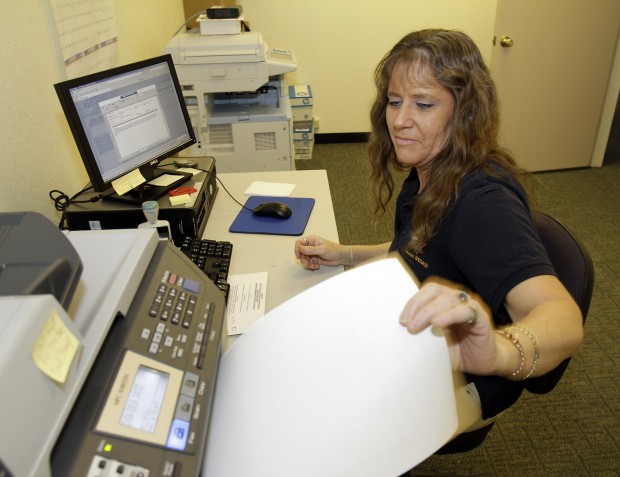
The jail has installed an electronic messaging system that allows family members and friends to send letters from any computer, with the inmate receiving a printed copy of the message at the jail.
The system, known as the Electronic Message Exchange, also makes it safer and easier for jail personnel, who don't have to worry about opening letters that might have contraband, said Lt. Sean Stewart, commander of the jail's security services section.
If a loved one sends an electronic message, it'll reach the inmate no later than the next day.
"We realized it's better for inmates and better for us," Stewart said. "We know there's no contraband."
The jail installed the system in November after receiving e-mails from the public through the Sheriff's Department Web site requesting the service, he said.
People are also reading…
The Pima County jail is the only facility in Arizona that uses the service, said Jim Crouch, an account manager for vendor company Value Added Communications.
Crouch said the service would likely expand into Maricopa County.
The Maricopa County Sheriff's Office does not use a similar system in its jails, according to the department.
Instead, inmates use postcards to communicate with relatives and friends, a Sheriff's Office spokesman wrote in an e-mail.
Facilities in North Carolina, Pennsylvania, Oregon and Texas use the e-mail service, Crouch said.
The message exchange is a supplement to the Pima County jail's inmate telephone service, meaning the jail doesn't pay extra for feature.
"It was developed as a security feature," Crouch said. "Anything can be sent inside of U.S. mail. And they have to go through that stuff. There are some hazards."
Each message, which is equivalent to a two-page, handwritten letter, costs 75 cents, Stewart said.
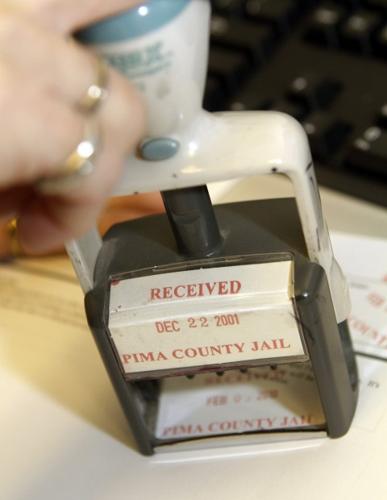
A family member or friend can pay online and send the message to the jail, where a mailroom staffer will print out the letter and check for inappropriate content before giving it to the inmate.
The inmate can hand-write a response and give it back to mailroom personnel, who then scan the message and send it electronically to the inmate's correspondent, he said.
Inmates do not have access to computers in jail.
The jail staff takes precautions against suspicious messages, Stewart said.
"It comes through the computer system, and we use the computer to search for buzzwords like cocaine, heroin, kill," he said. "Nothing goes out and comes in without someone looking at it."
About half of the costs of each letter goes to the vendor. The other portion goes to the jail's inmate welfare fund, which pays for items and services for the inmates, Stewart said.
The jail has received about 1,500 messages since November.
"We started with five, six, seven a day. Now, it's 25 to 30 a day," he said.
New Jail kiosks also take deposits for bail, sundries
In addition to the Electronic Message Exchange, the Pima County jail has added other services for inmates and their families.
The jail has installed five pay machines that allow inmates, friends and relatives to pay inmates' bail or deposit money into their jail accounts for food, clothing and toiletries.
The facility expects to add a sixth machine, known as an EZmoneyload kiosk, next week, said India Davis, a corrections captain.
The facility will have three machines in the jail for inmates and three in jail lobby areas for public use, Davis said.
Family members also can deposit money into an inmate's account online, she said. In addition to cash, an inmate, friend or relative can use a credit card.
"An advantage of the kiosks is the inmate, friend or family member can use credit cards," Davis said. "It's never been set up like that before. We never accepted credit cards for bond payments."
When an inmate is booked into jail, his or her money is deposited into the machine and goes in the inmate's jail account. When inmates leave, the jail gives them a debit card with any leftover money from their accounts.
"We used to give them a money order. It was difficult for people who wanted to get money after hours," she said.
The kiosks, which were installed in September, also benefit jail staffers.
"It reduces the cash-handling our staff has to deal with," Davis said. "All this time, we've been acting as a bank. It's really not our main mission."
Contact reporter Jamar Younger at 573-4115 or jyounger@azstarnet.com


