Former and current researchers at the University of Arizona are somewhat divided on whether UA administrators are doing enough to push back against the Trump administration’s cutting of federal research funding and encroachment on processes of how research grants are chosen.
In the administration’s latest targeting of federal research funding for universities, the White House Office of Management and Budget released a proposed rule change to “Regulation for Federal Financial Assistance” earlier this month. This rule decides how research funding is distributed, and the White House’s change is trying to replace scientific review of research grants with political review, experts say.
Tomás Díaz de la Rubia, UA's senior vice president of research and partnerships and head of its Office of Research and Partnerships (ORP), submitted a response to the federal office, pushing back on the proposed change and saying its numerous provisions require more clarity and more objective and risk-based standards.
People are also reading…
He said the change will shift decision-making away from scientifically grounded evaluation and merit-based peer review, give federal agencies more authority to suspend or terminate funds, create significant uncertainty and add layers of bureaucracy.

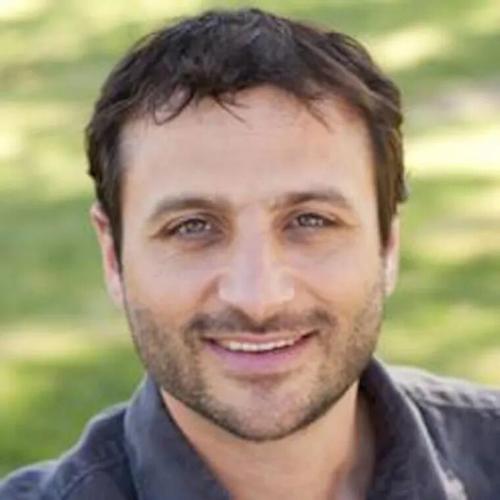
Zack Guido, director of the Arizona Institute for Resilience’s International Resilience Lab at the University of Arizona.
“The response ORP provided was a strong rebuff,” Zack Guido, director of the Arizona Institute for Resilience’s International Resilience Lab at the UA, told the Star on Thursday. “But the UA can make the argument more forcefully to Arizona voters. The public should be aware of how the proposed changes would affect the economy, student experience, employment and public monies, should we substantially degrade our research capacity.”

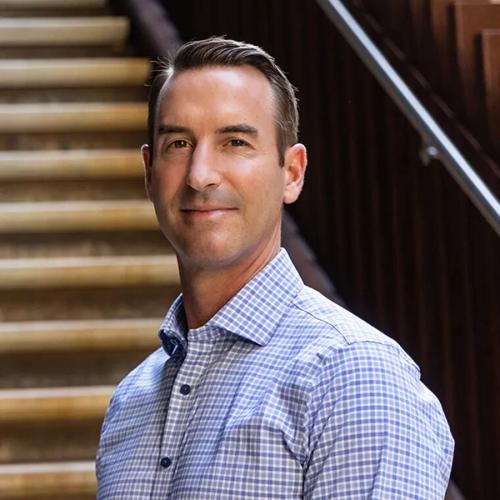
Greg Collins, former associate vice president and research professor with the Arizona Institute for Resilience at the University of Arizona.
Greg Collins, former associate vice president and research professor with the Arizona Institute for Resilience, said he thinks Díaz de la Rubia and UA President Suresh Garimella have been “very weak and late in responding to cuts” to research funding since the second Trump administration took office.
“Well over a year ago, leaders at other universities spoke out, while U of A leadership kept quiet,” said Collins, who has also worked for the U.S. Agency for International Development for 11 years. “To the extent silence is complicity, they were complicit … or at the very least hoped keeping quiet would keep U of A out of the crosshairs. Clearly, that too is a losing strategy.”

Timothy Finan, a University of Arizona professor emeritus of anthropology.
Speaking of the rule change itself, Timothy Finan, a UA professor emeritus of anthropology who has been involved in UA research projects, said these directives would determine what the priorities of research in the U.S. are and what kinds of research can and cannot be done.
Finan said the proposal’s ask that research grants comply with what OMB calls “Gold Standard Science” is “ridiculous,” because he said a group of government bureaucrats or politicians — people who are biased and have a clear ulterior motive — will be defining the “Gold Standard Science.”
The gold standard has already been defined by the process of scientific and research methods, he said.
“Basically, it’s an effort to control the academic research process (and) the entire operation of academic research,” Finan said of the change.
“I can disagree with what the priorities of the university are in terms of research — maybe I feel that they might be too concentrated in the area of space science or maybe even AI (artificial intelligence) and stuff like that; not to reject those topics but to say that it narrows the mission of public university systems which are much broader,” he said.
“But I would not take issue with how our university is establishing priorities. The priorities change with different administrations. (But) it’s always been consistent that the adherence to the basic understanding of how knowledge is created and applied and used to solve problems, that that goes across all disciplines," Finan told the Star.
The new OMB proposal was posted publicly on May 29 and accepted public comments until July 13. By the end, the proposal had collected more than 490,000 public comments nationally, and dozens of faculty members, researchers and organizations based in Arizona and from the state's three public universities had posted strong comments. A lot of the comments pushed back on the change.
If enacted, the change will take effect on Oct. 1.
'Explicit politicization of science'
Guido said the proposed changes are disheartening to put it mildly, and that there seems to be “no real practical federal avenue to support” work done by researchers like him.
“It takes hundreds of hours to put together a well-reasoned and rigorous proposal. I’m motivated to go through the effort because I have believed up until this point that the best ideas win the day,” he said. “It’s true that the proposal review process has been far from perfect, but the Trump Administration’s revamp makes me ask: ‘Why even bother?’ My research is focused on the use of climate information, often internationally and working with marginalized populations like small-scale farmers.”
He said while he accepts changes in funding priorities, since that’s a healthy practice that keeps the U.S. on the cutting edge, the current changes appear to be a more “explicit politicization of science that casts aside critical issues affecting Arizona, the U.S., and the broader global community.” This includes issues like “disaster preparedness, food security, environmental justice, climate impacts, and weather readiness,” he said.
“A lot of incredibly impactful research focuses on understanding how social and environmental changes affect people and their livelihoods,” Guido said. “This research that doesn’t necessarily lead to widgets and the ability to monetize the work. But it is knowledge essential for informing policy and building a resilient society. Even as priorities change, the U.S. should invest in these issues.”
Guido added that he hopes the UA can find ways to invest in priorities that aren’t just aligned with the current Trump administration, but also rely on the UA’s “strong environmental talent and impact” and continue to work on “wicked problems” like climate change, water and food security.
Under Garimella’s administration and with Díaz de la Rubia as senior vice president for research and partnerships, the UA has highlighted research areas including space science, fusion energy, AI and healthcare, and mining.
The fact that political appointees will be sitting on federal research agencies and giving out decisions on which research should and shouldn’t be granted funding “is a complete unmitigated disaster” and “is the worst idea that you could possibly imagine," Finan said.
He said for many years at research agencies like the U.S. Agency for International Development or USAID, the top appointees were independent of the party in power, and while they would establish a certain set of priorities or a particular strategy for the institution, they weren’t the ones evaluating the proposals or the process of where research money should be allocated within the agency.
“That was done more on a peer-based process,” Finan said.

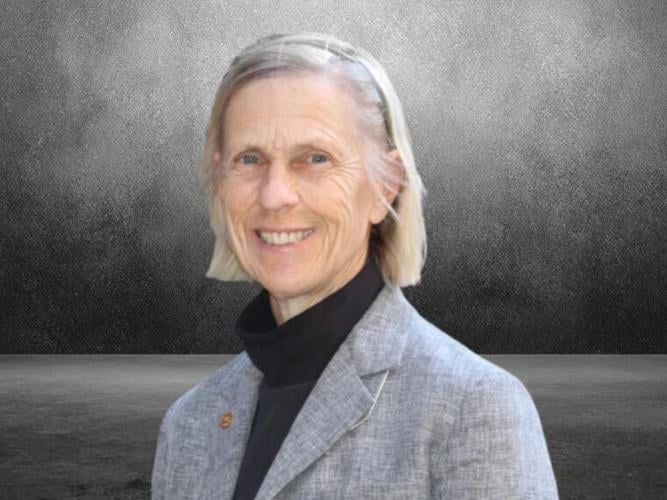
Lucy Ziurys, a University of Arizona professor and research in chemistry and biochemistry and astronomy.
Lucy Ziurys, a UA professor and researcher in chemistry, biochemistry and astronomy, said the U.S. has always been a leader in science and technology and has encouraged innovation and free thought, and this is what led to discoveries that benefited the U.S. and the world.
For OMB to attack this is one symptom of a “totalitarian state," Ziurys said.
“It’s going to be a disaster for this country. It’s going to be disaster for the University of Arizona,” Ziurys told the Star Thursday. “You can see people leaving already. Look at Omar Yagi, who won the Nobel Prize in Chemistry last year at UC Berkeley. I mean being at UC Berkeley has to be the best position you can imagine. And he just resigned. He’s moving his people, his thoughts, his money, his science to China.”
Ziurys said she thought Díaz de la Rubia’s response to OMB was very good and accurate.
“He was perhaps a little more diplomatic than I would be, but he was correct. He hit the nail on the head,” she said. “Obviously he’s worried too and the administration is worried. And I’m sort of surprised he gave such a strong response … I was very pleased to see Díaz de la Rubia express the opinions the way he did. It was a very reassuring tone from the administration.”
White House compact, OMB proposal 'equally dangerous'
The OMB proposal comes about 10 months after the White House’s “Compact for Academic Excellence in Higher Education” in October 2025, first sent exclusively to nine universities including the UA, that tied priority access to federal money to committing to a long list of Trump administration goals.
UA President Garimella rejected the earlier compact, saying academic freedom, merit-based research funding and institutional independence must be preserved.
This was after the Trump administration targeted federal research funding starting in the spring of last year, including pausing and terminating funding for research grants across universities and research institutions and capping the indirect cost rates that pay for administrative costs tied to research work.
UA research projects in collaboration with USAID were cut in February 2025, and cost the university nearly $13.5 million in unspent federal funds across four grants that were in the middle of their work.
The UA lost roughly $60 million in unspent federal funds across 67 terminated research awards as of July last year. It would have also potentially lost $40.5 million a year if the Trump administration’s attempt to get the National Institutes of Health to cap indirect cost rates for all universities at 15% had gone through. In April 2025, a judge permanently stopped NIH from implementing this cap.
Ziurys said she thinks the White House compact last fall and the OMB proposal now are “equally dangerous.”
“The compact affects more than just research and science and engineering. It affects anyone involved at the university in any capacity,” she said. “This one from OMB really impacts people doing scientific engineering and medicine research specifically. But of course the minute you start breaking up science, which is what this proposal, I think its intent is, then that’s going to affect everyone in the country.”
Reporter Prerana Sannappanavar covers higher education for the Arizona Daily Star and Tucson.com. Contact her at psannappa1@tucson.com or DM her on Twitter.

Prerana Sannappanavar
Higher Education Reporter


 U of A leader joins opposition to proposed federal research funding changes