The University of Arizona is forecasting a slight decrease in student tuition revenue in fiscal year 2027, due to its intention to have a smaller incoming class in fall 2026, UA Chief Financial Officer John Arnold told the Arizona Board of Regents.
The UA will also see a small decline in state funding and other forms of revenue, as well as a slight increase in grants and contracts, Arnold said.
UA officials confirmed in May that the fall 2026 class is expected to be smaller than last year’s, which was already 19% smaller than the fall 2024 class, mostly due to declines in out-of-state and international students.
For the last year, Provost Patricia Prelock and other UA officials have publicly talked about intentionally changing enrollment strategy, and giving out less merit aid to out-of-state students, to have smaller, “right-sized” classes. They’ve said they want to give more access to Arizona students and those who need financial aid.
People are also reading…

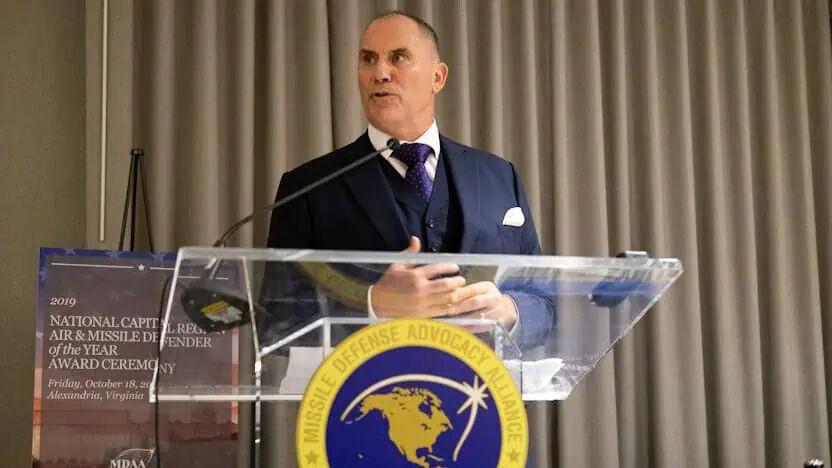
University of Arizona CFO John Arnold
In fall 2025, UA officials said they brought in the same amount of money with fewer students by being selective with merit-based aid. But this year, officials say the further decline in enrollment is expected to lead to less student tuition revenue.
“We’re headed towards a balanced budget in fiscal ’26,” Arnold told the regents at a meeting Thursday. “As we look into fiscal (year) ’27, we really approach the budget process through the strategic imperatives that the president (UA President Suresh Garimella) has outlined for the board and for our community — success for every student, research that shapes the future, and engagement with our communities.”
Arnold also said the UA is moving to a new budget model called Arizona Forward that he said is "more transparent, student-centered, data-informed, aligned with the (strategic) imperatives, and hopefully predictable and sustainable as we move forward."
Arizona Forward, which the UA will adopt on July 1, the start of fiscal year 2027, will distribute “specific revenue streams to academic colleges based on teaching, enrollment and research activity.”
As for state funding, “We had a number of significant one-time revenues that came to the university in fiscal ’26, specifically around the CAMI construction project that won’t be there in fiscal ’27. And so, we have that change,” Arnold told the board.
The Center for Advanced Molecular and Immunological Therapies, or CAMI, project will be a 205,000-square-foot, seven-story bioscience research hub located in the Phoenix Bioscience Core.
“You’ll note that in our overall revenue structure, of course, those expenditures also go away, so that’s just the ins and outs of one-time revenue and expenditures,” Arnold said.
Another “item that we’re dealing with as we look at fiscal ’27 is the (Arizona) Promise Program. Fiscal ‘26 had one of those one-time revenues and that will not be there in fiscal ‘27.”
The Arizona Promise Program is a guaranteed scholarship initiative that covers the full cost of tuition and mandatory fees for eligible, low-income students at the UA, Arizona State University and Northern Arizona University.
Arnold said the program had been successful and UA was grateful for the one-time revenue influx, but in FY27, that cost will shift back to the university, which will see an increased expense of almost $9 million.
In the financial update at Thursday’s meeting, Bradley Kendrex, vice president of business management and finance for the Arizona Board of Regents, said all three universities overseen by the board — UA, ASU and NAU — are showing solid financial management.
“All three universities are projecting to end the year with positive financial results, even if that’s close to break even,” Kendrex said. “And a thread that you’ll see throughout is that discipline around expenses has really been the driving factor that’s allowed that to be the case."
Reporter Prerana Sannappanavar covers higher education for the Arizona Daily Star and Tucson.com. Contact her at psannappa1@tucson.com or DM her on Twitter.

Prerana Sannappanavar
Higher Education Reporter