A spring-fed oasis for endangered fish and other wildlife on the east side of the Santa Rita Mountains is now under the protection of an international conservation group.
The Nature Conservancy has acquired Cottonwood Spring and the 218 acres surrounding it along Arizona Highway 82 between Sonoita and Patagonia.

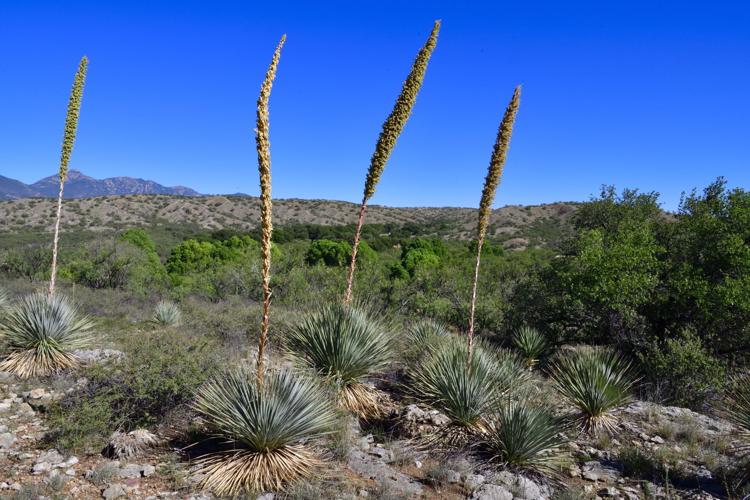
Desert spoon plants send up stalks on property recently acquired by The Nature Conservancy to protect Cottonwood Spring near the headwaters of Sonoita Creek on the east side of the Santa Rita Mountains.
The high-flowing warm spring near the headwaters of Sonoita Creek is home to the endangered Gila topminnow and other federally protected species, including the Chiricahua leopard frog, the Southwestern willow flycatcher and a wetland plant called the Huachuca water umbel.
“Protecting Cottonwood Spring means this rare water source will continue to sustain the wildlife that depend on it,” said Jody Norris, protection program director for The Nature Conservancy in Arizona. “This is a huge conservation win, with many partners to thank.”
People are also reading…
The global nonprofit based in Arlington, Virginia, purchased the property from a private owner who previously leased it out for cattle grazing. The sale price was not disclosed.

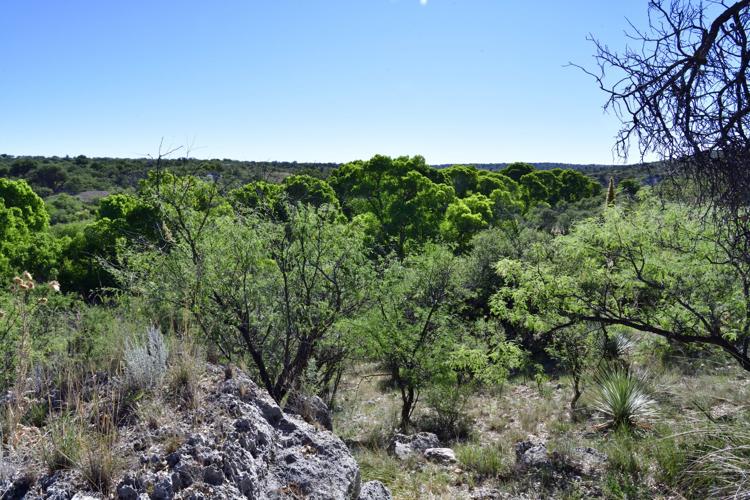
A ribbon of green trees trace the flow of Cottonwood Spring, just off Arizona Highway 82 between Sonoita and Patagonia.
Conservancy spokeswoman Lena Rueck said the group acquired the land early last month at its “appraised fair-market value.” The transaction was paid for with grant money from the U.S. Fish and Wildlife Service and a U.S. Army program that helps protect sensitive ecological sites near military installations, in this case Fort Huachuca.
The Gila topminnow is a 1- to-2-inch-long, guppy-like spring fish native to the greater Gila River watershed in Arizona and New Mexico but found only at isolated locations with perennial water, including Sabino Canyon, Cienega Creek, Sonoita Creek and the lower Santa Cruz River in Southern Arizona.
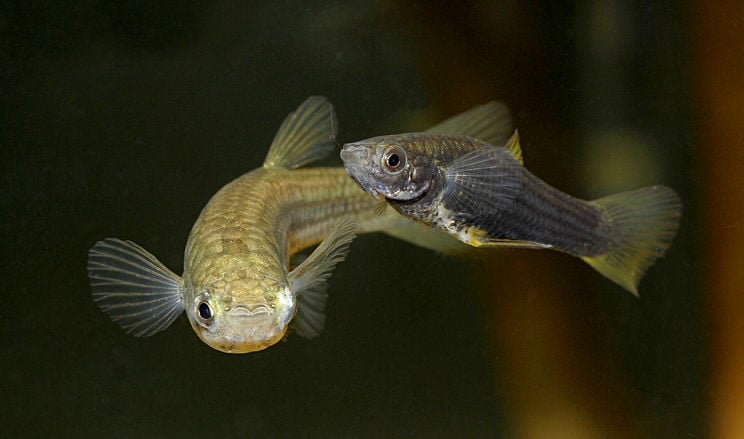
The Gila topminnow was one of the original 78 species inlcuded when the Endangered Species List was first created in 1967.
The small, silver and bronze fish was one of the first 78 species included when the Endangered Species List was created in 1967.
Aaron Mrotek is manager of the Patagonia-Sonoita Creek Preserve, The Nature Conservancy’s 865-acre riparian park along the creek just outside the town of Patagonia. He will also oversee planning and restoration at the Cottonwood Spring property.
“The spring and the stream it creates are one of the few remaining year-round water sources that support healthy and stable populations of Gila topminnow in Arizona,” Mrotek said. “Protecting this area is essential to giving this species a fighting chance to survive.”
The land also includes a portion of an important wildlife corridor animals use to move through the Canelo Hills and between the Santa Ritas and the Patagonia Mountains.

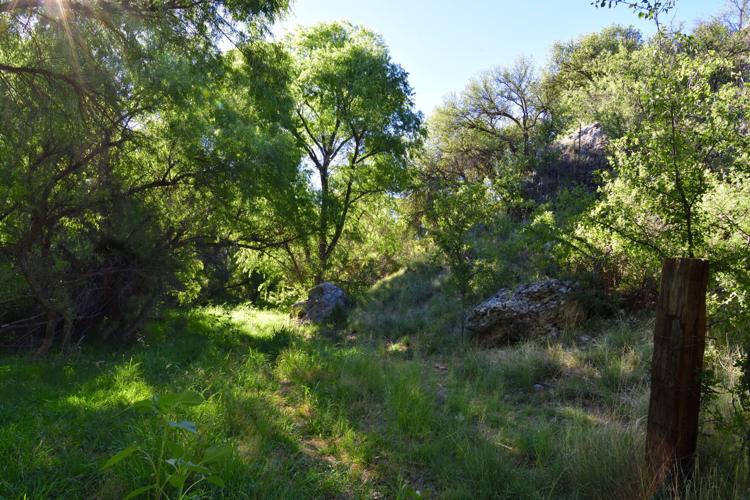
Green grass and trees grow in a rare desert oasis created by Cottonwood Spring, southwest of Sonoita.
The threats to Cottonwood Spring are similar to those facing other desert water sources, namely nearby water development, climate change and the unchecked spread of invasive species.
Mrotek said water “daylights” from the spring at about 60 gallons per minute and almost 80 degrees Fahrenheit, producing a stream and wetland roughly the length of a football field beneath a canopy of willow and cottonwood trees.
Isotope analysis indicates the flow is largely influenced by runoff from the Santa Ritas, he said, so no impacts to the spring are anticipated as a result of groundwater pumping for the Hermosa critical minerals mine now in development in the Patagonia Mountains.
There are no longer any cattle on the property, but Mrotek said recent grazing there was done responsibly to avoid significant damage to the spring and wetland.
Even so, he said, the first step in managing the area for conservation will be to “let it rest for at least a year” to see what it looks like without livestock present.
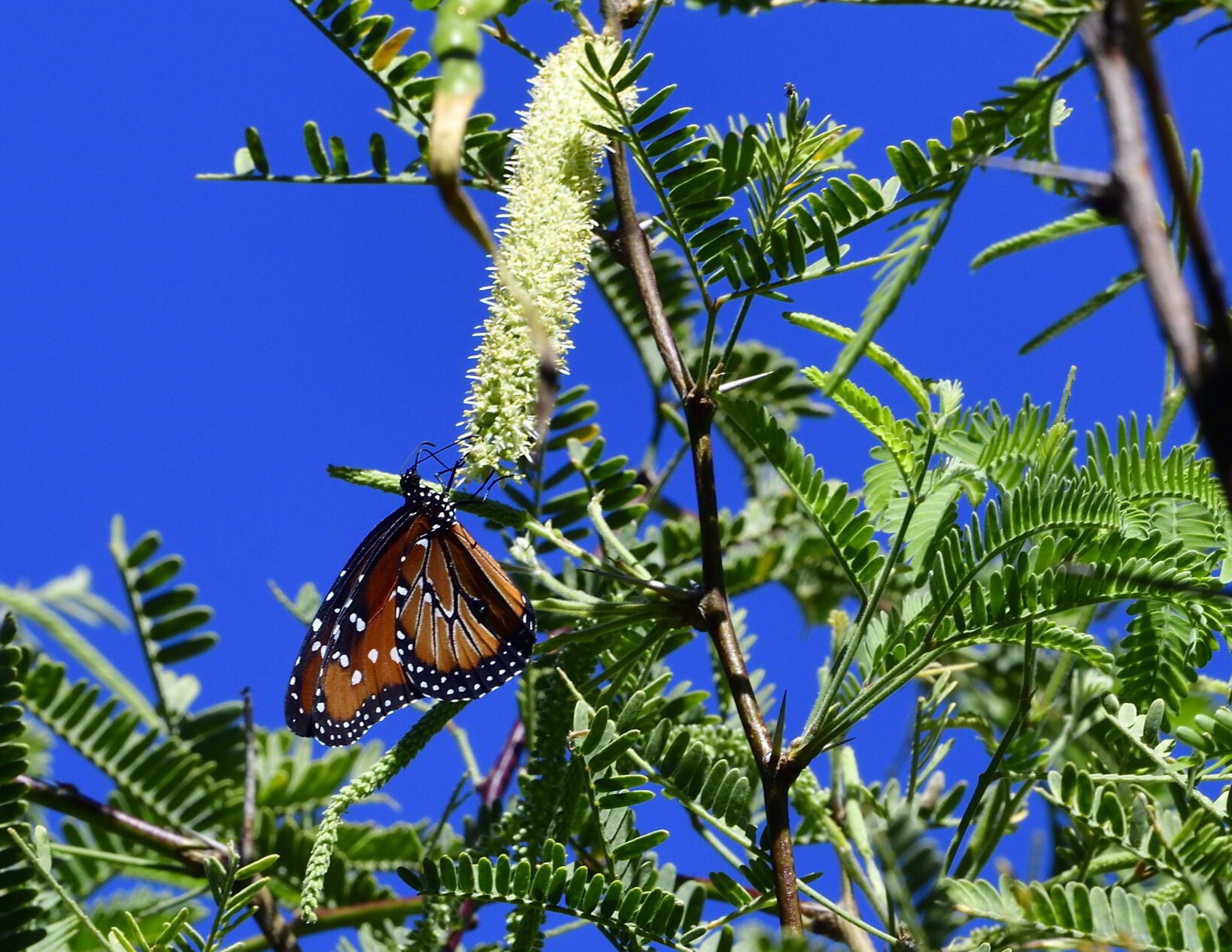
A queen butterfly feeds on a mesquite bloom at Cottonwood Spring, a 218-acre riparian area near Sonoita recently acquired by The Nature Conservancy.
A full biological inventory will also be conducted before any restoration plans are developed.
Mrotek expects the vegetation portion of the inventory to include at least a few surprises. “I think we’re likely to find some rare or unique species there,” he said.
For the time being, access to the property is by permission only, but Mrotek said he is hopeful that some sort of public interface will be developed at the spring someday.