


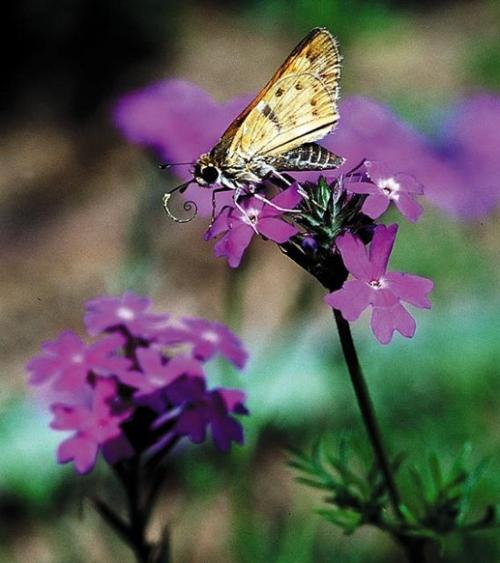
Since I know nothing about butterflies and moths, I perversely thought they would be a good subject for an article. It certainly forced me to do some homework.
A few weeks ago, after a particularly heavy rain, I stepped outside and found myself surrounded by hundreds of fluttering yellow butterflies. They are still here, though not in such great numbers. I knew they were butterflies and not moths, because somewhere in the back of my head was a near-forgotten piece of knowledge: Moths are nocturnal.
I asked a friend who is a native of Arizona about these pretty yellow wonders. She said she knew them to be sulfur butterflies, which visit from Mexico.
I had also noticed a minority of these butterflies are white. They look exactly like what we called cabbage moths in California. They were dreaded by those of us who were vegetable gardeners. Except, of course, these critters were flying about the broccoli and cabbages during the day. Butterflies. They are relatives of the sulfurs, and I can assure you, they will savage a crop of cruciform veggies in a flash.
People are also reading…
According to the references, these butterflies have a very wide range and can feed on many different plants. They are a diverse and well-adapted group. In our area, where many of the visitors are from Sinaloa, they appear to favor plants that produce legumes.
This is where they leave their sticky eggs attached to a branch or stem. Eggs become caterpillars in time (but you all remember that from elementary school). The caterpillars of this species are light green in color, blending well with the desert, and feed on seeds and some leaves.
I have noticed the sulfurs swarming a small shrub at the front of the house. I actually got to watch one attach an egg to a branch. This little shrub produces tiny seed pods each year. I'll bet they are yummy to the ravenous caterpillars. Many, many butterflies, more's the pity, are considered pests.
A couple of stories about butterflies, before I segue into moths.
My friend, who told me about these creatures, related a wonderful story. Many cultures believe butterflies have special powers and are inhabited by departed souls. Recently, this lady was at a memorial service for someone she knew well. After the service, she was talking to another friend, when a sulphur butterfly landed on her arm. It stayed a very long time.
A visit from the departed, or a random incident?
You decide.
Years ago, when my father died, I was unable to cry. I didn't follow the rest of the family in the mourning process. A few weeks after Dad's passing, I developed a very painful foot; so painful, in fact, walking was difficult. I went to a very wise doctor, who could find nothing wrong with the foot.
I related our recent family's events, and my inability to grieve. He told me to take a slow stroll in the woods, think about all of the good times with Dad, and just reflect.
I did that.
Down by the pond, I stopped for a moment, and the butterfly known as a mourning cloak alighted on my hand. It stayed and stayed; its markings so beautiful. I began to cry like a baby. The next day, the foot was fine.
Again, your decision. I know mine.
I'm sure you've all seen the incredibly beautiful photos of some the moths of the Amazon.
In truth, we have some fascinating species in our country, too. The one which comes to mind first is the really large redwood moth. I lived among the redwoods in California for more than 30 years and saw only about four of them. They are far from common and a real study in brown and beige.
One summer, I kept getting calls about hummingbirds feeding in gardens at night. I knew this couldn't be, so began the search.
Sphinx moths. They are large, heavy-bodied, and feed in the garden at night. I finally saw one, and I could have mistaken it for a hummer.
The light has changed to its burnished fall gold; the barrel cacti sport multihued coronas for our pleasure. I wish you all a butterfly visit to think about.


