


Sometimes you don't even have to ask the city for taxpayer money to receive it.
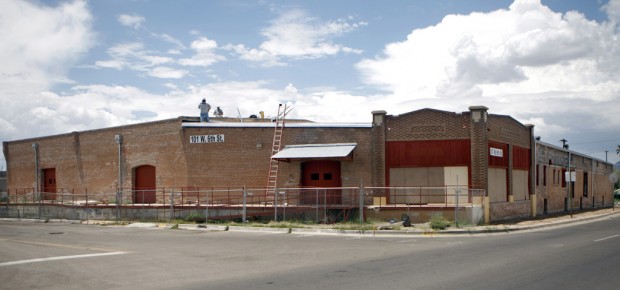
Take the historic Steinfeld Warehouse. So far, the city has quietly pumped nearly $1 million into the landmark at 101 W. Sixth St., even though the original deal to turn the property over to the Warehouse Arts Management Organization called for taxpayers to spend zero.
City officials say spending $1 million after telling taxpayers the project would cost them nothing actually saved the public money because the funds came from an expiring federal grant that would have been lost if they hadn't spent it quickly.
The city acquired the 1907 Steinfeld and other aging warehouses along downtown's north edge after a Barraza-Aviation Parkway route shift.
In 2010, the city wanted to avoid the exorbitant cost of fixing and maintaining them, so it sold the Steinfeld Warehouse to WAMO for $1, with a requirement WAMO pay $250,000 over three years and be responsible for "all costs associated with the property, capital improvements, maintenance and management."
People are also reading…
WAMO eventually intends to develop the Steinfeld, which has been vacant since 2007, into a quarter where artists can live and work, according to WAMO's website.
For now, the city has done the spending to stabilize the building.
"We have $1 million sunk in this when the (original plan) called for zero public money," said Councilman Steve Kozachik. "When this came to council we were assured this was going to be privately financed and would save the city money. But the opposite has happened," he said.
"I guess that was just the conversation we had at the front door. As soon as it was over, they went around to the back door and asked city staff for a public handout," Kozachik continued.
Albert Elias, director of the Housing and Community Development Department, said just because public money wasn't included in the Steinfeld Warehouse agreement, it doesn't mean the city staff went behind the backs of the mayor and council and surreptitiously injected money into the project.
He said each year the mayor and council approve an action plan where specific dollar amounts are dedicated to needs such as historical preservation and bus shelters. City workers have some leeway in how money is spent, as long as the projects fall within the approved action plan guidelines.
Although the Steinfeld Warehouse was never specifically identified as a funding recipient, it met the 2011 action plan requirements, Elias said.
Spend Money to Save Money
Jonathan Mabry, the city's historic preservation officer, said the city actually saved money by investing $993,168 in the Steinfeld.
In the fall of 2011, around $1.3 million in Community Development Block Grant funds was unexpectedly returned to the city by an underperforming Business Development Finance Corp. loan program.
Mabry said the city needed to find a project to spend the money on immediately or the federal government would reduce all future CDBG allocations to reflect the lower spending level.
"So we were looking for hammer-ready projects that fit our existing action plans," he said. "We were under this tremendous time crunch. Luckily, we already had on-call contracts with three design-build teams to perform historical preservation projects."
He said the city gave the contractor Sellers & Sons $413,111 for blight remediation and exterior stabilization. But shortly after the contract was signed, a change order for $548,600 was requested by the architects and structural engineer for roof repairs.
"It was always anticipated roof repair would cost in the ballpark of $500,000," Mabry said. "The roof repairs were originally planned to follow the completion" of the walls and exterior stabilization. But once it became obvious the roof needed to be done at the same time as the walls a change order was requested.
If WAMO fails to pay the $250,000 by 2014, the contract contains a reversion clause that would return the building to the city.
Mabry said although the Steinfeld Warehouse will still need substantial improvements once the current repairs are finished this week, the project accomplished its goals of preserving a historic downtown landmark.
"Steinfeld is the oldest and most significant warehouse in the city," he said. "This is a project the city can be very proud of."
Councilwoman Regina Romero concurs with Mabry and doesn't want to see any more of Tucson's historic buildings crumble.
"I believe in investing in the Warehouse Arts District … and I think using federal funds for blight abatement has proven successful in downtowns across the country to revitalize the urban core," Romero said.
"When there's public infrastructure improvements private investment follows, and I think that's what we are beginning to see happen in that area of downtown."
Contact reporter Darren DaRonco at ddaronco@azstarnet.com or 573-4243.


