

Democratic candidates for Erie County sheriff agreed on this at their debate Monday: Change is needed at the Sheriff's Department.
The candidates said they would find alternatives to solitary confinement in jail, train officers in de-escalation techniques and hold deputies and officers accountable for their actions.

Party Chairman Jeremy Zellner denies he told Kimberly L. Beaty she had the wrong look.
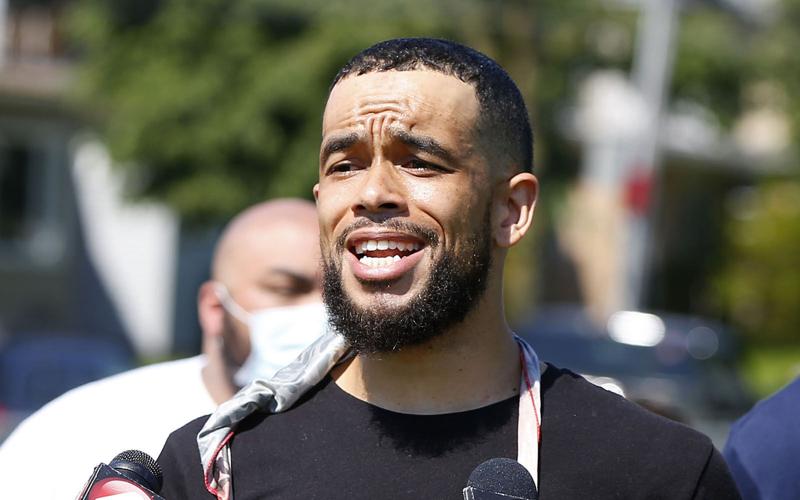
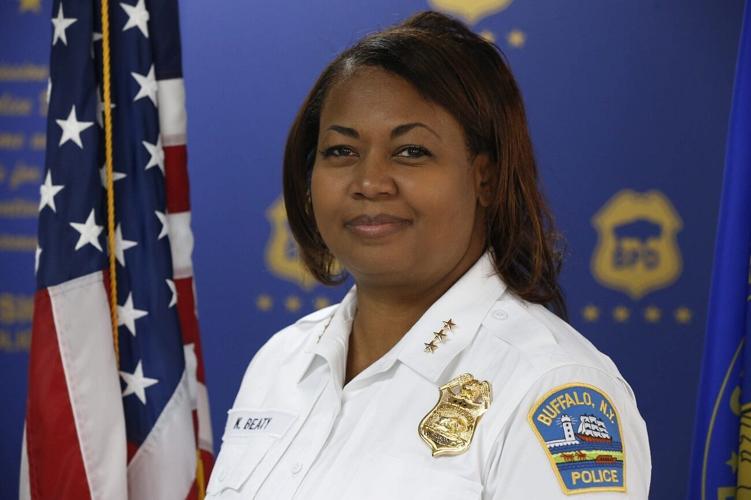
The Democratic primary contest features Cheektowaga Assistant Chief Brian J. Gould; former Buffalo Deputy Commissioner Kimberly L. Beaty-Miller, now director of public safety at Canisius College; and activist and businessman Myles L. Carter.
They attended a debate sponsored by VOICE Buffalo at the Buffalo & Erie County Library on Monday. The non-partisan group said it reached out to all candidates running for sheriff. Republican candidate John C. Garcia, a retired Buffalo detective, declined to attend because of another engagement, and the group did not hear from the endorsed Republican Karen Healy-Case, a former Buffalo police lieutenant.
People are also reading…
Much of the forum was focused on operations at the Erie County Holding Center and at the Erie County Correctional Facility in Alden, where inmate deaths and accusations of police misconduct have prompted criticism of the Sheriff's Office.
Brian Gould, the Democratic Party nominee for Erie County sheriff who is heading into a party primary, has twice been suspended, once in 2014 and again in 2017, records show.
Gould, who is the endorsed Democratic candidate in the June 22 primary, said he would make decisions based on safety. Giving inmates access to activities, libraries and phone calls will improve morale and help keep inmates safer, he said.
"We don't necessarily have to reinvent the wheel with everything we do," Gould said. "The culture of our current Sheriff's Office needs to change."
Gould said he developed crisis intervention training for Cheektowaga police, and he would invest in properly training deputies and corrections officers.
Carter said on his first day in office he would implement Cariol's Law for the Sheriff's Department, holding deputies liable if they fail to report instances of brutality and police misconduct.
He would have fewer deputies and hire people trained in mental and behavioral health and drug abuse counseling.
"The No. 1 reason people are committing crimes is because of poverty," Carter said.

The News has been gathering disciplinary records of sheriff candidates with law enforcement backgrounds now that those records are public documents in New York.
Miller-Beaty said she would lead by example.
"Leadership starts at the top," she said.
She said de-escalation training is needed to protect civilians, inmates and officers.
"You're better communicating with people and using your verbal skills," she said. "We need to do de-escalation training to prevent injury and to prevent deaths."
Gould, Carter and Beaty said there needs to be an alternative to solitary confinement.
"Sadly, there are times when people need to be isolated from the general population," Gould said.
He said he would look to what leads to the behavior and work to prevent the disrupting behavior, and would look to a restorative housing model.
As several candidates spar over enforcing the strict gun control law known as the SAFE Act, a major pro-Second Amendment group is assailing endorsed Republican Karen L. Healy-Case.
Miller-Beaty said at the onset of an arrest, a person begins to feel isolated.
"We need for people to thrive and survive in incarceration. They cannot thrive away from other people," she said. "Jail is not a walk in the park, but they need to know they are going to survive and be safe."
Carter said he would end solitary confinement.
"We will find an alternative," Carter said.
He also wants to de-prioritize low-level marijuana infractions, devote more resources to missing persons and solving homicides and he would hire jail chaplains instead of using volunteers.
If the Holding Center and Alden facility are consolidated, he would build on programs, particularly training inmates.
"We need to make sure people come out with specific skills," Carter said.


