


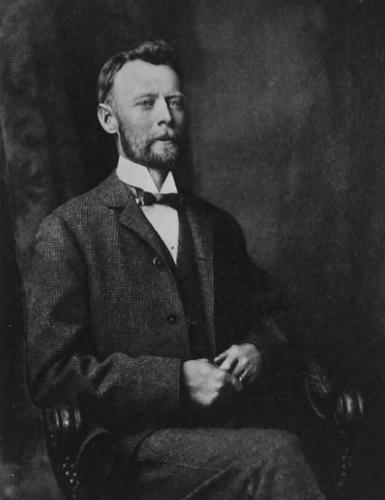
James Colquhoun, called the “savior of the Arizona Copper Co.”, was known for having developed the first copper leaching plant at Clifton that was later applied to the mines at Ajo and Inspiration.
Colquhoun arrived in Arizona in 1883 in response to stockholders in Scotland who required his expertise as a mining engineer to rescue their mining investment in Clifton.
Fulfilling the roles of bookkeeper, assayer, metallurgist, and smelter superintendent, Colquhoun would later become the President of the Arizona Copper Co. and the Arizona and New Mexico Railway, a 3-foot gauge line stretching 71 miles from Clifton to its terminus with the Southern Pacific Railroad at Lordsburg, New Mexico.
In 1882, the Arizona Copper Co. — a Scottish syndicate from Edinburgh — acquired the Clay, Coronado, Humboldt, Longfellow and Metcalf mining properties.
People are also reading…
By 1884, the company owned 40 claims.
That same year Chase Creek flooded and the power dam which supplied power to the Arizona Copper Co.’s smelter was washed out. Colquhoun ordered the dam fixed in the midst of the flood keeping the company’s production on track in the midst of financial strife.
Additional challenges beset Colquhoun during his company tenure. The disposal of smelter slag previously cooled in giant ladles and used as filler around Clifton was subsequently discarded with the molten slag poured directly into the San Francisco River granulating upon contact with water.
While this process recommended by Colquhoun saved the company $20,000 annually in haulage, it caused protest and litigation from farmers in the Gila valley around Safford who cited adverse effects upon crop irrigation from the contaminated river water.
Large settling basins resulted, built by the Arizona Copper Co. to filter the water prior to its departure downstream from the smelter. Low-grade oxidized porphyry copper ore coming out of the shafts during the 1890s averaged 4 percent in contrast to the rich ores mined the previous decade that were up to 26 percent.
Direct smelting no longer proved efficient with more material going to waste in the ore dumps then could be profitably extracted.
With the market price of copper below 16 cents per pound, a more efficient and rapid means of ore extraction was needed.
Colquhoun saved his company from financial ruin by devising a new method that involved the concentration of ore by use of jigs, “machines using gravity concentrating wherein the heavier particles of crushed ore settle at the bottom.” The rich concentrate was sent to the smelter for further refinement while the jig tailing was sent to the leaching plant devised and constructed by Colquhoun in 1894.
It was capable of extracting 2 million pounds of copper a year with a process involving dilute sulphuric acid obtained from a small vein of iron pyrites as a leaching mechanism that enabled copper to be leached at a profit found in the ore dumps composing the tailings.
Increased production coupled with reduced production costs of copper by two cents enabled the company to mine lower grade ore without the cost incurred by selective mining.
Costs involved included $48,000 for the leaching plant and $52,000 for the acid plant.
Return on Investment in 1895 was immediate with the treatment of 14,784 tons of jig tailings which produced 517.7 tons of copper through the use of 1,412 tons of sulfuric acid at a cost of 6 cents per pound of copper.
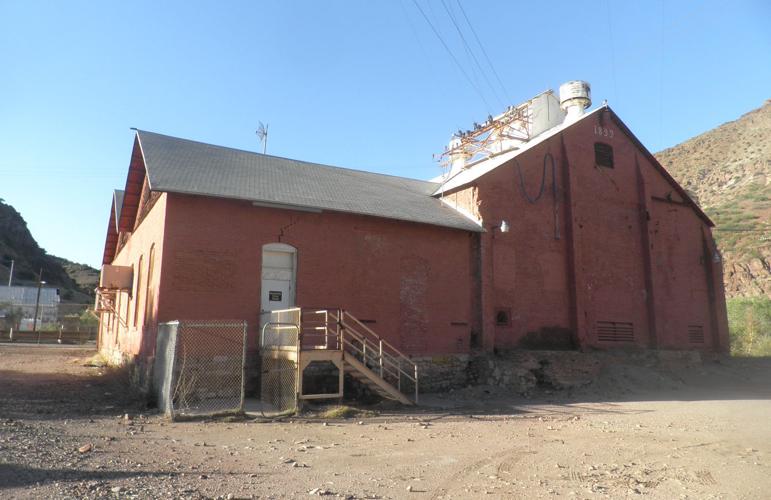
Additional investment in production was made in a power plant constructed in 1897.
Housed in the large two story brick building were gas engines powering turbines which produced electricity necessary for the innovative Bessemer process of smelting.
With production increased by 40 percent, investors saw a rise in dividends as seen in the contrast of the market value of Arizona Copper Co. stock in 1892 at 75 cents a share compared to $80 per share in 1907.
Net earnings in 1908 amounted to over $1.2 million.
Archivist, historian and author William Ascarza’s forthcoming book “In Search of Fortunes: A Look at the History of Arizona Mining.” For more information contact M.T. Publishing Co. at (812) 468-8022
 Former Sam Levitz building sells for $8.6 million


