ATLANTA — Against a backdrop of political division and upheaval, the Rev. Martin Luther King Jr.'s daughter said the holiday honoring her father's legacy comes as “somewhat of a saving grace” this year.

Bernice King talks with a reporter Wednesday in Atlanta.
“I say that because it inserts a sense of sanity and morality into our very troubling climate right now,” the Rev. Bernice King said in an interview with The Associated Press. "With everything going on, the one thing that I think Dr. King reminds people of is hope and the ability to challenge injustice and inhumanity.”
The holiday comes as President Donald Trump is about to mark the first anniversary of his second term in office on Tuesday. The “three evils” — poverty, racism and militarism — that the civil rights leader identified in a 1967 speech as threats to a democratic society “are very present and manifesting through a lot of what's happening” under Trump's leadership, Bernice King said.
People are also reading…
King, CEO of the King Center in Atlanta, cited efforts to roll back diversity, equity and inclusion initiatives; directives to scrub key parts of history from government websites and remove "improper ideology” from Smithsonian museums; and immigration enforcement operations in multiple cities that have turned violent and resulted in the separation of families.
“Everything President Trump does is in the best interest of the American people," White House spokesperson Davis Ingle said in an email. “That includes rolling back harmful DEI agendas, deporting dangerous criminal illegal aliens from American communities, or ensuring we are being honest about our country’s great history.”
Maya Wiley, president and CEO of the Leadership Conference on Civil and Human Rights, one of the nation’s oldest and largest civil rights coalitions, said King's words “ring more true today.”
“We’re at a period in our history where we literally have a regime actively working to erase the Civil Rights movement,” she said. “This has been an administration dismantling intentionally and with ideological fervor every advancement we have made since the Civil War.”
Wiley also recalled that King warned that “the prospect of war abroad was undermining to the beloved community globally and it was taking away from the ability for us to take care of all our people.” Trump's administration has engaged in military strikes on alleged drug-smuggling boats and captured Venezuela's president in a surprise raid earlier this month.
Bernice King said she's not sure what her father would make of the United States today, nearly six decades after his assassination.
“He's not here. It's a different world,” she said. "But what I can say is his teachings transcend time and he taught us, I think, the way to address injustice through his nonviolent philosophy and methodology.”
Nonviolence should be embraced not just by those who are protesting and fighting against what they believe are injustices, but should also be adopted by immigration agents and other law enforcement officers, she said. To that end, she added, the King Center previously developed a curriculum that it now plans to redevelop to help officers see that they can carry out their duties while also respecting people's humanity.
Even amid the “troubling climate” in the country right now, Bernice King said there is no question that “we have made so much progress as a nation.” The civil rights movement that her parents helped lead brought more people into mainstream politics who have sensitivity and compassion, she said. Despite efforts to scrap DEI initiatives and the deportation of people from around the world, “the inevitability is we're so far into our diversity you can't put that back in a box,” she said.
To honor her father's legacy this year, she urged people to look inward.
“I think we spend a lot of time looking at everybody else and what everybody else is not doing or doing, and we’re looking out the window at all the problems of the world and talking about how bad they are and we don’t spend a lot of time on ourselves personally,” she said.
King endorsed participation in service projects to observe the holiday because they foster connection, sensitize people to the struggles of others and help us to understand each other better. But she said people should also look at what they can do in the year to come to further her father's teachings.
“I think we have the opportunity to use this as a measuring point from year to year in terms of what we’re doing to move our society in a more just, humane, equitable and peaceful way,” she said.
5 films to watch for MLK Day
‘Brother John,’ 1971
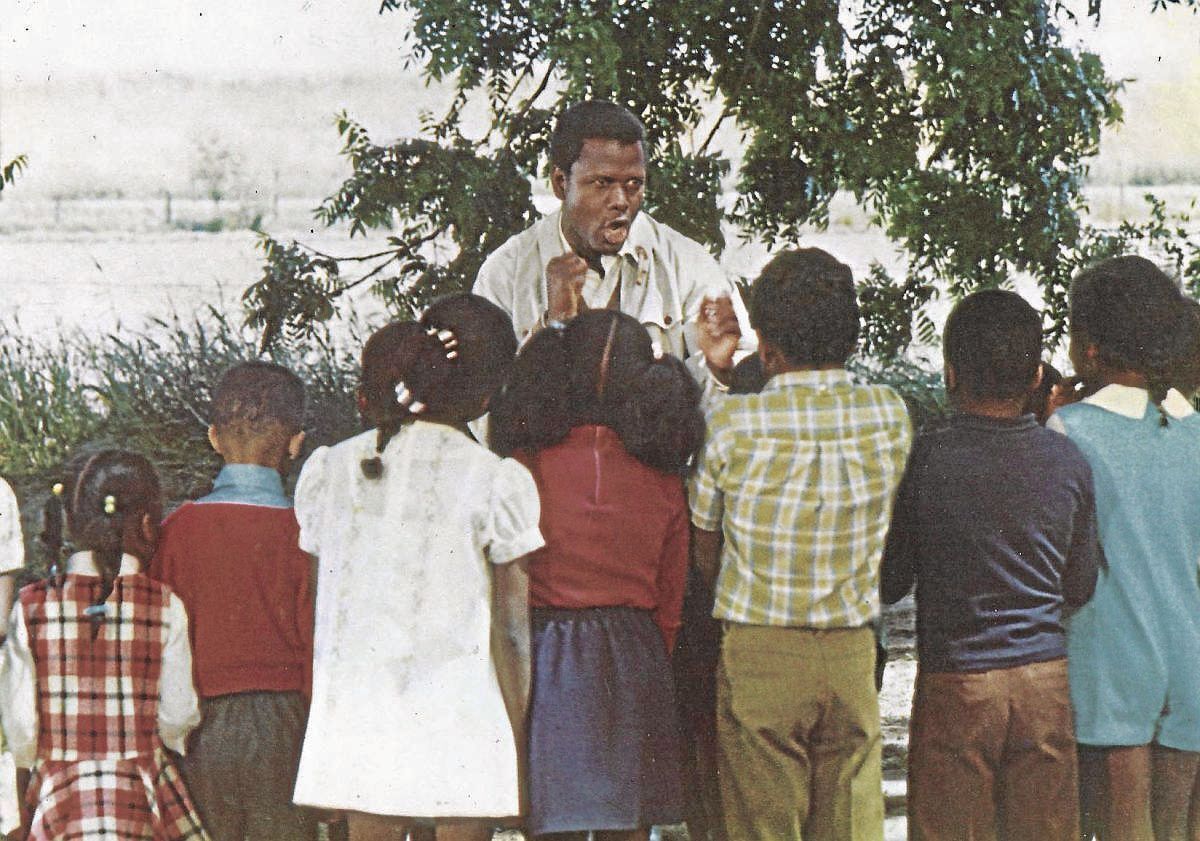
Sidney Poitier, arguably American cinema’s most-influential Black actor, died Jan. 6 at 94. Even after his death, "Brother John" is Poitier’s most-overlooked film. The story of John Kane returning to his little hometown in rural Alabama is a tale of pain, suppressed rage and a fate all of us may face because of our inhumanity to one another. Poitier’s pivotal scene with co-star Will Geer is one of the best in all of cinema.
‘13th,’ 2016

Want to feel a tad uncomfortable? Want to explore how some “rights” can be used as a way to disenfranchise people? Watch Ava DuVernay’s documentary "13th" about our prison system and the 13th Amendment.
‘MLK/FBI,’ 2020

Everyone claims the cuddly, generic legacy of MLK these days, but there was a time when powerful forces in this country believed he was a dangerous radical. Others claimed he was under “Soviet influence.”
The documentary "MLK/FBI" captures an overlooked, important part of history.
‘I am Not Your Negro,’ 2016

Based on an unfinished manuscript from writer and activist James Baldwin, the documentary "I am Not Your Negro" offers us the voices of the people who fought for civil rights and paid dearly in the effort to stand for others.
‘In the Heat of the Night,’ 1967

A must-watch. "In the Heat of the Night" was not played in many theaters throughout the South. Why? Because Sidney Poitier’s Virgil Tibbs raised his voice to the Sparta police chief played by Rod Steiger. An incredible score from Quincy Jones, as well as strong supporting performances from Warren Oates and Lee Grant.