BROWNING, Mont. — A battle broke out on the Blackfeet Indian Reservation two years ago.
It was a battle about pain – and how to stop it.
The battle centered on the Southern Piegan Health Center, a tribally operated clinic with a pain-management program that some believe was actually fueling harm by flooding the Blackfeet Nation with opioids. Supporters saw it as a haven for suffering patients.

Concerns about the prescribing practices at the Southern Piegan Health Center, a tribally operated clinic, have roiled the Blackfeet Indian Reservation in northwest Montana.
Through a monthslong investigation, the Lee Enterprises Public Service Journalism Team obtained dozens of documents and interviewed a dozen people on both sides of the fight over pain management care at Southern Piegan Health Center, including health care administrators, doctors, the tribal chairman and the mother of a woman who died while a patient of the clinic.
Even some of the critics who vehemently denied SPHC misprescribed drugs or harmed patients did not dispute some of the critics’ primary claims, including:
People are also reading…
- Between 200 and 300 patients received prescriptions for 35,000 to 40,000 controlled-substance pills per month, according to counts conducted in two sample months in 2023 and 2024.
- Instead of writing notes from patient visits, old notes were sometimes copied and pasted into medical files.
- The Drug Enforcement Administration and the U.S. Department of Public Health and Human Service Office of Inspector General investigated the clinic, issued subpoenas and, according to the Blackfeet Tribal Business Council chairman, sent the tribe a “target letter requesting every single file” at Southern Piegan Health Center.
- The DEA asked the clinic’s provider to surrender her license to prescribe controlled substances, which she did. That provider was still employed at the health clinic as of April.

Jennifer St. Goddard, administrator of Southern Piegan Health Center until recently, pushed back on claims that patients had been harmed as a result of SPHC’s practices or “that we were a pill mill.”
In February, a month after Lee Enterprises began probing SPHC, director and administrator Jennifer St. Goddard announced that her team would soon end Southern Piegan’s pain-management program.
In April, days after the Blackfeet Tribe’s governing council approved an investigation into her and the clinic, St. Goddard announced her resignation from Southern Piegan.
Those developments have left critics of the clinic feeling vindicated, since it appears the flow of opioids and other controlled substances from Southern Piegan has ceased or will soon. But the changes haven’t stopped the pain caused by the controversy on the Blackfeet Indian Reservation.

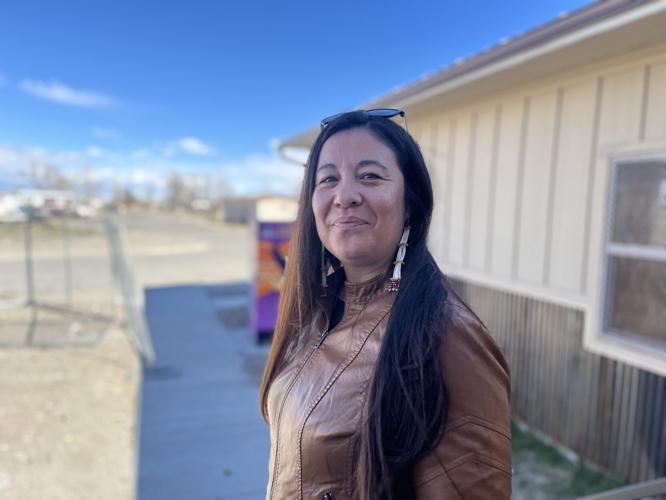
Fonda Red Fox, the former director of centralized billing for the Blackfeet Tribal Health System, said she reported her concerns about prescribing practices at Southern Piegan Health Center to federal investigators.
‘This is kind of scary’
Soon after starting as director of centralized billing for the Blackfeet Tribal Health System in 2023, Fonda Red Fox said she reported her concerns about potential overprescribing at Southern Piegan to her superiors in tribal health.
When St. Goddard and others at SPHC rejected calls for change within the tribal health system, Red Fox said she called the federal Drug Enforcement Administration and the U.S. DPHHS’ Office of Inspector General.
Federal investigators didn’t immediately respond, so Red Fox said she urged the tribal health system to bring in a doctor to oversee the care at SPHC.
“I was like, 'We need a medical director,’” Red Fox recalled. “‘We need a medical director because this is getting out of hand, like, this is kind of scary.'”
DEA launches investigation
That medical director would be Dr. Mary DesRosier, who accepted the job in April 2024.
As the first Blackfeet woman to ever become a medical doctor, DesRosier had practiced at the Indian Health Service hospital in Browning for nearly three decades. But within days of starting as medical director, DesRosier was also stunned, she said, by the volume of opioids flowing out of Southern Piegan.

Dr. Mary DesRosier raised concerns to tribal leaders and federal investigators about what she said was over-prescribing of narcotics for patients at the Southern Piegan Health Center.
DesRosier immediately brought her concerns to St. Goddard, who DesRosier said resisted attempts to press for reforms at SPHC.
DesRosier said she then went to the Blackfeet Tribal Business Council, which governs the tribe, to ask for help.
Rodney Gervais, the tribal chairman, said he and others in the tribal government “of course” took her “allegations very seriously,” but told DesRosier the tribe “can’t just go off your word.”
“We couldn’t act on things without proper information,” Gervais said.
When her efforts to sound the alarm within the tribe didn’t produce change, DesRosier said she reached out to the DEA in May 2024.
Within weeks, DesRosier said, agents from the DEA and DPHHS OIG were in Browning to interview her and Red Fox. They also asked DesRosier to begin reviewing patient charts and sharing information with the federal investigators via secure dropbox.
DesRosier and Red Fox said that soon after, the DEA launched an investigation into SPHC and subpoenaed them.
DesRosier compiled an anonymized spreadsheet for the DEA and said she found that SPHC providers prescribed 35,603 pills to 211 patients in October 2023 and 40,066 to 262 patients in April 2024. She said other chart reviews indicated these amounts had remained relatively consistent for years.
Chart reviews she completed also found that SPHC employees had copied and pasted existing patient notes instead of writing new notes for patient visits, DesRosier said.
Donald MacCord, Northwest representative for American Molecular Laboratories, which conducted drug screenings of SPHC patients, said he received three subpoenas, two that came “directly from the DEA” and one “from the grand jury and the U.S. Attorney out of Great Falls.”
Those subpoenas required that they not share certain documents, including the subpoenas themselves, outside of that federal investigation, DesRosier, Red Fox and MacCord said.

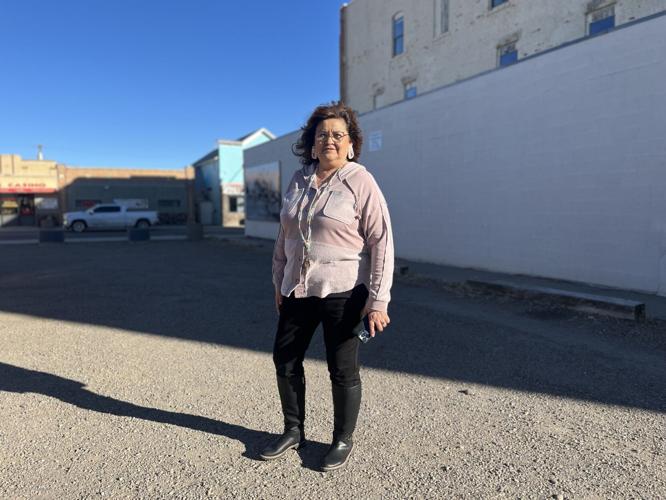
Donald MacCord, Northwest representative for American Molecular Laboratories, was brought in to perform drug testing at Southern Piegan Health Center.
St. Goddard said she had not heard from the DEA, but that investigators from the DPHHS Office of Inspector General “requested all of our pain-management files” and that SPHC provided them in mid-2025. Gervais said the tribe provided investigators “probably 40 boxes of information” in response to “a target letter” from the OIG.
Gervais also said this recent investigation is not the first outside probe into allegations of overprescribing at Southern Piegan Health Center.
While he didn’t recall the case clearly, Gervais said that investigators from the DEA, DPHHS Office of Inspector General or the state of Montana probed a now-deceased SPHC provider’s prescribing practices in about 2018 or 2019, while he was on council but not chairman.
Gervais said investigators requested and reviewed files but “cleared” the provider in 2020. “There’s been allegations before,” Gervais said, “and we’ve gotten through it.”
Steffan Tubbs, public affairs officer for the DEA’s Rocky Mountain Field Division, declined to comment on previous investigations. A Department of Justice spokesperson did not respond to a request for comment about that earlier investigation.
‘Lack of resources’
In a wide-ranging interview with Lee Enterprises, St. Goddard strenuously rejected claims that patients had been harmed as a result of SPHC’s practices or “that we were a pill mill.”
St. Goddard argued that, by making such accusations, DesRosier and others had unfairly “targeted” Southern Piegan with unfounded claims that undermined the health center’s ability to serve patients.
St. Goddard did acknowledge the program had struggled at times due to overburdened providers and a “lack of resources.” And she didn’t dispute the monthly pill counts provided by DesRosier or the allegation of copied-and-pasted notes, though she rejected the idea that these were evidence of problematic practices.
St. Goddard said prescribing 35,000 to 40,000 opioid pills a month to 200 patients was “not unreasonable for the numbers of patients we had.”
And she said that both tribal lawyers and a third-party review of the program supported the idea that copying and pasting patient notes is “a common practice of medical providers,” in some circumstances.
St. Goddard also argued that DesRosier was never actually the tribal health system’s medical director and never had legal authority to review patient charts or provide oversight of SPHC because the tribal council did not approve her hiring. DesRosier provided paperwork to Lee Enterprises showing her hire, which was signed by the tribe’s personnel director.

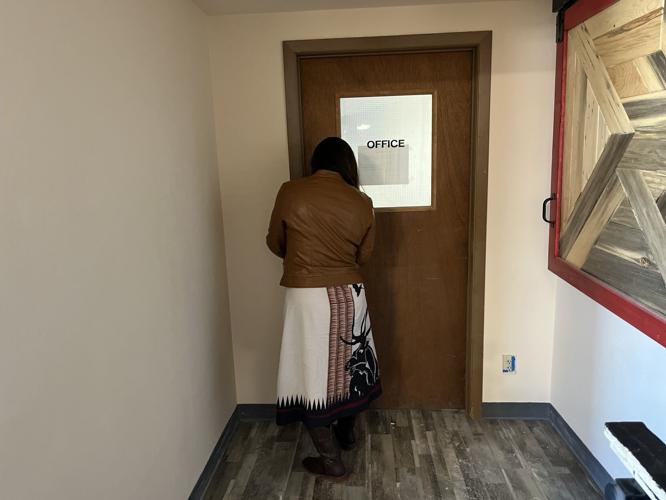
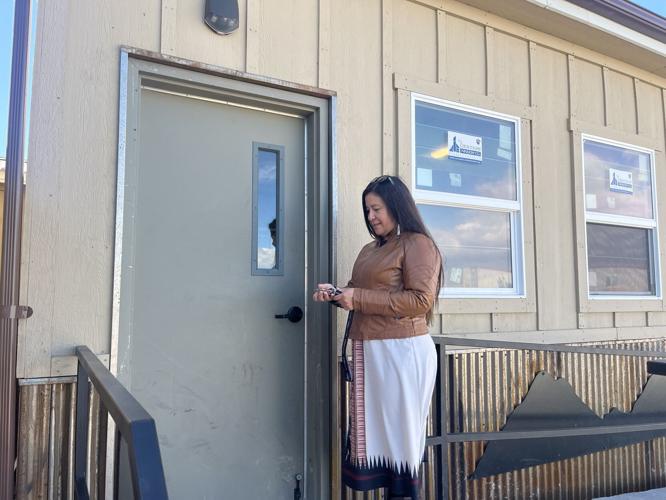
Jennifer St. Goddard, administrator of Southern Piegan Health Center until recently, unlocks a door at the clinic in Browning, which was undergoing a remodel in April.
‘Do not bill for these’
As her concerns grew, Red Fox said she worried not only about the harm medications from SPHC might be doing to patients, but also about the possibility that even billing for such visits might be illegal. Red Fox said she “point-blank asked” DEA agents what to do and they told her, “'Do not bill for these, because then this becomes Medicaid fraud.'”
Red Fox did as instructed, she said, and stopped billing Medicaid for the $800 that each pain-management visit brought in to Southern Piegan.
A year later, however, Red Fox alleged that the tribe brought in a contract biller and told them to bill for those visits anyway. When the contractor did as instructed, Red Fox said, they billed for “over a million dollars of that Medicaid that we had stopped billing for.”
Gervais told Lee Enterprises that a third-party biller who billed for Southern Piegan visits after tribal-health employees stopped doing so was asked to act as a grand-jury witness.
License surrendered
As the DEA’s investigation continued into 2025, Red Fox, DesRosier, Gervais and others said that agents compelled Patricia Alderson, an SPHC nurse practitioner, to voluntarily relinquish her license to prescribe controlled substances.
Tubbs, of the DEA, confirmed in an email that Alderson “did voluntarily surrender her license.”
Asked whether Alderson did so under pressure from the DEA, Tubbs wrote, “DEA does not ‘pressure’ individuals – they have the choice of surrendering or face an Administrative hearing.” When asked whether Alderson faced such a choice, Tubbs did not respond.
Gervais told Lee Enterprises he talked to Alderson and “advised (her) against” surrendering her license because she was “innocent until proven guilty.”
St. Goddard acknowledged that Alderson had given up her license to prescribe controlled substances but said that she had been hired back and was working as SPHC’s primary-care provider as of April. Jamie Fricke, the current medical director for the health center, noted that the Montana Board of Nursing has not restricted Alderson’s license “in any way.”
Efforts to reach Alderson by email, phone and through a lawyer who represented her in an unrelated case were unsuccessful.

Fonda Red Fox, the former director of centralized billing for the Blackfeet Tribal Health System, said she found the amount of opioids being prescribed at Southern Piegan Health Center "kind of scary."
‘Failure to comply’
In an interview, St. Goddard initially stated she didn’t hear any allegations of inappropriate prescription practices regarding opioid pain medications at SPHC until January of 2025.
But DesRosier said she first brought her concerns to St. Goddard in April 2024, and documents show that Rutherford and Garland Stiffarm, chief executive officer of the Blackfeet Tribal Health System, sent a letter dated Nov. 8, 2024 to St. Goddard about DesRosier’s findings.
That letter stated that DesRosier had conducted patient chart reviews and found a host of problems, including “overprescribing of opiate narcotics, improper documentation of visits, and incomplete evaluation of patients receiving opiates for chronic pain” as well as “copying and pasting medical documentation.”
They also demanded a number of reforms that St. Goddard was to implement “immediately.”
“Failure to comply with this directive may result in progressive disciplinary actions (i.e. suspension or termination),” Stiffarm and Rutherford wrote.
In a Dec. 4, 2024 letter to the tribal health system’s executive team, MacCord outlined his concerns about SPHC, writing that he had begun “monitoring the testing protocols at S. Peigan once it became evident that the staff was pouring out significant numbers of drug tests and not doing confirmation tests per standard IHS and Clinic policies.”
St. Goddard said that MacCord “did not actually bring any of those allegations to us” and was more interested in money than in helping the clinic. But she did acknowledge that, for a time, the clinic was dealing with a lapse in drug-screening results being entered into the clinic’s electronic-health records system.

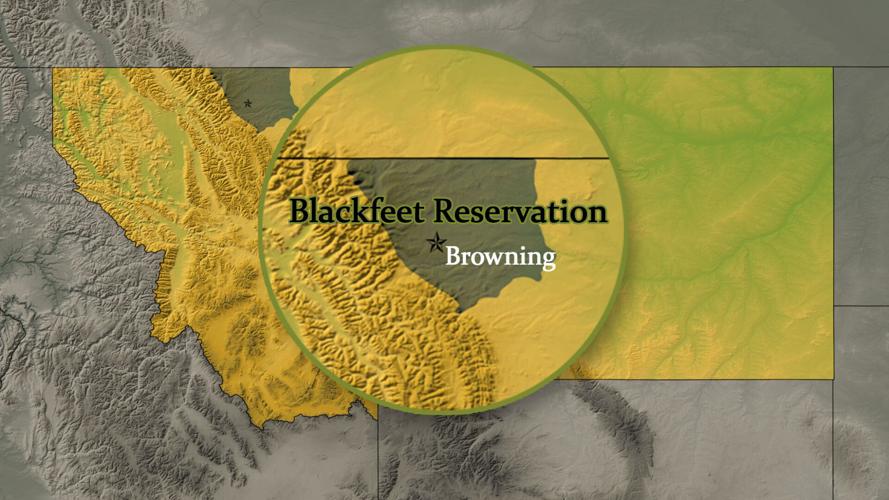
A map of the Blackfeet Indian Reservation located in northwestern Montana.
‘A matter of utmost urgency’
On Jan. 14, 2025, DesRosier and Stiffarm, who did not respond to requests for comment sent by email and through former colleagues, made another attempt at sounding the alarm about Southern Piegan.
In a letter addressed to the Blackfeet Tribal Business Council, DesRosier and Stiffarm described what they said were problems at SPHC as “a matter of utmost urgency, one that touches, not only on the health and safety of our people, but also their dignity and trust in the systems meant to protect them.
“This is not a simple issue of negligence; it is a collision between outdated practices, a genuine but misguided belief in how pain should be treated, and realities of modern medical science,” they continued. “The result is unchecked opioid addiction, deteriorating mental health, and preventable deaths. We urge this body to direct the Tribal Attorney General to establish a Special Task Force and appoint a Special Prosecutor (capable of practicing in the Blackfeet Tribal Court) to address these failures and hold those responsible accountable.”
In an interview, St. Goddard said such allegations that SPHC was “killing people” were “unjust,” “unwarranted” and “unsubstantiated.” She also said that putting out such allegations was harmful to the clinic and the community.
Misty LaPlant, opioid response director for SPHC, said she has seen no evidence supporting claims that medications from the clinic were fueling opioid addiction and death.
“Part of what my program does is collect data and analyze that data on opioid overdoses,” LaPlant said. “And I can tell you that every single fatal opioid overdose in this community in this county was confirmed by toxicology as a fentanyl overdose and not related to any prescribed opioid medication. And, additionally, all the overdoses in our community in the last six years, none of them have been indicative of prescribed pain pills. They're all from fentanyl. Illicitly manufactured fentanyl.”
In their four-page letter, DesRosier and Stiffarm warned that the clinic’s practices were leading to “addiction and dependency,” a “mental health crisis” and “negative community effects,” including “broken families, fractured trust, and weakened cultural resilience.”
“This is more than a health care issue – it is a crisis affecting our entire community,” DesRosier and Stiffarm wrote.
And they urged the tribal council to act, including by forming a task force to “evaluate how ongoing negligence and refusal to adapt are actively endangering lives.”
‘Harming patients’
A week later, DesRosier wrote again.
In a letter dated Jan. 22, 2025 and addressed to the Blackfeet Tribal Business Council, the tribal attorney and Stiffarm, DesRosier stated that the day before she had pulled Gervais aside and told him that, in her “medical and professional opinion … the medical practices of the Southern Piegan Health Clinic are causing the deaths of Blackfeet people due to the over prescribing of opiate narcotics.”
Gervais called allegations that Southern Piegan’s prescribing practice had led to patient deaths “outrageous.”
“All of this is allegations by individuals who have been proven wrong, and they’re disgruntled,” he said.
Employees reinstated, tribe assumes oversight
On Jan. 28, 2025, after DesRosier said no signs of decisive action could be detected in SPHC’s practices, Stiffarm “hand delivered” a letter to St. Goddard, the center’s administrator, informing her that she “was being placed on Administrative Leave.”
That’s according to a Jan. 29, 2025 memo that Stiffarm wrote to himself “for the record regarding the delivery of the official letter” to St. Goddard.
Alderson was also put on administrative leave, soon after voluntarily relinquishing her license to prescribe medications under pressure from the DEA, DesRosier and Red Fox said.

Lyle Rutherford, of the Blackfeet Tribal Business Council, discusses blueprints for a new wellness center in this 2024 photo. He was involved in pressing for reform at Southern Piegan Health Center later the same year.
But on Feb. 20, 2025, documents show that the tribal council passed a pair of resolutions that critics believe undermined efforts to improve care at Southern Piegan.
One of those resolutions authorized “all employees of Southern Piegan Health Center who were placed on administrative leave to be reinstated, effective immediately.”
In doing so, the tribe allowed St. Goddard and Alderson to return to their positions at SPHC, DesRosier and Red Fox said.
The other resolution moved SPHC “out from under the administrative umbrella of Blackfeet Tribal Health and under the direct supervision of the Blackfeet Tribal Business Council and Health Board.”
That action removed the tribal health system’s oversight of SPHC.
St. Goddard said the resolution also meant that the health center no longer had to share its revenue with the tribal health system and could use its funds to improve care and hire needed employees.
St. Goddard said that it was fear of losing this income that motivated DesRosier and others in tribal health to make what she believed to be unsubstantiated allegations about Southern Piegan.
“We bring in a lot of revenue,” St. Goddard said. But under tribal health, St. Goddard said, SPHC “was being stifled. We weren't able to hire. We were losing our applicants.”
‘Huge liability’
Four days after those resolutions passed, on Feb. 24, 2025, Gervais, the tribal chairman, emailed Stiffarm, tribal Councilman Lyle Rutherford and others, saying that “employees have been reinstated and the program has been placed directly under the health board at which time is the Blackfeet Tribal Business Council.”
He also issued multiple “directives” related to the federal investigations, including:
- “Any documents, information and communication regarding DEA or events of the tribal health investigation will be handed over to myself, BTBC (Blackfeet Tribal Business Council) and our attorney Evan Thompson.”
- “All communications regarding Southern Piegan Health Clinic with Federal, State and outside agencies will cease and desist from your administration. The BTBC, Southern Piegan and health attorney Evan Thompson will continue these discussions with the outside agencies.”
- “All accusations that Southern Piegan Health Clinic employees are killing people will cease and desist.”
Gervais added: “I feel the accusations the Tribal Health Administration made were unfounded, unprofessional and at this point a huge liability to the Blackfeet Tribe. There has been information brought forth to the BBC that puts Tribal Health's accusations into serious question.
"I know there are still a lot of concerns regarding Southern Piegan Health Clinic," Gervais continued. "We will address these issues to ensure that we move in a better direction to serve our people with respect, dignity and the love they deserve.”
'SPHC to discontinue Pain Management'
While SPHC employees like St. Goddard and Alderson were allowed to remain in their jobs, DesRosier and Red Fox left the tribal health system due to their concerns about the allegedly harmful prescribing practices at Southern Piegan – and over fears of retaliation for voicing those concerns.
When Lee Enterprises initiated this investigation into SPHC in January, DesRosier, Red Fox and others expressed skepticism that the clinic would reform its practices.
But on Feb. 11, St. Goddard sent a letter to the Blackfeet Tribal Business Council announcing the “Discontinuation of Pain Management Program.”
After hearing “allegations of inappropriate prescription practices,” St. Goddard wrote that she and her team “have been investigating and implementing the necessary changes to our Pain Management Program and its practices” and decided “it is in the best interests of SPHC to discontinue Pain Management.”
She also noted that her team had “initiated a third-party review of the allegations.”
“While the third-party review confirmed that the allegations against SPH lacked merit,” St. Goddard wrote, “there were some findings that gave me concern and which I have been working to address and monitor.”
Gervais noted that the third-party review resulted in “minimal findings,” but he declined to share that report.
In addition to those internal investigations, St. Goddard wrote that she had “worked with the State of Montana Nursing Board and Federal DEA to further investigate the allegations.”
While she wrote that these “investigations have yet to yield new information” and that SPHC had implemented “all recommended policy updates/changes to our Pain Management Program, we believe that several factors weigh against continuation” of that program.
Ultimately, the decision to close the clinic, St. Goddard told Lee Enterprises, had to do with their inability to bring on a pain specialist to operate the program.
“And so I think if we're not going to do the very best at it, then … I don't want us to do that,” St. Goddard said. “I don't want us to offer that.”
On April 15, the tribal council voted to approve an investigation into St. Goddard and Southern Piegan Health Center in response to “a lot of complaints from a lot of the staff members” who work for Southern Piegan’s various programs, Rutherford said.
Two days later, St. Goddard quit, believing the planned investigation was just more “targeting” by those who wanted to get rid of her, she told Lee Enterprises.
It is not clear whether any federal investigations are ongoing.
Keri Brehm Leggett, acting public affairs officer for the U.S. Attorney’s Office in Montana, wrote that her office “cannot confirm or deny whether any investigations into this alleged conduct have been or are being conducted.”
Gervais noted that the tribe hasn’t “gotten a letter saying (federal agents) have stopped the investigation.”
When asked if the DEA is continuing to pursue its investigation, Tubbs said that “we do not comment on active investigations.”
Ted McDermott has been a reporter and editor at newspapers in Missoula, Butte and Spokane. His reporting has earned numerous journalism awards, including the A-Mark Prize for Investigative Reporting and first place for Coverage of Indigenous Communities by a non-Native reporter from the Indigenous Media Awards.