BROWNING, Mont. – Jennifer St. Goddard had one mission.
“I'm here to (ensure) the health and the welfare of my community,” the director of Southern Piegan Health Center said in April. “Because I am an enrolled Blackfeet member, these are my people. They are truly my people, and I'm going to act in the best interest of them at all costs.”
And those costs have been high, she said.
Over the past two years, St. Goddard has been repeatedly accused of allowing opioids and other controlled substances to flow out of the Southern Piegan Health Center, the tribal clinic she led until recently, and fuel harm across the Blackfeet Indian Reservation in northwest Montana.

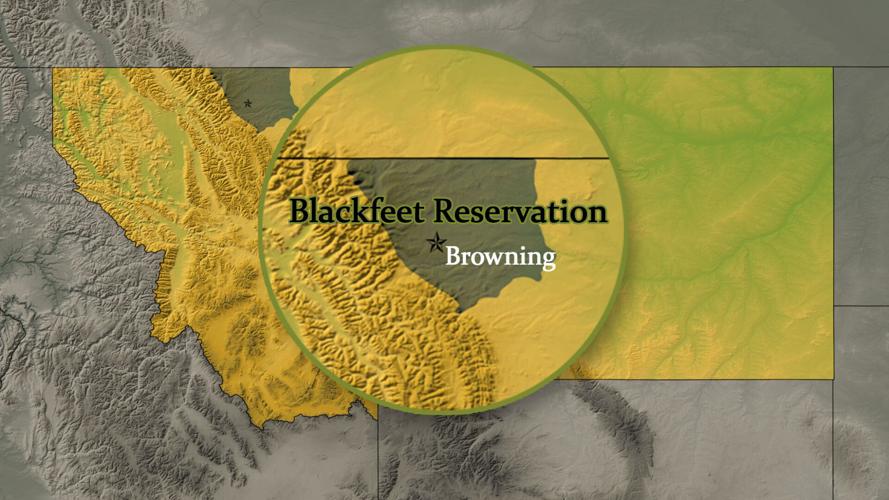
A map of the Blackfeet Indian Reservation located in northwestern Montana.
Members of the Blackfeet Tribal Health System, including its medical director and CEO, have alleged that the health center’s prescribing practices have endangered patients. Southern Piegan has been the subject of federal and state investigations. St. Goddard and others at the health center have been placed on administrative leave. Time, energy and money have been diverted from providing health care to responding to the various allegations of overprescribing, misprescribing, fraud and other misconduct, St. Goddard said.
People are also reading…
“And the people who pay the highest price are our patients, because that's what happened in all of this,” St. Goddard said. “When you have a stop and a starting of a service and you have these things happening ... the person who pays the ultimate price is our patients.”

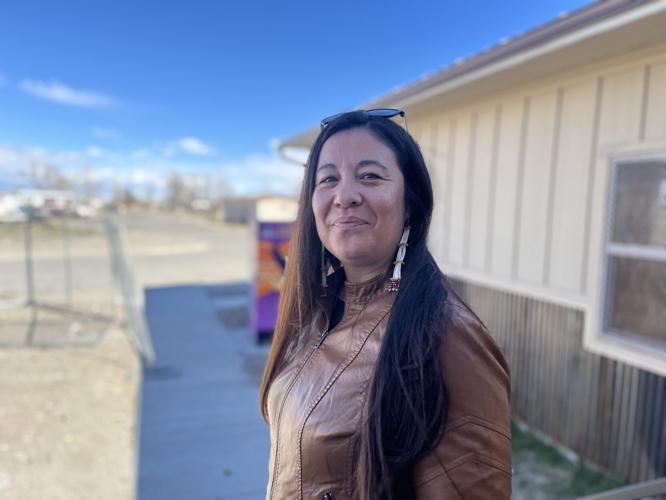
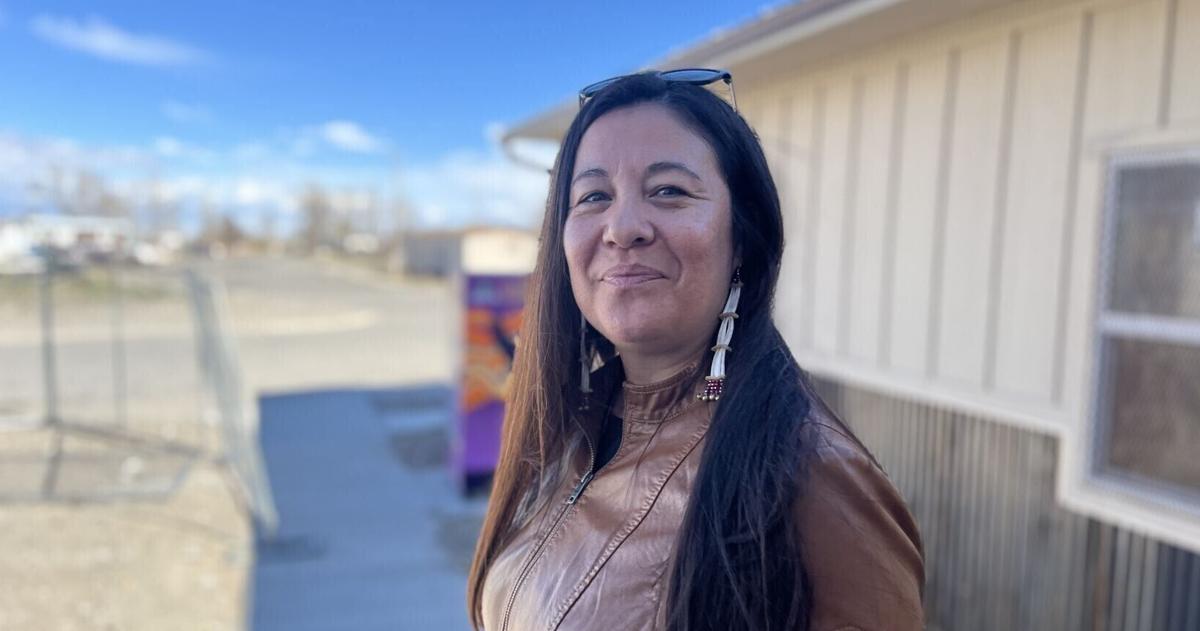
Jennifer St. Goddard, administrator of Southern Piegan Health Center until recently, said allegations that SPHC was harming people were “unjust,” “unwarranted” and “unsubstantiated.”
In February, St. Goddard announced her decision to end Southern Piegan’s pain-management program altogether.
But she and others from Southern Piegan’s leadership team were adamant in an April interview that this decision wasn’t a response to the allegations of misconduct that have roiled Southern Piegan Health Center since 2024.
Rather, St. Goddard said, SPHC is “basing that decision on ... a lack of resources.”
While Southern Piegan has made numerous efforts to change and improve its practices over the past year, St. Goddard said pain management is “an overly burdening specialty” that has proved difficult to offer in a remote, rural setting where qualified specialists are reluctant to locate.
“And so I think if we're not going to do the very best at it, then I don't want us to do that,” St. Goddard said. “I don't want us to offer that.”
St. Goddard suggested in April that she was going to continue to lead Southern Piegan, come what may.

Dr. Mary DesRosier’s whole life has been built on “medicine, Blackfeet, helping and healing.”
“I have stood up against anything that they have thrown at me, and I've been put on administrative leave,” St. Goddard said in April. “I've been fired. I've been all of these things. And at the end of the day, I'm still standing.”
A few days later, however, after the Blackfeet tribe’s governing council approved an investigation into her and the clinic, St. Goddard sent a brief email to council members, announcing that she had “made the difficult decision to resign as the Director of Southern Piegan Health Center effective immediately.”
‘Huge burden’
St. Goddard, a Blackfeet tribal member, joined Southern Piegan in February of 2023, after earning a bachelor’s degree in finance as well as a master’s in health administration and working for multiple health clinics in Missoula.
At the time, she said, the health center’s “primary-care providers were also handling pain management.”
But after a couple of providers left, responsibility for patient care fell on a single provider, Patricia Alderson. And that, St. Goddard said, “was a huge burden.”
Soon after Alderson assumed full responsibility for prescribing medications, the Blackfeet Tribal Health System, which included Southern Piegan at the time, hired a new medical director, a longtime Blackfeet doctor named Mary DesRosier.
But St. Goddard refused to acknowledge DesRosier as a legitimate medical director with valid oversight of Southern Piegan because, she claimed, her hiring was not approved by the tribal council.
DesRosier dismissed this idea and provided paperwork showing her hire, signed by the tribe’s personnel director.
‘A better model’
Within days of starting in her new position in the spring of 2024, DesRosier became deeply concerned by the amount of opioids and other controlled substances that Alderson was prescribing at Southern Piegan each month.
DesRosier told Lee Enterprises that she immediately reported those concerns to St. Goddard, who refused to accept the advice of someone she did not recognize as having any legitimate authority.
St. Goddard also disagreed with what she described as DesRosier’s “very rigid” approach and belief that people shouldn’t “use any type of opiate for pain, at all, ever.” And St. Goddard said DesRosier “wanted to implement that rigidity to every piece of the tribal health system.”
When DesRosier discovered that SPHC providers prescribed 35,603 pills to 211 patients in October 2023 and 40,066 to 262 patients in April 2024 and that these amounts had remained relatively consistent for years, she considered it damning evidence of the health center’s overprescribing. St. Goddard, on the other hand, said those prescriptions were “not unreasonable for the numbers of patients we had.”
St. Goddard said she realized by June 2024 that the health center was “overburdening our provider.”

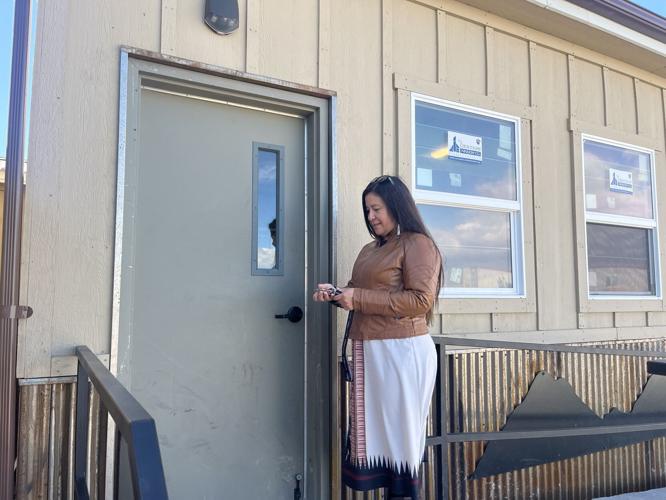
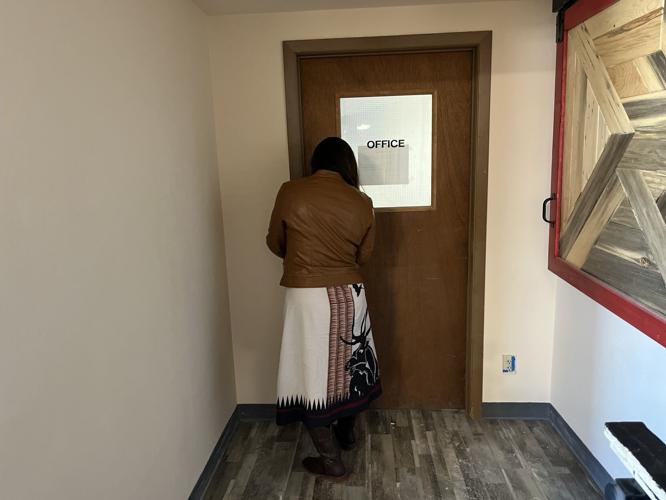
Jennifer St. Goddard, administrator of Southern Piegan Health Center until recently, unlocks a door at the clinic in Browning, which was undergoing a remodel in April.
In response, she said, Southern Piegan leadership was "trying to figure out, 'What's a better model? How can we make sure that our pain management is looked at as a specialty arm, rather than a part of primary care?'"
She said Southern Piegan hired a pain-management care manager in November 2024 to help with pill counts, drug screenings and other “areas that were hard for us to follow up on.”
‘Absolutely targeted’
In a letter dated Nov. 8, 2024, Garland Stiffarm, CEO of the Blackfeet Tribal Health System, and Lyle Rutherford, a tribal councilman, sent a letter to St. Goddard outlining DesRosier’s concerns and demanding changes.
But St. Goddard said she first heard allegations of inappropriate prescription practices regarding opioid pain medications at Southern Piegan in January of 2025, when she said she found out that Rutherford had approved an investigation into the health center.
Again, St. Goddard questioned whether this action was valid, arguing it had not received approval of the entire tribal council. Documents suggest, however, that the Blackfeet Tribal Health System was probing the clinic with the participation of Rutherford, who was serving as chair of the tribal council’s Health Committee.
When a Southern Piegan patient died on Jan. 18, 2025, DesRosier and other critics blamed Alderson, arguing that medications she prescribed led to an accidental overdose.
That’s an allegation that St. Goddard vehemently rejects. The patient’s official cause of death was listed as complications from diabetes.

Some believe a tribal clinic with a pain-management program was fueling harm by flooding the Blackfeet Nation with opioids. Supporters saw it as a haven for suffering patients.
Misty LaPlant, opioid response director for SPHC, said she has seen no evidence supporting claims that patients died as a result of overprescribing and misprescribing.
“Part of what my program does is collect data and analyze that data on opioid overdoses,” LaPlant said. “And I can tell you that every single fatal opioid overdose in this community in this county was confirmed by toxicology as a fentanyl overdose and not related to any prescribed opioid medication. And, additionally, all the overdoses in our community in the last six years, none of them have been indicative of prescribed pain pills. They're all from fentanyl. Illicitly manufactured fentanyl.”
Days after that death, a DEA agent came to Browning and asked Alderson to surrender her license to prescribe controlled substances, which she did.
Then, on Jan. 28, 2025, Stiffarm “hand delivered” a letter to St. Goddard, the center’s administrator, informing her that she “was being placed on Administrative Leave,” documents say.
While St. Goddard said she recognized the need for improvements at the health center, she objected to how DesRosier, Stiffarm, Rutherford and others campaigned for reform.
“And so at this point, we were absolutely targeted,” St. Goddard said. “And it had been going on for, now, over a year.”
Employees reinstated
Soon after, on Feb. 20, 2025, the tribal council passed a pair of resolutions.
One of those resolutions authorized “all employees of Southern Piegan Health Center who were placed on administrative leave to be reinstated, effective immediately.” In doing so, the tribe allowed St. Goddard and Alderson to return to their positions at SPHC, DesRosier and Red Fox said.
The other resolution moved SPHC “out from under the administrative umbrella of Blackfeet Tribal Health and under the direct supervision of the Blackfeet Tribal Business Council and Health Board.”
That action removed the tribal health system’s oversight of SPHC.

Jennifer St. Goddard, administrator of Southern Piegan Health Center until recently, pushed back on claims that patients had been harmed as a result of SPHC’s practices or “that we were a pill mill.”
St. Goddard said Southern Piegan had been trying to get out from under the tribal health system for a while because tribal health had “stifled” SPHC’s efforts to grow and improve.
“That umbrella wasn't working for Southern Piegan Health Center, and we weren't growing,” St. Goddard said.
And she argued that the criticism from those in the tribal health system had been motivated by a fear that Southern Piegan would leave – and take its revenue with it.
‘Plan of action’
While she distrusted the motives of Rutherford, DesRosier, Stiffarm and others, St. Goddard said she told the tribal council she would “put together a plan of action” and arrange for an “external review” of Southern Piegan’s pain-management program.
She hired Health Management Associates to conduct that review.
St. Goddard did not describe the findings of that review in detail or share it with a reporter, but she did say that HMA never recommended that Southern Piegan “cease and desist” its pain-management program.
An HMA spokesperson said “we don’t comment on whether an organization has or has not been a client.”
St. Goddard noted that after HMA’s review, Southern Piegan updated its policy and procedures, brought in a care manager, conducted employee trainings, and “did a lot of work.”
Southern Piegan also hired Jamie Fricke, a nurse practitioner, as its new medical director in the fall of 2025. Fricke lives in Alabama but commutes back and forth, spending weeks at a time on site, he said.
St. Goddard also brought back Alderson. While she cannot prescribe opioids and controlled substances, Alderson provides primary care and can prescribe other medications, Fricke said.
St. Goddard acknowledged it was “concerning” when the DEA asked Alderson to surrender her license to prescribe controlled substances, but St. Goddard declined to say why she has continued to employ her because it was a personnel matter.
But Fricke noted that the state Board of Nursing to date “has not restricted (Alderson’s) license in any way.”
As Southern Piegan has sought to improve its pain-management program, St. Goddard said it has developed and implemented plans that have kept patients “at the center” of the health center’s work.
St. Goddard said SPH has tried to meet patients “where they're at and do it in the most humane way we can, possibly, with no judgment.”

Concerns about the prescribing practices at the Southern Piegan Health Center, a tribally operated clinic, have roiled the Blackfeet Indian Reservation in northwest Montana.
‘We don't have the resources’
Since Alderson lost her DEA license, St. Goddard said Southern Piegan has been relying on a contracted provider who works via telehealth and “was coming on site” periodically to provide pain-management care.
But after the HMA review, St. Goddard said SPHC’s ability to proceed with a pain-management program “was really hinging on that part where we could confirm that we would have a pain specialist” who was permanently on site.
Last fall, St. Goddard said she was working out the logistics with a Kalispell-based health center to bring in a provider who could manage Southern Piegan’s pain-management program.
But that plan collapsed last fall, she said, when the proposed provider determined that “the numbers of patients at that time that we had … was too big of a panel of patients for him to manage,” St. Goddard said.
“I think as it's gone on – and our inability to bring on somebody who specializes in pain – it's made it really difficult to see how we can continue to offer a specialty (when) we don't have the resources to be successful at it, quite frankly,” St. Goddard said.
She said Southern Piegan plans to refer patients to a pain-specialist in Conrad, which is located 65 miles from Browning. That distance, she said, is a “huge barrier of access” but that SPHC will “see how we can bridge that gap for them.”
“We will still maintain their primary care,” St. Goddard said. “And we've brought on a patient-care coordinator to kind of help with those kind of more social determinants, trying to work with people to get them on health insurance, to get them hooked up with transportation. And so it's not that we're just saying like, ‘Oh, here, you know, you need to head out,’ or whatever. We're definitely trying to bridge those areas to make sure that they're still able to access their pain medicine or to help them.”
‘Very disheartening’
St. Goddard said all of the allegations and investigations have been “very disheartening” and have diverted energy that could have been directed toward expanding care through the health center.
But SPHC leaders are adamant that Southern Piegan Health Center is not “ending pain-management services based on these allegations,” LaPlant said.
“I think some of the facts related to that is that Southern Piegan has been compliant and forthcoming with all the separate investigations,” LaPlant continued. Meanwhile, LaPlant said, Southern Piegan has been “growing in a lot of different, really positive ways. And so I think at the end of the day, because of the big need that pain management requires as a specialty, that we're no longer going to continue that because we're choosing to focus on other, more positive things as a whole to our health center, into providing continued commitment to quality care for our community, advancing and improving upon patient health outcomes and safety.”
“I feel like as a team, we've done and been able to – in the midst of all of this chaos and stuff that's going on – we've done a really good job at still pushing forward our health center,” St. Goddard said.
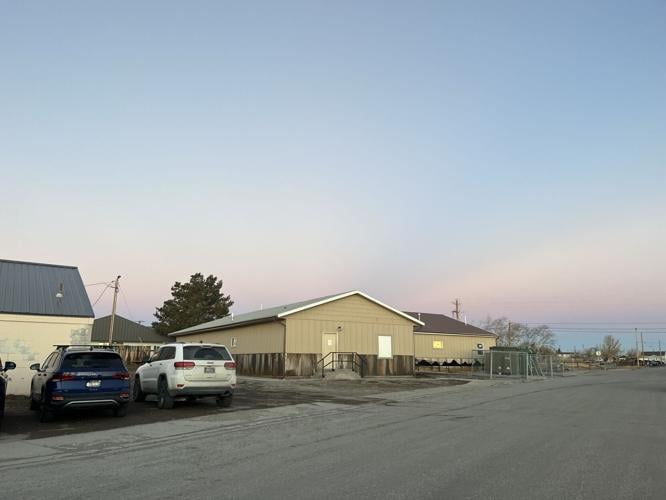
Southern Piegan’s main clinic in Browning is undergoing a nearly complete renovation and expansion. And the health center, which includes school-based clinics in both Browning and Heart Butte, “just set up a new school based clinic with the Head Start,” St. Goddard said.
Southern Piegan also recently took over operations of the tribe’s homeless shelter, which also houses an opioid-response team.
The number of active patients in Southern Piegan’s pain-management had declined from the mid-200s last year to 85 in April, Fricke said. But the total number of patients served by SPHC, including through telehealth, had reached 2,300.
‘Difficult decision’
St. Goddard expressed a mix of defiance and optimism as she looked back on a contentious chapter in Southern Piegan’s history that may not be over.
Efforts to determine whether any federal investigations are ongoing were inconclusive.
Keri Brehm Leggett, acting public affairs officer for the U.S. Attorney’s Office in Montana, wrote that her office “cannot confirm or deny whether any investigations into this alleged conduct have been or are being conducted.”
When asked if the DEA is continuing to pursue its investigation, Steffan Tubbs, public affairs officer for the DEA’s Rocky Mountain Field Division, said that “we do not comment on active investigations.”
Rutherford said that two days before St. Goddard resigned, the Blackfeet Tribal Business Council voted to approve an investigation into St. Goddard and Southern Piegan Health Center in response to “a lot of complaints from a lot of the staff members” who work for Southern Piegan’s various programs.
The resolution initiating that investigation had not been signed by tribal Chairman Rodney Gervais or the council secretary, Rutherford said, meaning it had not been approved at the time St. Goddard quit.
Rutherford said he was disappointed that the investigation didn’t play out, “because I'd like to get her side of the whole story, too.”
But St. Goddard told Lee Enterprises she doubted the integrity and motives of Rutherford and others on council who approved an investigation based on what she referred to as “solicited complaints” from “disgruntled employees.”
For St. Goddard, the council’s investigation was just the latest installment in three years of “targeting” by those who wanted to get rid of her, she said.
“At the end of the day, I was just like, I don't have any desire to go through another fight,” St. Goddard said.

Bison from the Blackfeet Buffalo Program graze on their winter range along the Two Medicine River. The tribe has about 700 bison in the herd, and this year they harvested about 20 to distribute across the community.
Ted McDermott has been a reporter and editor at newspapers in Missoula, Butte and Spokane. His reporting has earned numerous journalism awards, including the A-Mark Prize for Investigative Reporting and first place for Coverage of Indigenous Communities by a non-Native reporter from the Indigenous Media Awards.