

His sweeping redesign efforts arguably would be the most dramatic by a U.S. president since Theodore Roosevelt championed a structural overhaul of the National Mall in the early 1900s. In the 1950s, Harry Truman gutted and rebuilt the White House.
Here are some of Trump's passion projects, which drew sharp criticism from Americans concerned about pocketbook issues and the preservation of historic landmarks.
Ballroom
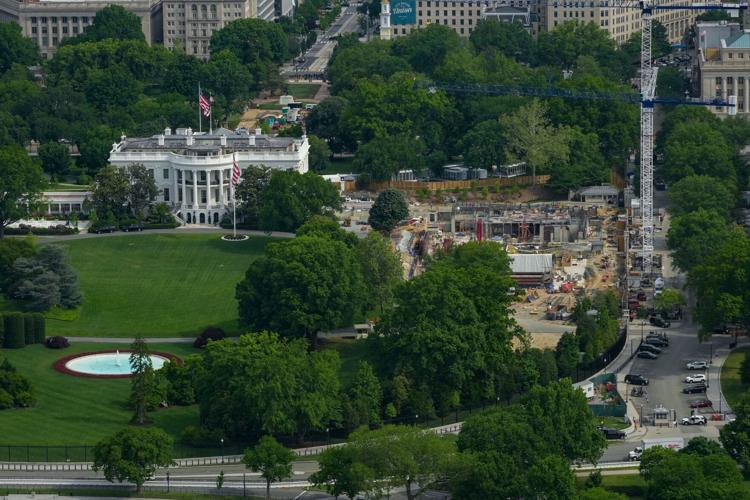
Trump said his planned 90,000-square-foot ballroom will be "the Greatest of its kind ever built," matching the existing White House in height and scale. Estimated to cost $400 million, he said it will be funded by wealthy individuals and corporations.
People are also reading…
But the Republican president's enthusiasm about the project, which he says will seat 1,000 guests, is not widely shared. He's faced public backlash since he demolished the East Wing to make room for the structure, despite earlier assurances that he would not.
A Washington Post-ABC News-Ipsos poll in October found 56% of Americans opposed the project, while only 28% supported it.
Preservationists and opponents of the project criticized the loss of the East Wing, which housed the offices of the first lady and the White House movie theater, and raised concerns that it could visually overpower the main mansion.
The work on the project provides a daily cacophony of construction noise between the White House and the Treasury Department, a disruption likely to continue for much of Trump's three remaining years in office.
On April 17, an appeals court allowed the Trump administration to continue construction of the ballroom and set a June hearing to review a Washington judge’s order that would halt the project.
Kennedy Center
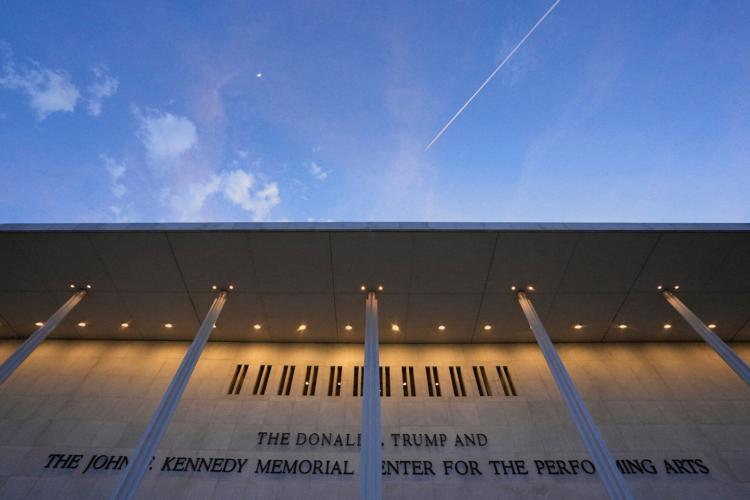
Congress authorized the John F. Kennedy Center for the Performing Arts to honor the Democratic president who was assassinated in 1963. That name went unchallenged for decades — until a Trump-appointed board voted last year to rename it the Trump–Kennedy Center.
The storied cultural center saw show cancellations and slumping ticket sales after Trump's takeover.
On Feb. 1, Trump announced that the property will close for two years beginning July 4 for a major overhaul. Trump insists the structure needs a retool, citing problems with the plumbing and crumbling masonry.
He said he does not plan to tear down the Kennedy Center but will renovate it, a claim critics note he also made about the East Wing before it was destroyed. He estimated the renovations will cost $200 million.
Reflecting pool
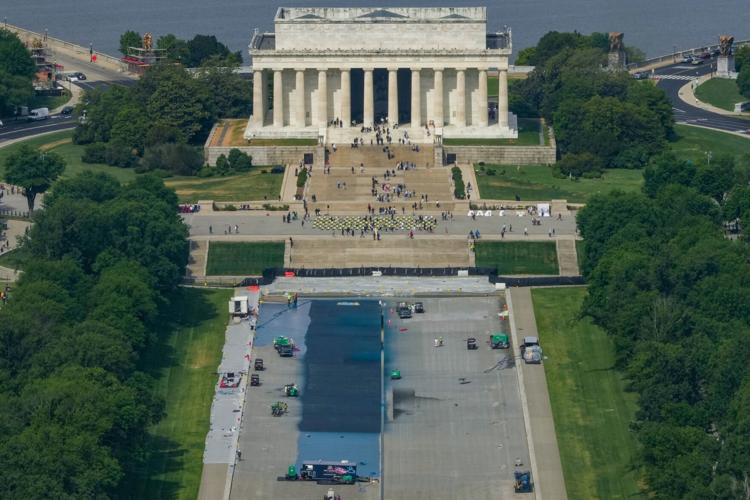
Trump on May 4 said he is remodeling Washington's historic Lincoln Memorial Reflecting Pool on the National Mall, where Martin Luther King Jr. delivered his "I Have a Dream" speech in 1963.
Trump said the pool was in bad shape and he decided to get more involved in the project to get it cleaned, restored and repaired at a fraction of an earlier high-cost estimate. He said the pool was resurfaced with "American flag blue" materials.
Pleased with his efforts, the president released a social media post featuring an AI-generated image of himself shirtless and other Cabinet officials floating in the pool.
Arch
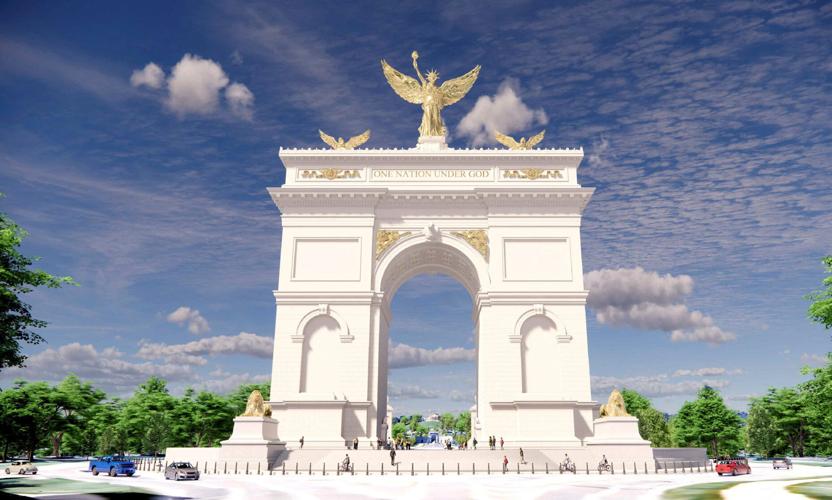
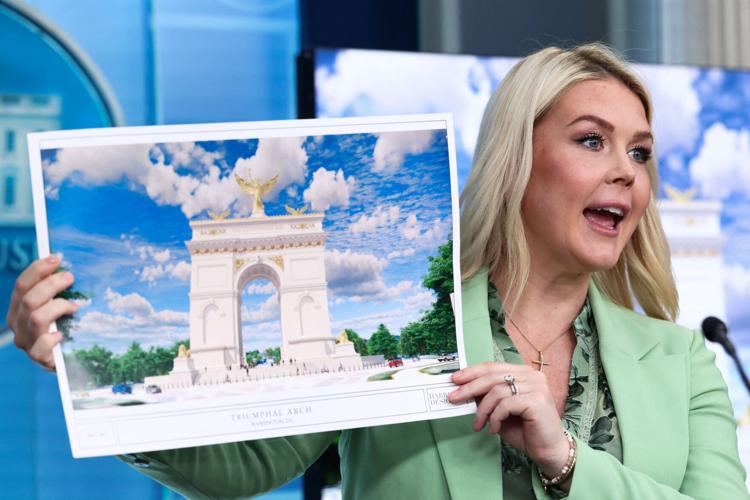
Across the Potomac River from the Lincoln Memorial lies a nondescript highway roundabout upon which Trump wants to build what he calls the Independence Arch, reminiscent of the Arc de Triomphe in Paris but much bigger.
The height of the arch, with eagle statues and a Lady Liberty-type figure on top, was estimated at 250 feet. That is taller than the Lincoln Memorial and not far off the size of the U.S. Capitol, which at 288 feet can be seen across much of Washington.
By contrast, the Arc de Triomphe in Paris is 164 feet tall.
Trump told reporters on Jan. 31 that he wanted a large arch because "we're the biggest, most powerful nation."
Whether the arch will actually be built with a 250-foot height remains unclear, as there is a possibility it could interfere with the flight path of southbound planes on the final approach to Ronald Reagan Washington National Airport a few miles away.
Oval Office
Trump embarked on his first major redecoration project at the White House when he moved back into the Oval Office in January 2025.
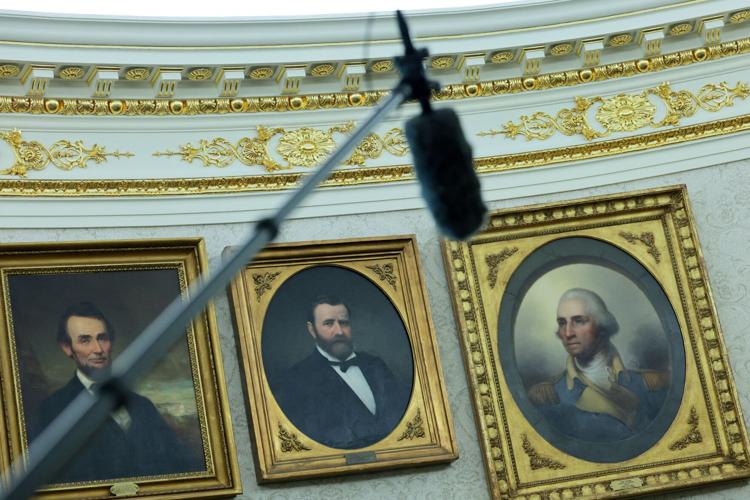
He transformed the storied room with gold accents and statuettes, portraits of famous Americans pulled from storage — including some who are not easily identifiable — and a copy of the Declaration of Independence hanging on the wall behind a black sheet. Busts of Abraham Lincoln and Benjamin Franklin are now situated on tables near his desk.
The level of bric-a-brac can give the room a cluttered, old library feel compared to the styles of previous presidents, but Trump is pleased with it and likes to give tours to visitors.
White House grounds
Trump replaced the Rose Garden's iconic grass lawn with a white stone patio and umbrella-covered tables, much like Trump has by his pool at his Mar-a-Lago Club in Palm Beach, Fla. He said the stone was needed because women wearing high heels would sink into the soil.
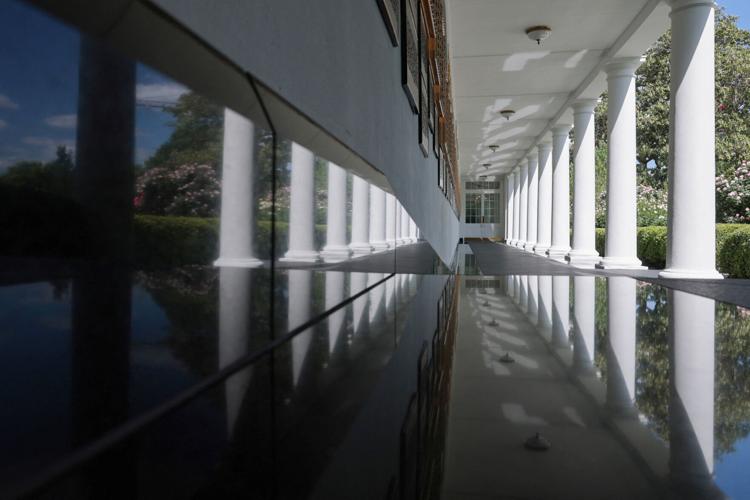
Along the nearby colonnade walkway, Trump placed portraits of America's 47 presidents on the wall, with a plaque beneath each inscribed with Trump's view of that person.
Bitter at his loss to Democrat Joe Biden in the 2020 election, Trump replaced Biden’s portrait with an image of an autopen, a device he and other Republicans criticized Biden for using to sign documents despite it being a fairly standard practice for recent presidents.
Elsewhere on the White House grounds, Trump placed large flagpoles on both the North and South Lawns.
Lincoln bathroom
Inside the White House, Trump tore out the green-tiled, retro-styled bathroom in the Lincoln Bedroom and replaced it with a modern version featuring white and black marble.
The green-tiled Lincoln bathroom dated back to Truman's White House renovation in the 1950s, according to a Washington Post article from 2007.
At the time, then-President George W. Bush and first lady Laura Bush undertook a renovation of the Lincoln Bedroom, which Lincoln used as an office. The Post article describing the Bush renovation said they left alone the "well-preserved" bathroom.


