

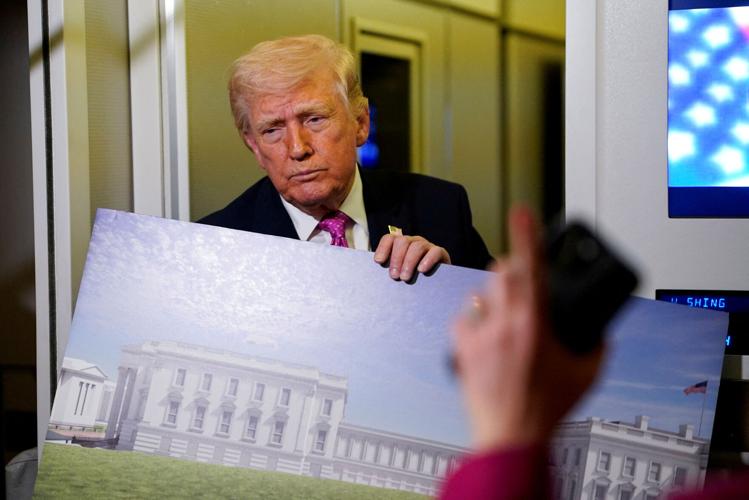
WASHINGTON — Democrats hoping to win control of Congress in November's elections seized on Republicans' support of President Donald Trump's proposed $400 million White House ballroom to portray his party as out of touch with voters' cost-of-living concerns.
As Republicans move toward a vote that might include hundreds of millions of dollars for the ballroom, Democrats point to a more than 50% jump in gasoline prices since Trump launched a war with Iran, as well as rising healthcare, fertilizer and electricity costs they say his policies worsened.
"It's a perfect storm of ugly," Sen. Amy Klobuchar, D-Minn., told reporters, quoting a farmer in her state.
Outside of Washington, Democratic candidates portray the project as a frivolous diversion from working Americans' concerns.
The ballroom "is a vanity project that we don't need," said Brian Poindexter, a Democrat running for a House of Representatives seat in Ohio. "Most of the people I hope to serve … worry about food, utilities, paying the rent."
People are also reading…
His rival, incumbent Republican Rep. Max Miller, did not respond to a request for comment.
Some Republicans say the ballroom is a needed improvement for an outdated White House and has nothing to do with the broader economy.
"It's hard to make that connection there. It doesn't fit," said Rep. Daniel Webster, R-Fla.
Others say it's a bad look ahead of the November elections, when control of Congress is at stake.
“We're talking about building a ballroom, and we're trying to get the economy squared away. Timing is bad," Sen. Thom Tillis, R-N.C., told CNN.
Republicans highlight the tax cuts they passed last year as they make the case they tackled affordability concerns, but Trump himself has not always stuck to that message.
"I don’t think about Americans’ financial situation. I don’t think about anybody," he told reporters last week when asked about rising costs spurred by the Iran war. He said his main concern was preventing Tehran from developing a nuclear weapon.
White House spokesman Davis Ingle said the administration was working to make healthcare and other costs more affordable.
The funding in question is part of a package that would enable the Secret Service "to properly address the ever growing threats of political violence in this historically heightened threat environment," Ingle said.
Washington makeover
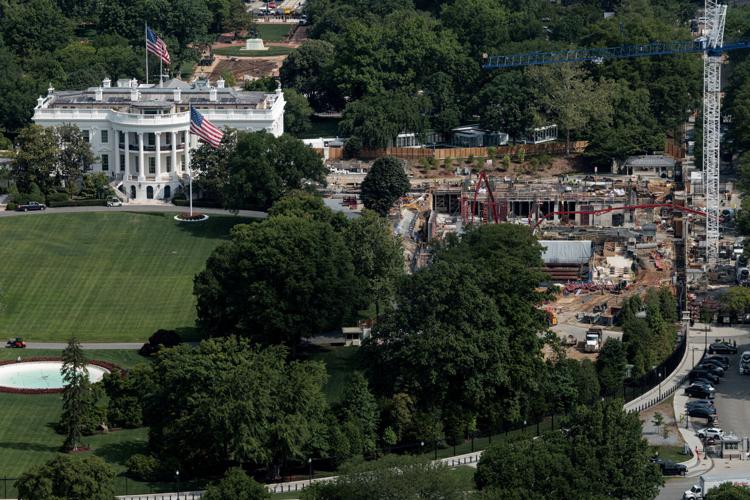
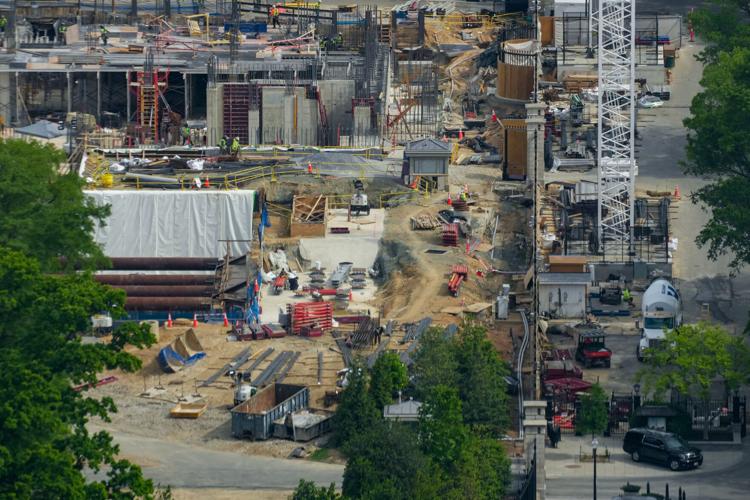
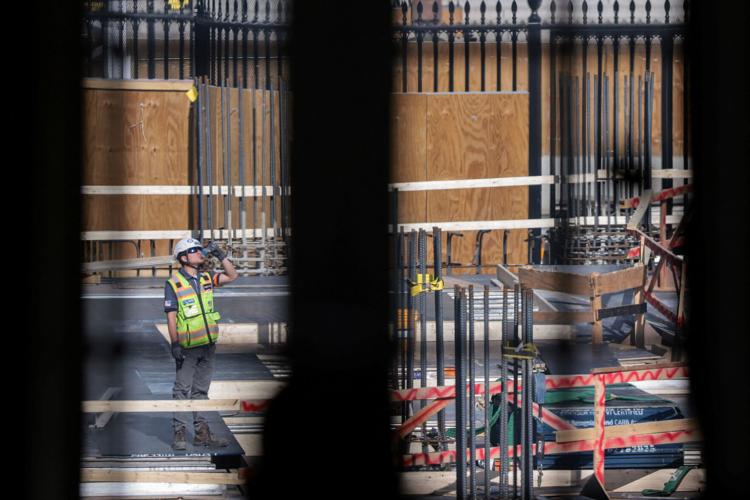
Trump, a former real estate developer, already demolished the East Wing of the White House as he forges ahead with the 90,000-square-foot ballroom. It would be capable of hosting large state events that are now held in tents on the South Lawn. It would sit atop a fortified underground military complex.
The scale of the project and the administration’s handling of fundraising drew criticism from watchdog groups who say it raises questions about transparency, donor influence and adherence to longstanding ethics norms.
Trump said about $300 million was raised for the project, though he has not provided details on the source of that money.
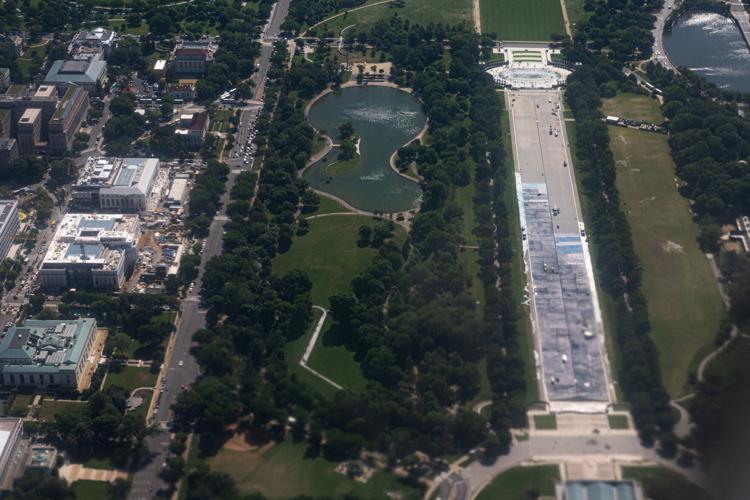
It's one of several efforts Trump undertook to overhaul Washington landmarks, including the Kennedy Center for the Performing Arts, the Lincoln Memorial Reflecting Pool and a proposed triumphal arch near Arlington Cemetery.
Trump insisted the ballroom would not cost taxpayers one cent because of private donations and money out of his own pocket.
However, after a gunman tried to storm a black-tie gala featuring Trump in April at a Washington hotel, Sen. Lindsey Graham, R-S.C., called for Congress to approve $323 million in taxpayer money for the ballroom, citing security concerns.
Republicans are now trying to adopted legislation that would include $1 billion for presidential security, including roughly $400 million for the White House complex. A vote in the Senate is possible this week.
"We want to protect our presidents no matter who they are, what party they're in," said Rep. Glenn Thompson, R-Pa. "I think that this construction project does that."
Details of the legislation have not yet been publicly released.
Senate Majority Leader John Thune, R-S.D., said the $1 billion is needed to bolster the Secret Service and harden the White House complex. "The ballroom is being financed privately," he said.
Democrats say the legislation contains no such guardrails. "If it's not for the ballroom, they should write that right into the bill," Sen. Jeff Merkley, D-Ore., said.
Trump looms large over November's midterm elections. Polls showed voters disapprove of his handling of the economy, his immigration crackdown, the Iran war and the ballroom. A Washington Post-ABC News poll released this month found Americans opposed the ballroom project by 56% to 28%.
In such an environment, it may be difficult for the security funding to pass the Senate, where Republicans hold a 53-47 majority, and the House, where their 217-212 majority gives them few votes to spare.
On Saturday, a Senate official made the GOP plan even harder.
The Senate's parliamentarian, Elizabeth MacDonough, removed the security funding that could be used for the ballroom from a massive spending package. She ruled that the security funding provision falls under chamber rules that require 60 votes to pass most legislation, according to Merkley's.


