WASHINGTON — Iran seized two ships in the Strait of Hormuz on Wednesday, tightening its grip on the strategic waterway after U.S. President Donald Trump called off attacks indefinitely with no sign of peace talks restarting.
Trump maintained the U.S. Navy blockade of Iran’s trade by sea, and Iran’s parliament speaker and top negotiator Mohammad Baqer Qalibaf said a full ceasefire only made sense if it was lifted. Reopening the strait was impossible with such a “flagrant breach of the ceasefire,” Qalibaf said in a post on social media.
“You did not achieve your goals through military aggression and you will not achieve them by bullying either. The only way is recognizing the Iranian people’s rights,” he said in his first response to Trump’s ceasefire extension.

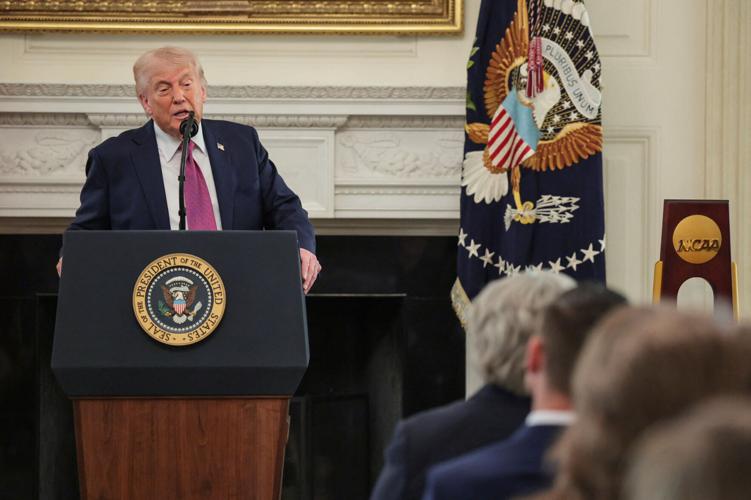
U.S. President Donald Trump delivers remarks Tuesday to NCAA Collegiate National Champions at the White House in Washington.
Iran’s semi-official Tasnim news agency said the Revolutionary Guard seized two vessels for maritime violations and escorted them to Iranian shores. It was the first time Iran seized ships since the war began at the end of February.
People are also reading…
The Revolutionary Guard also warned any disruption to order and safety in the strait would be considered a “red line,” Tasnim said.
Trump said in a statement on social media late Tuesday that the U.S. agreed to a request by Pakistani mediators “to hold our Attack on the Country of Iran until such time as their leaders and representatives can come up with a unified proposal … and discussions are concluded, one way or the other.”
A source briefed on the matter confirmed on Wednesday that Trump had not set a timeline for the extension of the ceasefire.
Iran considers the U.S. blockade an act of war and said as long as it continues it will not lift its closure of the strait, which caused a global energy crisis.
Iran showcased some of its ballistic weapons at a parade in Tehran on Tuesday evening, with images on state TV showing large crowds waving Iranian flags and a banner in the background with a fist choking off the strait.
Captions read: “Indefinitely under Iran’s Control” and “Trump could not do a damn thing,” referring to the waterway.

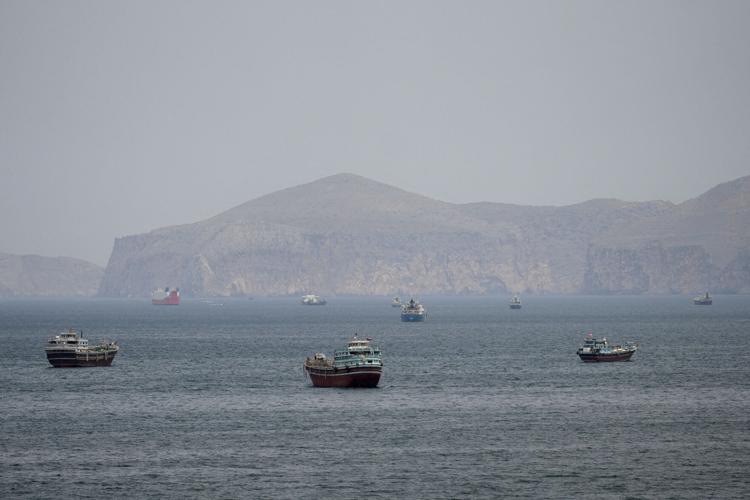
Ships and boats are seen Wednesday in the Strait of Hormuz, Musandam, Oman.
'A setback'
Pakistan, which has acted as a mediator, was still trying to bring the sides together for negotiations after both failed to show up for last-ditch talks on Tuesday before the two-week-old ceasefire had been due to expire.
"We were all prepared for the talks, the stage was set," a Pakistani official briefed on the preparations told Reuters. "If you ask me honestly, it was a setback we were not expecting, because the Iranians never refused, they were up to come and join, and they still are."

Another Pakistani source who was involved in the talks said Pakistan was still "working very hard to bridge that conflict, talk to each side with their sensitivities in mind."
There was no response early Wednesday to Trump's ceasefire announcement from senior Iranian officials, though some initial reactions from Tehran suggested Trump's comments were being treated skeptically.
Tasnim said Iran didn't ask for a ceasefire extension and repeated Tehran's threats to break the U.S. blockade by force.

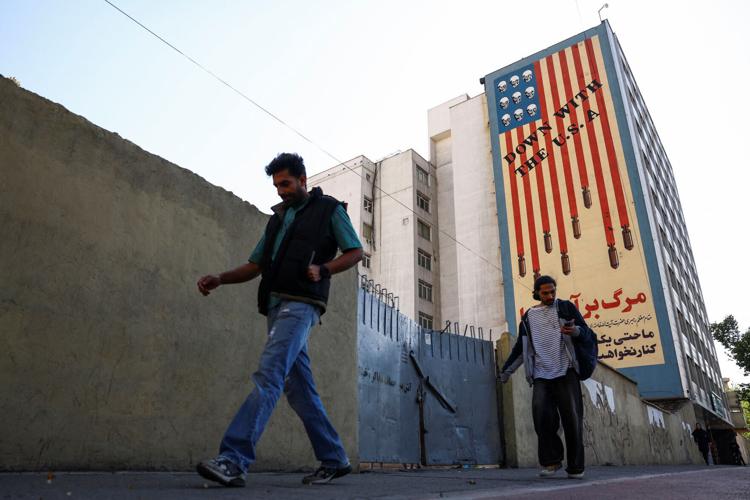
People walk past an anti-U.S. mural on a building Wednesday in Tehran, Iran.
Ship damaged
Throughout the war, Iran has effectively shut the strait to ships other than its own by attacking vessels that attempt to transit without its permission. About a fifth of global oil and liquefied natural gas normally passes through the waterway.
On Wednesday, Britain's maritime security agency UKMTO said at least three container ships reported being hit by gunfire in the strait.
The master of one ship reported being approached by an Iranian gunboat northeast of Oman on Wednesday, the agency said. The vessel came under fire from guns and rocket-propelled grenades and its bridge was heavily damaged, though there were no reports of casualties or environmental damage.
Two other ships said they came under fire about eight nautical miles west of Iran with no reported injuries.
Iran condemned the U.S. Navy intercepting Iranian ships at sea as part of its blockade, accusing the U.S. of "piracy at sea and state terrorism."
Key differences
With his announcement on Tuesday, Trump again pulled back at the last moment from warnings to bomb Iran's power plants and bridges, a threat condemned by the United Nations and others as potentially constituting war crimes. Iran said it would strike its Arab neighbors if its civilian infrastructure was hit.
Before Trump's latest announcement, a senior Iranian official told Reuters Iran's negotiators were willing to attend another round of talks. But throughout Tuesday Iran said publicly it had yet to agree to attend, while a U.S. delegation led by Vice President JD Vance never left Washington.
A first session of talks 11 days ago produced no agreement.
Washington wants Iran to give up highly enriched uranium and forgo further enrichment to prevent it getting a weapon. Iran, which says its nuclear program is peaceful, wants an end to the war, the lifting of sanctions, reparations for damage and recognition of its control over the strait.

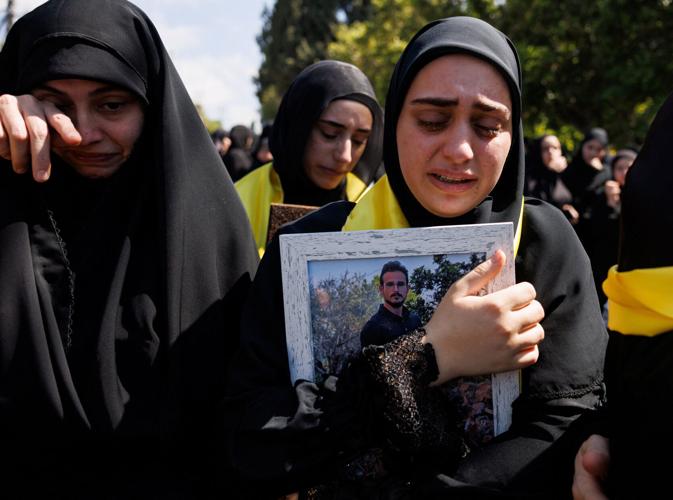
A woman mourns her relative Ali Ballout, a civil defense member killed during the conflict with Israel and exhumed from a temporary grave, during his funeral Wednesday in his home village, in Aitit village, southern Lebanon.
Lebanon
Meanwhile, Lebanese authorities reported at least two violations of a U.S.-brokered ceasefire to stop a parallel conflict between Israel and armed group Hezbollah. The Lebanon ceasefire was a condition for Iran agreeing to talks.
Overnight, an Israeli drone strike killed one person and wounded two others in Lebanon's western Bekaa Valley while a later attack on a car in South Lebanon killed two people, state media reported.
The Israeli military said it was not aware of the first strike. It did not immediately respond for a request to comment on the second.
Hezbollah said it fired rockets and drones into northern Israel on Tuesday, saying the Israeli military violated the truce.