ZURICH, Switzerland — A high-level Iranian team arrived Saturday in Switzerland for peace talks with the United States, Iranian state media reported, as U.S. Vice President JD Vance departed Washington for meetings that Pakistan said will begin Sunday.
Though the U.S. and Iran agreed to a 60-day ceasefire while negotiations take place, Tehran's Islamic Revolutionary Guard Corps declared the Strait of Hormuz closed Saturday. This could complicate talks in which both sides seek to advance an interim deal brokered by Pakistan that U.S. President Donald Trump and Iranian President Masoud Pezeshkian signed Wednesday to end their war that began Feb. 28 with U.S.-Israeli strikes on Iran.
Iran shuts Strait of Hormuz as Israel tests MOU with Lebanon strikes.
The Revolutionary Guard warned ships would be at risk if they approached the waterway, a vital conduit for about a fifth of the world's oil and gas supplies. Iran cited what it called Israeli "crimes" in Lebanon and a U.S. violation of commitments to establish a ceasefire.
People are also reading…
U.S. Central Command said 55 merchant ships transited the strait earlier in the day, moving large amounts of cargo and more than 17 million barrels of oil to global markets, and that U.S. forces would ensure the flow of ships continued.
Trump wrote in a social media post that no toll will be charged for passage through the strait during or after the 60-day ceasefire, but noted the U.S. could levy a toll "for services rendered as the Guardian Angel to the countries of the Middle East" if a peace deal is not completed.
Mohammad Mokhber, an adviser to Iranian Supreme Leader Ayatollah Mojtaba Khamenei, accused the U.S. on social media of failing to implement the first clause of its 14-point interim deal with Iran, which includes a ceasefire "on all fronts," including Lebanon. He said as long as the agreement was only on paper, the flow of Middle East energy would remain halted.
The Lebanon truce appeared fragile as Israeli forces and the Iran-backed militant group Hezbollah attacked each other.

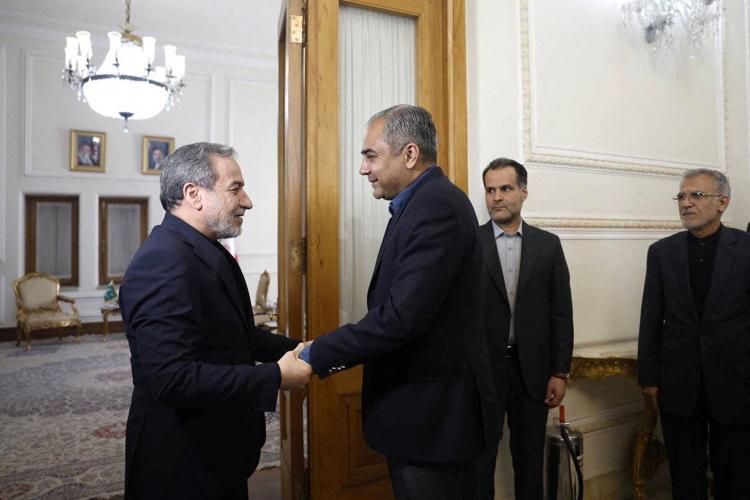
Iranian Foreign Minister Abbas Araghchi meets with Pakistan's Interior Minister Mohsin Naqvi on Saturday in Tehran, Iran.
Momentum builds for US-Iran talks
Iranian Foreign Ministry spokesperson Esmaeil Baghaei said Iran would press in Switzerland for a fulfillment of commitments, citing past failures by the other side to honor agreements.
The Iranian delegation was led by chief negotiator Mohammad Baqer Qalibaf and included Foreign Minister Abbas Araghchi as well as senior security, central bank and oil officials, Iranian media said.
In an interview earlier with Fox News, Vance said he was confident the ceasefire agreed to in Washington's 14-point deal with Tehran would hold and he saw no evidence the strait was closed.
He added that U.S. negotiators Jared Kushner and Steve Witkoff already were in Switzerland "dealing with some of the technical elements of this negotiation" and noted "things are going well."
One of the conditions for starting 60 days of U.S.-Iranian talks on Tehran's nuclear program and other issues is a halt to fighting in Lebanon.

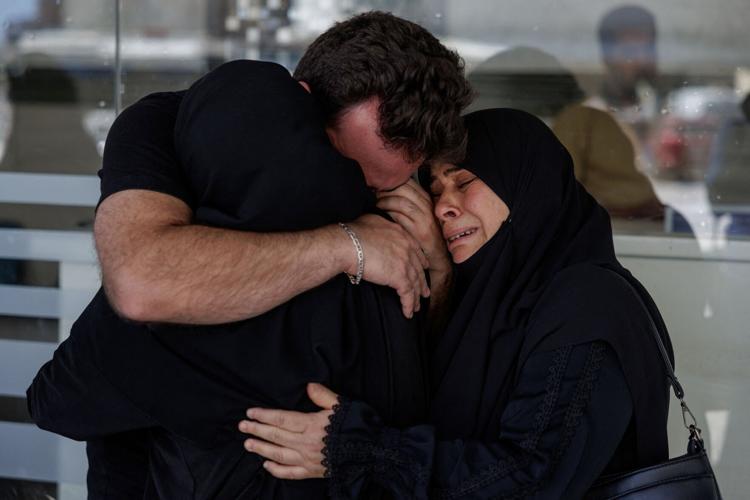
Relatives of the victims of an Israeli strike in Barish react Saturday outside Jabal Amel Hospital in Tyre, Lebanon.
However, the Lebanese Civil Defense said 20 people were killed by Israeli strikes in Lebanon on Saturday, hours after a truce there took effect.
Israel said it responded to attacks from Hezbollah, while the Iran-backed group said it would not allow Israel "freedom of movement" in Lebanon.
Israel, left out of the U.S.-Iran talks, says it is not party to the interim deal and will keep its forces in the Lebanese territory it occupies.
A U.S. official said the truce took effect at 4 p.m. in Lebanon on Friday, and Israeli and Hezbollah sources confirmed the agreement to Reuters.
The Israeli broadcaster Channel 12 reported that the prime minister and defense minister instructed the military to hold fire in Lebanon but it would not withdraw from areas it captured.

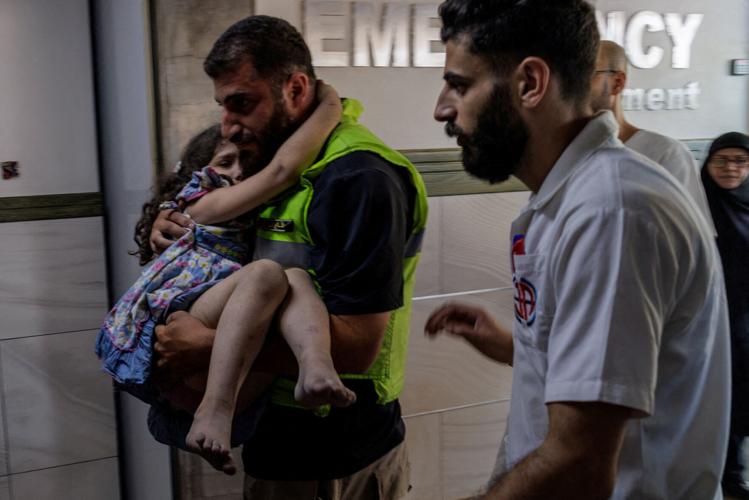
A member of the civil defence carries an injured girl Saturday following an Israeli strike in Barish, as they arrive at Jabal Amel Hospital in Tyre, Lebanon.
Fighting in Lebanon continues
Lebanon's state news agency NNA said Israeli warplanes and drones struck southern Lebanon and the Bekaa Valley, both Hezbollah strongholds, on Saturday.
An Israeli military official said Hezbollah fired more than 50 projectiles at Israeli forces in southern Lebanon overnight, and Israel attacked what it described as Hezbollah targets in response.
One of the deadliest Israeli strikes hit a three-story residential building in the town of Barish in the Tyre district, killing a father, a mother and their two children, a town official said. The Lebanese army said an Israeli strike also killed a soldier.

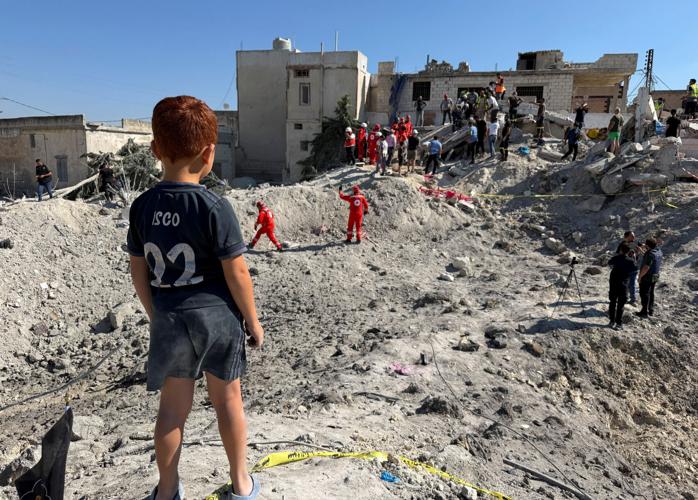
A child stands Saturday next to the rubble of a building damaged in an Israeli strike in Qennarit, southern Lebanon.
"All night we heard explosions. We got kind of excited by those statements about a ceasefire, but everything is continuing as usual," said Ofri Valfer, a resident of northern Israel. "You can hear very loud blasts here, and life goes on alongside that. Hopefully better days will come."
A military statement said Israel was committed to the ceasefire and would continue to act against threats to Israel or its forces.
Hezbollah said it remained committed to the ceasefire but would respond to Israeli attempts to expand its occupation.

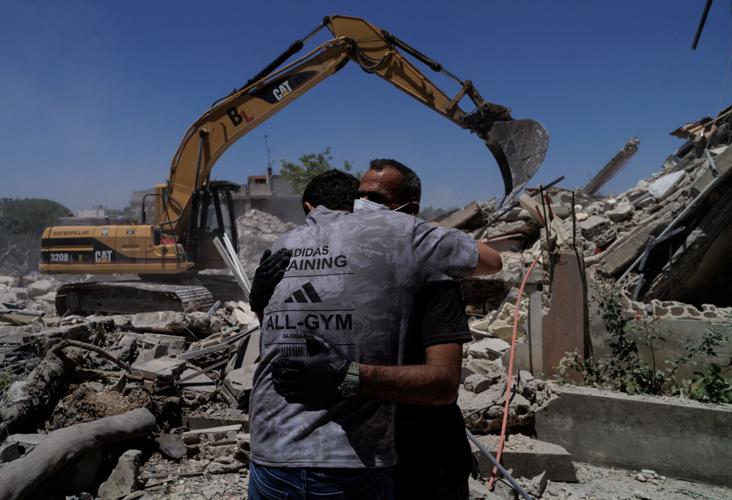
Rescuers embrace Saturday as they work at the site of an Israeli air strike in Barish, Tyre district, Lebanon.
War leaves thousands dead
The Iran war killed at least 8,000 people, mostly in Iran and Lebanon. It pushed up energy prices, stoking inflation worldwide.
Lebanon was drawn into the regional war when Hezbollah attacked Israel after the U.S. and Israel began their war on Iran. Israel responded with an offensive against Hezbollah that included invading south Lebanon.
Lebanon's health ministry said 4,057 people were killed in Israeli attacks since March 2, including medics, women and children, though it does not specify how many of the dead were combatants. Israeli authorities said at least 32 soldiers and four civilians were killed in fighting with Hezbollah.
The interim deal includes sanctions relief for Iran, the unfreezing of assets worth tens of billions of dollars and immediate U.S. waivers for its oil exports. It also envisages a $300 billion reconstruction fund and other incentives.