


7 Day Forecast
Summer is here, temperatures are rising, and you’re seeing the obligatory stories warning you about heatstroke and other dangers of high heat. How concerned should you be?
Highly concerned, according to a variety of health sources. Children, older adults and people with chronic medical conditions are most at risk, the Centers for Disease Control and Prevention says.
Outdoor workers, homeless people, pregnant people and others face high heat danger as well. Anyone can be unexpectedly overcome by extreme heat, sometimes in as little as 10 to 15 minutes.
Part of the problem is what Yale researchers call the heat risk perception gap, in which people underestimate high heat hazards.
You should start taking precautions when the heat index reaches the 90s, the National Weather Service says. At a heat index of 105 or higher, heat exhaustion is more likely. Heatstroke becomes possible with prolonged exposure or physical activity.
People are also reading…
It’s a good idea to be aware of places that can harbor heat hazards. Here are a few examples; some you’ll recognize, some you may not.
1. Hot cars
Going shopping? Hot cars are probably the first heat danger people think of, but perhaps not enough. Nearly 40 children, on average, die in hot cars every year.
Most of those children are 3 years old and younger. Most are left by parents or caregivers by accident, according to the organization Kids and Car Safety, which tracks such deaths.
Hot car deaths can happen at any time of year. Even if it doesn't feel unbearably hot outside, the inside of a car can rapidly heat up like a greenhouse.
2. Attics
Cleaning out your attic? Temperatures up there can exceed 150 to 160 degrees in the summer, even when the outside temperature is 95 to 97 degrees, according to the Texas A&M University Extension. That creates extreme risks of heat exhaustion and deadly heatstroke.
Attics get hot because roofs are exposed to the sun for hours, radiating heat inside. Also, warm air from below rises to the attic. Many attics lack good ventilation.
3. Confined spaces
Doing work around the house? Areas such as crawl spaces, sump pump pits, utility cellars and under-porch areas can be hotter than outside air, according to the Occupational Safety and Health Administration.
These areas often have awkward entrances and lack ventilation, which allows heat to build quickly.
4. Pavement
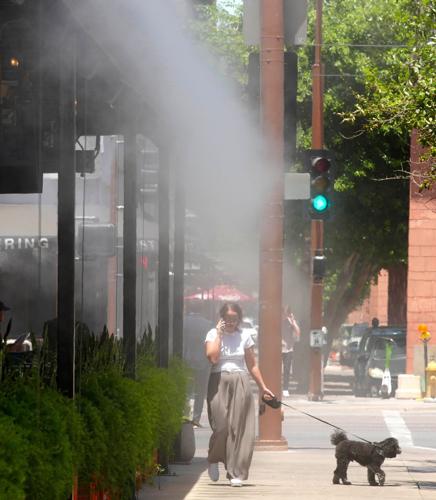
Taking your dog for a walk? Asphalt and dark pavement can become very hot to pets’ feet, according to Ready.gov. Puppies are especially at risk.
When the air temperature is 86 degrees, asphalt temperatures can reach 135 degrees, according to the Journal of the American Medical Association. That can cause thermal burns upon contact with skin.
One way to tell if the ground or pavement is too hot for your dog to walk on is to "place your hand comfortably on the pavement for 10 seconds. If it’s too hot for your hand, it’s too hot for your dog’s paws,” the American Kennel Club says.
5. Outdoor events
Going for a run or to an outdoor concert? Extreme heat becomes more dangerous when people are physically active, the CDC says. They can get dehydrated and overexposed to the sun and are unable to cool down.
The CDC suggests scheduling outdoor activity carefully, drinking fluids, seeking air conditioning as needed and pacing yourself.
Ready.gov advises people going outdoors during extreme heat to seek shade, stay hydrated and avoid strenuous activity or outdoor work at midday.
Sources: USA Today Network reporting and research; Reuters; Centers for Disease Control and Prevention; Yale Program on Climate Change Communication


