


In American suburbs and major cities, air conditioners are everywhere.
But in Europe, air conditioning proved divisive. To some, it's a lifesaving innovation needed in more homes. To others, it's a blight that is worsening a global climate crisis.
Europe, which used to see mild summers, became the fastest-warming continent on the planet in recent decades. Heat killed 200,000 there in just four years, according to the World Health Organization, which described the deaths as largely “preventable.”
Research shows air conditioning is the single most effective way to prevent heat-related deaths, especially for vulnerable populations like the elderly and children.
However, the technology can raise greenhouse gas emissions, as well as increase temperatures in cities where it’s widely used. Left-leaning officials across Europe cited AC units' inefficiency.
People are also reading…
Political divide
Positions on air conditioning often reflect political views, starkly so in France. The debate intensified with the heat in recent years, coinciding with a surge in AC sales across Europe and a growing push to more widely adopt the technology.
“It is absurd to have people die because of the heat,” far-right French leader Marine Le Pen told reporters. “If I am elected president, I will put into place a massive air conditioning plan.”
Paris Mayor Emmanuel Grégoire said “individual air conditioning is a scourge” and called for “flexibility” and solutions like better insulation to deal with high temperatures.
His deputy mayor, Audrey Pulvar, called out the United States for its widespread use of AC.
“As the second-largest emitter of greenhouse gas emissions in the world, you bear a significant amount of responsibility for global warming and the consequences we, in France, are experiencing,” Pulvar said. “Your cities '90% air-conditioned' are not unrelated to this. In Paris, we take responsibility."
Crisis intensifies
Average temperatures climbed by about 1 degree a year in Europe, according to Copernicus, the European Union’s climate monitoring service.
The trend seems to be worsening. June saw temperatures hit 108 degrees in France and 113 degrees in Spain. All-time records over 100 degrees Fahrenheit were reached in Poland, Germany and the Czech Republic.
In France, more than 1,000 excess deaths were recorded during the heat spell, according to the country’s national public health agency. More than 70 people drowned as they sought relief in waterways, Interior Minister Laurent Nuñez said.
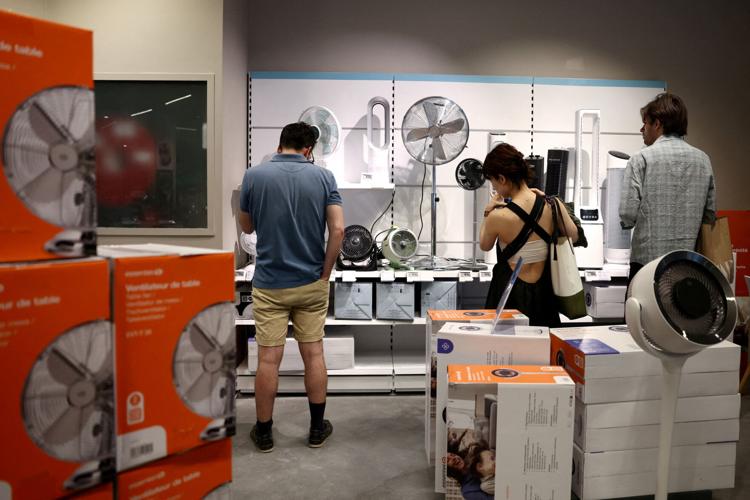
Across the continent, schools closed, concerts were canceled, train lines were suspended and wildfires raged. People sealed their apartment windows and stood in long lines for fans and portable AC units. High night temperatures provided little respite.
Climate downsides
Studies showed air conditioning can reduce the risk of heat-related deaths by up to 75%. The technology is estimated to have saved an average of 190,000 lives a year from 2019 to 2021, according to the International Energy Agency.
Among the main arguments against AC is that it contributes to climate change.
The energy supply needed for air conditioning generates about 4% of global greenhouse gas emissions, about twice as much as the entire aviation industry, according to a 2022 study.
AC units pump warm air outdoors, and studies showed systematic use in a densely populated area can raise temperatures by several degrees.
Growing popularity
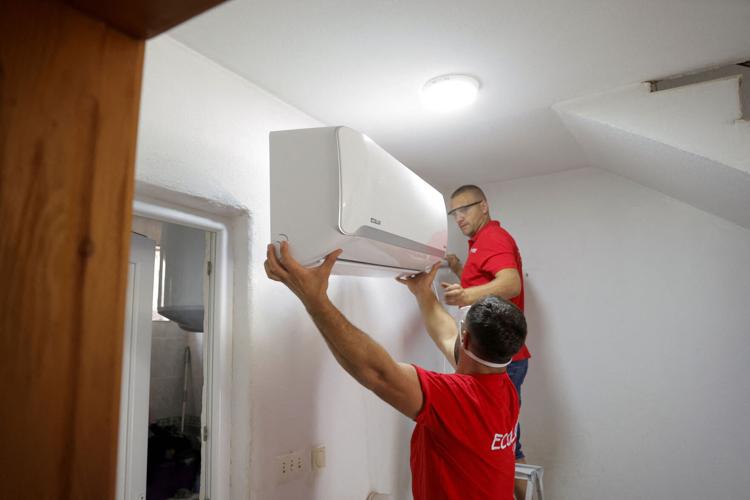
Though Europe was slower to implement air conditioning than other parts of the world, the continent saw a rise in AC use, especially in the south.
In Italy, more than half of all households use air conditioning, according to the National Institute of Statistics. EU data shows AC accounts for one-third of all electricity use in the country. In Spain, about 40% of households stay cool with AC units.
An estimated 4 million homes in the United Kingdom have air conditioning, double the figure from three years ago, according to The Guardian. In Germany, surveys show AC use jumped 6% from 2023 to 2024.
Mixed approach urged
Though individual air conditioning units can be highly effective in preventing heat-related deaths, it should not be the only tool to fight scorching heat waves, experts said.
Dr. Hans Henri P. Kluge, WHO's regional director for Europe, said cities should plant more trees to add shade and create a network of public cooling centers. He added that social services should prioritize vulnerable populations, including the elderly, and help educate people on the signs of heat-related illness.
Other methods include more breaks and flexible shifts so workers can avoid the midday sun, according to WHO. Increasing staff at medical facilities during heat waves also could prevent unnecessary deaths.


