


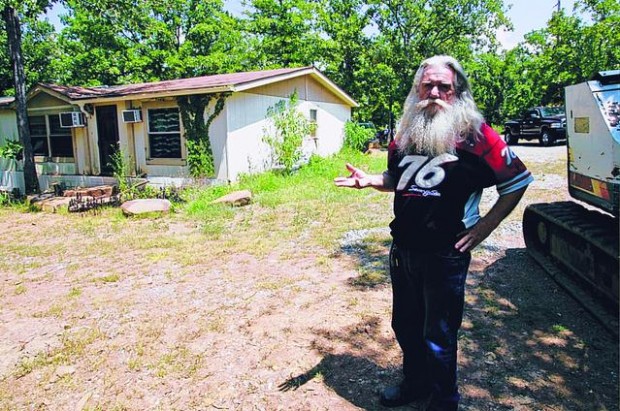
WILBURTON, Okla. — Nestled among the lush forests and mountain foothills of rural southeastern Oklahoma is a soldier's utopia, a sleepy enclave where U.S. veterans can claim their share of the American dream for pennies on the dollar.
For 75 years, the little-known United Spanish War Veterans Colony has offered vets an acre of tax-free land for only a couple hundred dollars, allowing them to build whatever they wish and live out their days in quiet retirement. No homeowners associations, no nursing homes, no red tape.
Here, the pecan trees are the tallest things around, and wild turkeys and deer outnumber residents. Most of the roads are barely wide enough for a single car.
But a dispute brewing in the colony could threaten the peaceful, communal way of life of the 110 veterans who live here. The opening salvo:
Nearly two dozen vets have accused colony leaders of financial mismanagement, and they say residents who question the improprieties are harassed and threatened with eviction.
People are also reading…
"They have gotten such control over the residents through fear and intimidation that … if you're a whistleblower, they want you out of there," said Gordon Landrum, a Vietnam veteran and former member of the board that governs the colony.
Things have gotten so bad, some vets are threatening to take up arms to defend themselves.
"I've got $74 in the bank, no place to go and three clips and a .45," said Paul Skaggs, who survived the Vietnam War but considers this the toughest fight of his life. "I'm just waiting for someone to take a shot at me."
Colony leaders dismiss the allegations, saying the disgruntled veterans have not formally brought their complaints to the board and accusing the group of taking a "warlike stance."
The colony has operated largely unnoticed for decades in the foothills of the Winding Stair Mountains, about 125 miles south of Tulsa. Soldiers from across the country typically learn about it from online chat rooms or friends of friends.
Landrum said he was ousted from the board two years ago after questioning the finances of the colony, which reported having more than $450,000 in the bank in 2006. He's so tired of the harassment, he's planning to pack whatever possessions will fit in an old horse trailer and head for Montana.
He has presented documents detailing the alleged mismanagement: thousands of dollars unaccounted for on annual financial reports, monthly beginning and ending balances that didn't match up, and records of questionable purchases.
Mike Sherrill, a Vietnam veteran who has served several terms as board chairman, rejected the alleged discrepancies, calling them "minor errors that would happen to anybody balancing a checkbook."
He said the books are now in order, and he welcomed an outside audit. An Associated Press review of documents, and recent audits of colony finances, could not account for more than $4,000 in colony money.
The controversy is a far cry from the esprit de corps the 800-acre community was founded on. Established in 1933 by a Spanish American War veterans' organization, the colony provided home sites for returning soldiers.
To be admitted, honorably discharged wartime vets must be members of a service organization such as the VFW or the American Legion. If the board approves an application, the veteran is assigned a share in the nonprofit and can apply for tract of land, typically a one-acre lot. There were more than 330 shareholders in the colony as of 2006, but only about 110 live here. .


